Which Is Better, Mount Rainier Or Olympic National Park?
A side-by-side comparison of Washington's two flagship national parks, with Olympic's rain forest, coast, ridge and lakes in one park weighed against a single-volcano destination, plus verdicts by traveller type.
Which Is Better, Mount Rainier Or Olympic National Park?
Neither park is objectively better, because they are not really competing for the same day. Mount Rainier National Park is a single-volcano park where the mountain is the whole show, while Olympic National Park packs temperate rain forest, wilderness coast, alpine ridges and glacial lakes into 922,651 acres. Travellers who want one dramatic peak choose Rainier; travellers who want three ecosystems in one border choose Olympic.
The question is fair, though, because most visitors have time for only one park on a Seattle trip, and the two parks sit on opposite sides of Puget Sound. Mount Rainier is the other major national park near Seattle, a glacier-clad volcano that dominates the skyline on clear days. Olympic National Park is the quieter giant to the west, reached by ferry or by driving around the sound, and it hosts over 3 million visits each year across rain forest valleys, seventy-some miles of wild coast, and high ridges that record 30 to 35 feet of snow in a normal winter. If Olympic ends up winning you over, our guide to choosing between the Hoh and Quinault rainforests sorts out the trail and access differences so you can plan the rain forest side of the trip.
This comparison leans on what the Olympic side actually publishes: verified fees, seasonal schedules, distances and tour listings. Where Mount Rainier is concerned, the point is to describe honestly what kind of park it is, a single-mountain destination, without inventing figures for it; anyone weighing Rainier's own numbers should check that park's official pages directly. The verdicts at the end break down by traveller type, because the right answer depends almost entirely on what a visitor wants from a single day or a single week.
What Makes Olympic National Park Different From Mount Rainier?
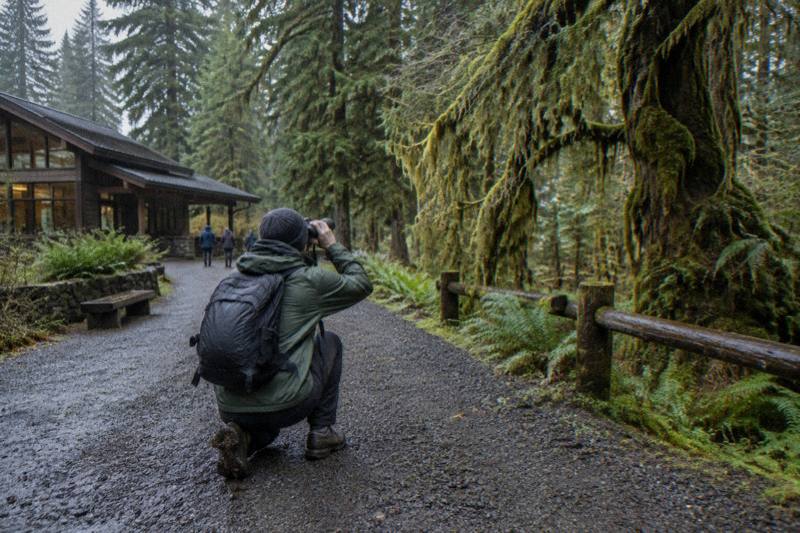
Olympic National Park sets itself apart by packing three ecosystems into one boundary: a rain-soaked temperate rainforest, a rugged Pacific coast with tide pools and sea stacks, and an alpine ridge with glacial lakes like Lake Crescent, a combination Mount Rainier, centered solely on its volcano, cannot offer.
The scale of the contrast is easy to state with Olympic's own numbers. The park covers 922,651 acres. The Hoh Rain Forest alone averages 140 inches of precipitation a year, while park headquarters in Port Angeles averages 25 to 30 inches, and the coast and western valleys see 100 to 170 inches annually. That gradient, from dry-ish rain shadow to saturated valley to salt spray, is why Olympic never feels like one place. The Hall of Mosses Trail loops 0.8 miles through the signature grove; the Spruce Nature Trail adds 1.2 miles; and the Hoh River Trail runs out-and-back to 18.5 miles at the Blue Glacier moraine.
Mount Rainier's appeal is the opposite shape. It is a park built around a single volcanic summit, where the experience is approaching one mountain from different sides and different elevations. That concentration is a genuine strength: the mountain is visible from enormous distances, and the park's trails radiate outward from it. But it means the variety within the boundary is narrower than Olympic's, and a day there is always a day with one landmark in the center of the frame.
For travellers coming from Seattle, the practical difference is that Olympic demands a ferry crossing or a long drive around the sound, while Rainier is reached by road from the east side of the metro. Neither approach is hard, but the Olympic trip has a boat ride in the middle of it, which many visitors enjoy as scenery rather than endure as transit. The Olympic National Park Tours site exists because that crossing, plus the park's spread-out geography, makes guided transport genuinely useful here.
Deciding between the parks is really deciding between concentration and range. If the dream photo is one immense glacier-wrapped peak, Rainier delivers it. If the dream day is rain forest, a lake the color of deep glass, and a Pacific beach with tide pools, Olympic is the only park in Washington that holds all three.
How Do The Two Parks Compare For A Day Trip From Seattle?
Olympic day tours from Seattle run 10 to 13 hours and cover a selection of stops, typically Hurricane Ridge, Lake Crescent or the Hoh, not the whole park. Mount Rainier sits closer to Seattle as the crow flies, so its day trips are shorter drives to a single mountain area. The honest trade is ferry time and range on the Olympic side versus driving distance and focus on the Rainier side.
The Seattle-departure tours on this site's roster state their durations plainly: 10 to 13 hours depending on the product. The Small-Group Ferry Day Tour runs 11 hours from $188 per person, rated 4.6 across 943 reviews, and includes the roundtrip cross-bay ferry, lunch, snacks and the park entrance fee. The All-Inclusive Naturalist Day Tour runs 12 hours from $368 per person, rated 4.9 across 1,067 reviews, with a professional naturalist guide and guided hikes or winter snowshoe treks tailored to the group. The Hurricane Ridge And Lake Crescent Day covers the ridge and the lake in 11 hours from $188 per person, rated 4.6 across 220 reviews.
No Seattle day tour covers everything, and any listing that promises Hurricane Ridge, the Hoh and the coast in a single day should be read with skepticism. The park is simply too large for that. What a good day tour does is pick a coherent slice, usually the ridge-and-lake combination or a rain forest run, and hand the driving and the ferry timing to someone who does it daily. One guest review of the small-group ferry product describes exactly that value: when the ferry was not operational, the operator drove the group around instead and bought lunch.
The ferry itself is part of the comparison. The Seattle to Bainbridge Island crossing takes about 35 minutes, and no vehicle reservations are needed on the Seattle to Bainbridge or Edmonds to Kingston routes, which is why tour operators can build reliable itineraries around them. Rainier day trips involve no boat, but they do involve mountain roads whose condition matters in a way lowland highways rarely do.
Travellers who want the shortest possible day out lean Rainier. Travellers who want the day to contain a ferry ride, a rain forest or a ridge, and a lake tend to find the longer Olympic day worth the alarm-clock start. The Olympic National Park Seattle day tours hub lists the full set of Seattle departures with prices and durations side by side.
Which Park Is Better For Rain Forest And Coast?
Olympic wins this category by default, because Mount Rainier has neither a temperate rain forest of the Hoh's kind nor wilderness coastline inside its boundary. The Hoh receives 140 inches of rain a year, supports moss-draped old-growth groves, and the park's coast runs with tide pools at Kalaloch, Ruby Beach and Beach 4. A visitor whose priority is rain forest or Pacific shore has only one Washington park to choose.
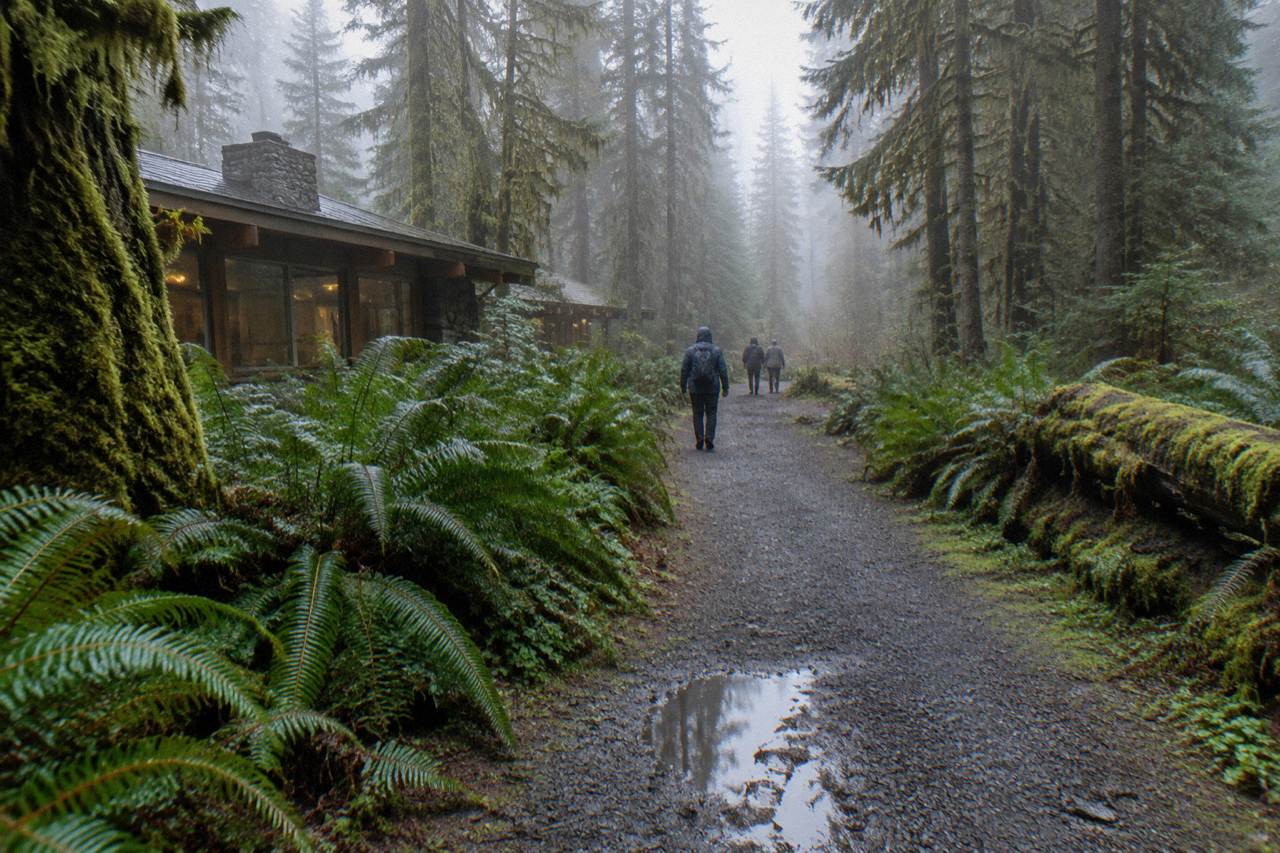
The Hoh Rain Forest is the flagship example. Its two short loops, the 0.8-mile Hall of Mosses and the 1.2-mile Spruce Nature Trail, put visitors under a canopy that exists in few places on earth, and the Hoh River Trail extends the experience toward the Blue Glacier for anyone with a full day or a backpacking permit. The Hoh campground holds 72 sites, open year-round and reservable up to six months ahead. The visitor center is open daily in summer and closed January through early March, generally Friday to Sunday in spring and fall, and pets are not allowed on the Hoh trails.
The coast is equally specific to Olympic. Kalaloch and Ruby Beach sit directly off Highway 101, and Beach 4 plus Hole-in-the-Wall are the park's most popular tide pool spots, best at tides lower than one foot. Two access notes matter for anyone planning: Mora Road is closed to all traffic at the campground, so Rialto Beach is not accessible via Mora Road during repairs of severe winter flood damage, and tours whose listings name Rialto must be confirmed with the operator for their current route before booking. Highway 101 is also closed overnight at the Hoh River Bridge, 7 p.m. to 5:30 a.m. each night October 13 to 19, with no detour across the river, though the Hoh Rain Forest stays reachable from Forks. If that has you thinking about staying in Forks, our answer to whether Forks is a real town explains what the town actually offers visitors.
On the tour side, the Hoh And Rialto From Port Angeles product is rated 5.0 across 172 reviews and runs 9 hours from $195 per person with a commercially authorized guide, transportation and park entrance fees included; its listing names Rialto Beach, so the route note above applies and the operator's current itinerary should be confirmed on the listing. One guest on that tour called it a great day in the rainforest with an easy walk almost anyone could manage.
Rainier has forests, but they frame a mountain rather than standing as the destination themselves. The comparison here is not close, and travellers who book specifically for moss, elk and tide pools should route to Olympic without much agonizing. The Hoh Rainforest tour guide covers the rain forest options in more depth.
Which Park Is Better For Mountain Views And Hiking?
Mount Rainier is the stronger pure mountain destination, since the entire park orbits one glacier-covered volcano, while Olympic's high country is spread across ridges like Hurricane Ridge at 5,242 feet. Olympic compensates with variety: alpine meadows, lake basins and the High Divide Loop through Seven Lakes Basin. Hikers who want one iconic peak choose Rainier; hikers who want range and solitude lean Olympic.
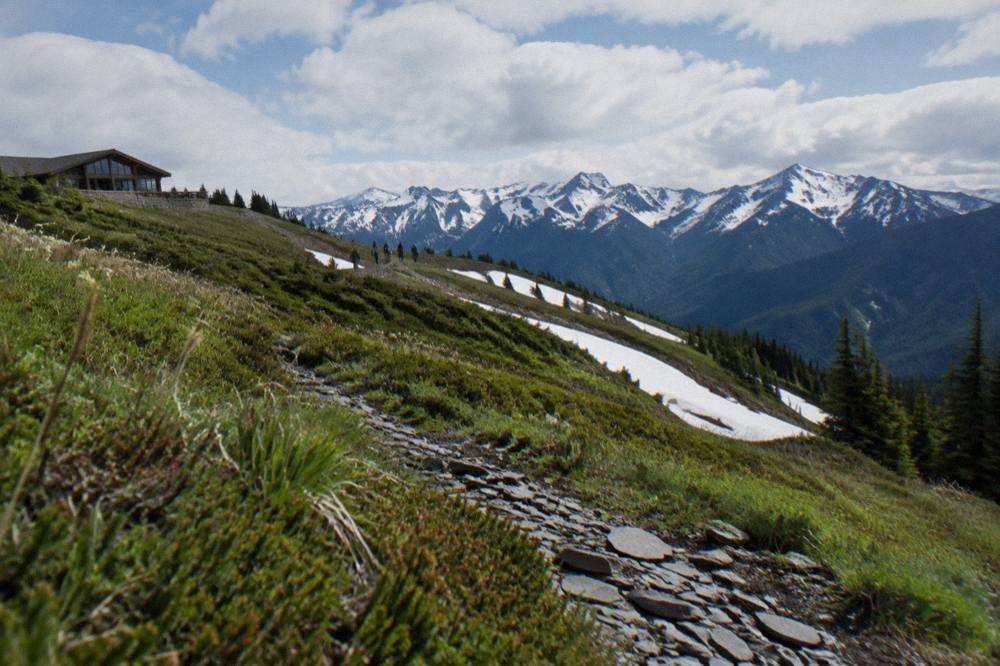
Hurricane Ridge is Olympic's mountain showpiece, 17 miles south of Port Angeles at 5,242 feet, reached on a paved road open through summer and scheduled Friday through Sunday plus holiday Mondays in winter, weather permitting. Obstruction Point Road, 7.8 miles of gravel from the ridge, opens from mid-June through October 15 when snow allows. The ridge traditionally records 30 to 35 feet of snow a year, and snow can appear in the high country as early as late September, which shapes the hiking season on both sides of the comparison. The park publishes the details on its Hurricane Ridge page.
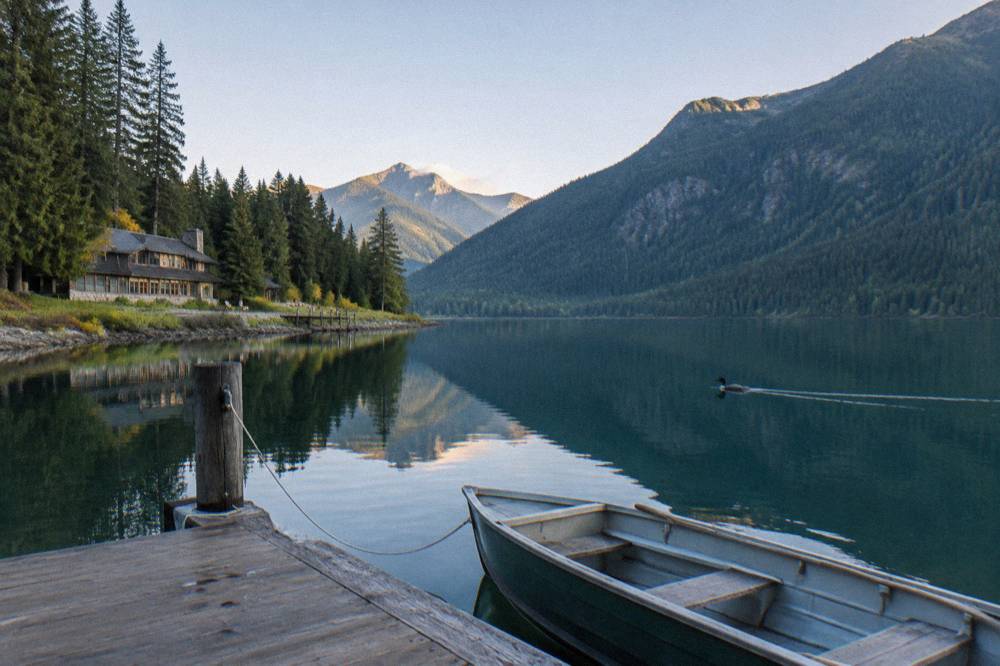
Olympic's hiking menu is unusually broad for one park. The High Divide Loop through Seven Lakes Basin is a popular two to three day hike under the wilderness permit system, which requires permits year-round, costs $8 per person per night plus a $6 permit fee, and releases summer-season permits on April 15 at 7 a.m. Pacific. Day hikers get Marymere Falls near Lake Crescent and the Spruce Railroad Trail on the lake's north shore, plus the Sol Duc Falls overlook about a mile from its parking lot. The Lake Crescent Half-Day Tour covers the lake area in 4 hours from $110 per person with a guide and transportation, a small pool of 39 reviews so far.
For Seattle visitors who want the ridge-and-lake combination without renting a car, the Hurricane Ridge And Lake Crescent Day delivers both in one 11-hour trip, and its guest reviews single out exactly those two stops, one calling the guide a careful driver on the long road. The best hikes in Olympic National Park guide lays out the full trail list with distances.
The honest Rainier verdict on hiking is that its subalpine wildflower season around one great peak is a famous, concentrated spectacle, and that concentration draws heavy traffic on its most popular trails during peak weeks. Olympic's trails distribute crowds across a much larger, roadless interior, which is why hikers who prize quiet often end up here even though the single best mountain view in Washington arguably belongs to the other park.
Which Park Is Better In Winter?
Olympic is the more workable winter park for most travellers, because its low-elevation rain forest and coast stay open and green while Hurricane Ridge adds a scheduled snow season with skiing and ranger snowshoe walks. Mount Rainier in winter is dominated by deep snow at its popular areas and road access that shrinks with conditions. Winter visitors who want variety, not just snow, get more usable park at Olympic.
The Olympic winter picture comes straight from the park's published schedule. Hurricane Ridge Road is scheduled open Friday through Sunday and holiday Mondays in winter, typically with uphill traffic allowed 9 a.m. to 4 p.m. and all vehicles below the Heart O' the Hills entrance station by 5 p.m.; it is closed Christmas Day. All vehicles, including four-wheel drive, must carry tire chains above the entrance station from November 1 through April 1. The ridge's winter offer includes a small ski and snowboard area operated on weekends and holiday Mondays, 15 to 20 miles of cross-country and snowshoe routes on unplowed roads, and ranger-led snowshoe walks on winter weekends. Temporary trailers provide restrooms and a visitor contact station, since the day lodge was lost to a fire in 2023.
What makes Olympic distinctive in winter is everything below the snow line. The Hoh Rain Forest campground stays open year-round, the coast at Kalaloch and Ruby Beach is a storm-watching destination, and Lake Crescent's lodge area runs into the shoulder season. A winter visitor can snowshoe in the morning and walk a green, dripping rain forest trail the same day, which is a combination Rainier's geography cannot match. The best time to visit Olympic National Park guide breaks the seasons down month by month.
Rainier's winter is real and beautiful, built around snowplay and climbing routes on one mountain, but it is a narrower offer: the park's famous meadows are under feet of snow, and the experience collapses to whichever road corridor is open. Travellers who specifically want a volcano in winter conditions will still love it. Travellers who want a full day's variety in December should point the car, or the tour booking, west.
Which Park Is Cheaper To Visit?
Olympic's entrance fees are straightforward: $30 per private vehicle for 7 consecutive days, $25 per motorcycle, or $15 per person on foot or bike for ages 16 and up, with children 15 and under free. A $55 Olympic Annual Pass covers a year. Mount Rainier charges its own separate entrance fee, which is not printed here, so cost comparison depends on that park's current posted price. Guided Olympic tours start at $17 per group for a self-guided audio option.
The full Olympic fee schedule, published on the park's fees page, also includes the America the Beautiful pass lineup: $80 for the resident annual pass, $20 for a senior annual and $80 for a senior lifetime, with military, access and fourth-grade passes free. The park does not accept cash, and visitors can pre-pay entry to cut entrance-station waits. Frontcountry campgrounds run $15 to $24 a night depending on location and season, and the wilderness permit adds $8 per person per night plus a $6 reservation fee for backpackers.
| Cost Item | Olympic National Park | Notes |
|---|---|---|
| Private vehicle entry | $30, 7 consecutive days | Covers all occupants, 15-passenger capacity or less |
| Motorcycle entry | $25, 7 days | Up to 2 motorcycles, 4 total passengers |
| Per person, no vehicle | $15, 7 days | Ages 16 and up; 15 and under free |
| Olympic Annual Pass | $55 | One year from month of purchase |
| Frontcountry camping | $15 to $24 per night | Location and season dependent |
| Wilderness permit | $8 per person per night | Plus $6 per permit, required year-round |
On the tour side, Olympic's price ladder spans a wide range. The Self-Guided Audio Driving Tour starts at $17 per group and guides a driving route through an app with offline GPS stories. At the top, the Private Coach Day Tour runs from $2,875 per group for up to 13 hours with a private guide, ferry and food and drinks included. Between those poles sit the shared Seattle day tours from $178 to $485 per person and the Port Angeles departures from $110 to $195 per person. The Olympic National Park tour cost breakdown covers where each dollar goes.
One point worth knowing: commercial tour operators pay their own entrance fees, $75 for a van, $100 for a mini-bus, $200 for a coach, and several roster tours list park entrance as included in the guest price, which is a real saving over driving yourself and paying the $30 vehicle fee separately. Neither park is expensive relative to what surrounding lodging costs; the fee question rarely decides the trip, but Olympic's numbers at least are easy to plan to the dollar.
Which Park Suits Which Traveller?
Families and first-time visitors who want variety in one day lean Olympic; photographers chasing one iconic volcano lean Rainier. Rain forest and coast seekers have no real choice, and Olympic owns that category. Serious peak-focused hikers and wildflower photographers get their best day at Rainier, while multi-day backpackers, wildlife watchers and travellers who hate backtracking get more from Olympic's 922,651 acres.
The verdict table below assigns each traveller type to the park that fits, based on everything above.
| Traveller Type | Better Fit | Why |
|---|---|---|
| First-time visitor with one day | Olympic | A tour pairs ridge, lake or rain forest with a ferry ride in a single booked day |
| Rain forest or coast priority | Olympic | The Hoh and the wilderness coast exist only here |
| Single iconic mountain photo | Mount Rainier | One glacier-clad volcano dominates every view |
| Multi-day backpacker | Olympic | High Divide, Seven Lakes Basin, coastal wilderness routes |
| Winter visitor wanting variety | Olympic | Snow at the ridge, green rain forest and coast below |
| Wildflower meadow photographer | Mount Rainier | Concentrated subalpine bloom around one peak |
| Family with kids | Olympic | Short loops, tide pools, lakes and easy visitor pacing |
| Traveller who dislikes long drives | Mount Rainier | No ferry crossing required from Seattle |
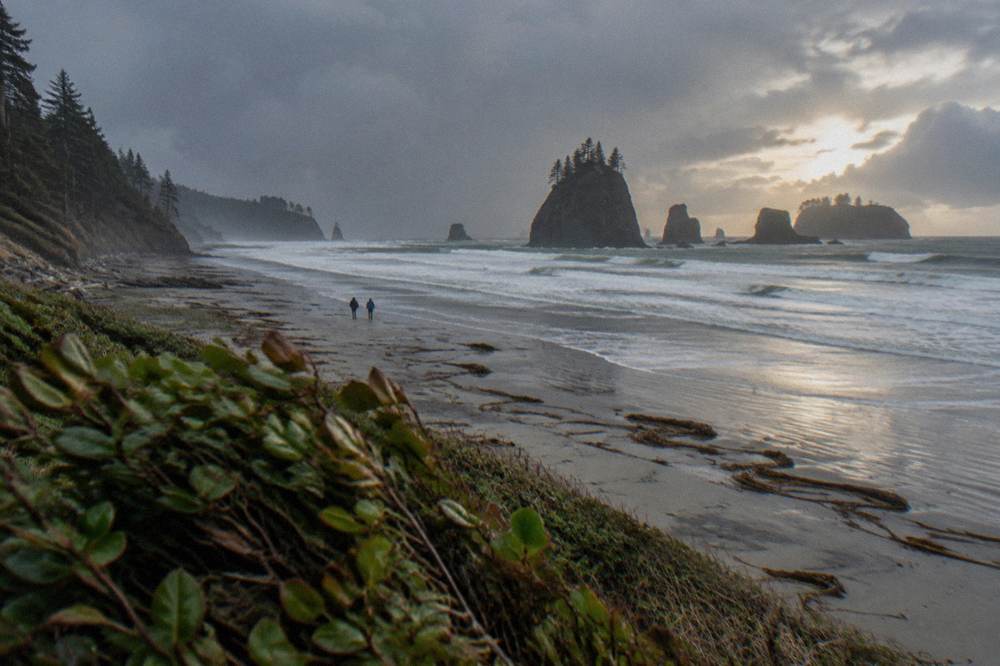
The strongest single argument for Olympic is compression. Nowhere else in the country can a visitor book one 11-hour tour and see an alpine ridge, a glacier-carved lake and, on other itineraries, a rain forest that receives 140 inches of annual rain, then return to a city the same night. The strongest single argument for Rainier is focus: one mountain, seen from every angle, doing one thing at world-class scale.
For travellers who land on the Olympic side of the verdict, the Small-Group Ferry Day Tour is the natural first booking: 11 hours from Seattle, from $188 per person, ferry, lunch and park entrance included, Check availability.
Common Questions About Rainier Versus Olympic
Which Is Better, Mount Rainier Or Olympic National Park?
Neither is objectively better. Rainier concentrates everything around one glacier-clad volcano and suits peak-focused hikers and photographers; Olympic spreads rain forest, wilderness coast, alpine ridges and glacial lakes across 922,651 acres and suits travellers who want variety, wildlife and multiple ecosystems in one boundary.
Can You Visit Both Parks On One Trip From Seattle?
Yes, but not comfortably in one day. The parks sit on opposite sides of Puget Sound, and Olympic requires a ferry crossing of about 35 minutes or a long drive around the sound. A week-long trip can pair two or three days in each park, but a single day forces a choice between them.
Is Olympic National Park Harder To Reach Than Mount Rainier?
Olympic takes more logistics from Seattle because of the water crossing and the park's own size, with Hurricane Ridge 17 miles from Port Angeles and the Hoh about two hours further west. Rainier is a road drive from the east side of the metro. Guided Olympic tours absorb the ferry and driving, which is why they are popular.
Which Park Is Better For Wildlife?
Olympic. The park holds the Roosevelt elk herd, black bears across forest, riparian and subalpine zones, and coastal tide pool life, and visitors must stay at least 100 feet from elk. Grizzly bears are absent from the Olympic Peninsula. Rainier's wildlife viewing is real but centered on its forest and meadow corridors.
Which Park Is Better In July And August?
Both peak in July and August, but for different reasons. Rainier's subalpine wildflowers bloom in a concentrated window, while Olympic's July and August bring roughly 2 inches of rain each month, the driest stretch of the year, opening the ridge, the rain forest and the coast at once. Crowds peak at both.
Do I Need A Tour For Either Park?
No, both parks are drivable independently, and Olympic charges $30 per vehicle for 7 days. But Olympic rewards tours more, because the ferry, the driving distances and the scattered highlights make a guided day efficient; Olympic tour listings run from $17 per group for a self-guided audio option to $2,875 per group for a private coach.