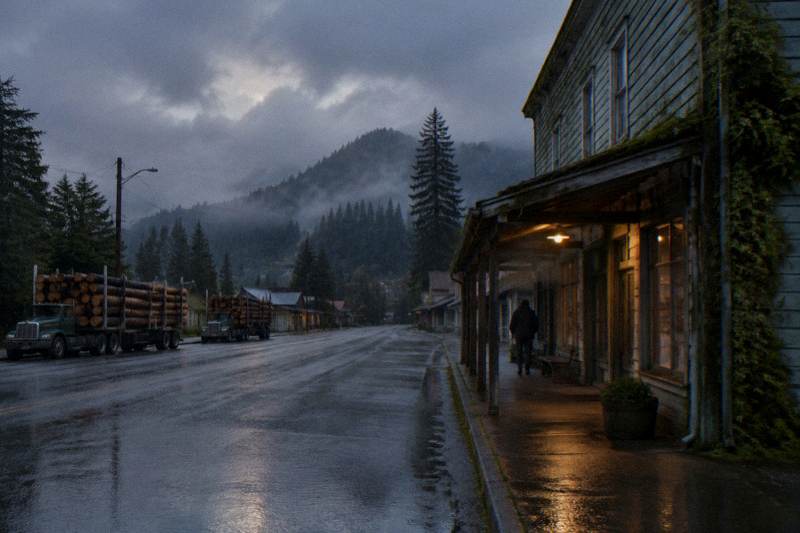
Is Forks From Twilight A Real Town?
Yes, Forks is a real town on the west side of the Olympic Peninsula, and it makes a practical base for the Hoh Rain Forest, Ruby Beach and Sol Duc. Here is what a Twilight fan actually finds there.
Is Forks From Twilight A Real Town?
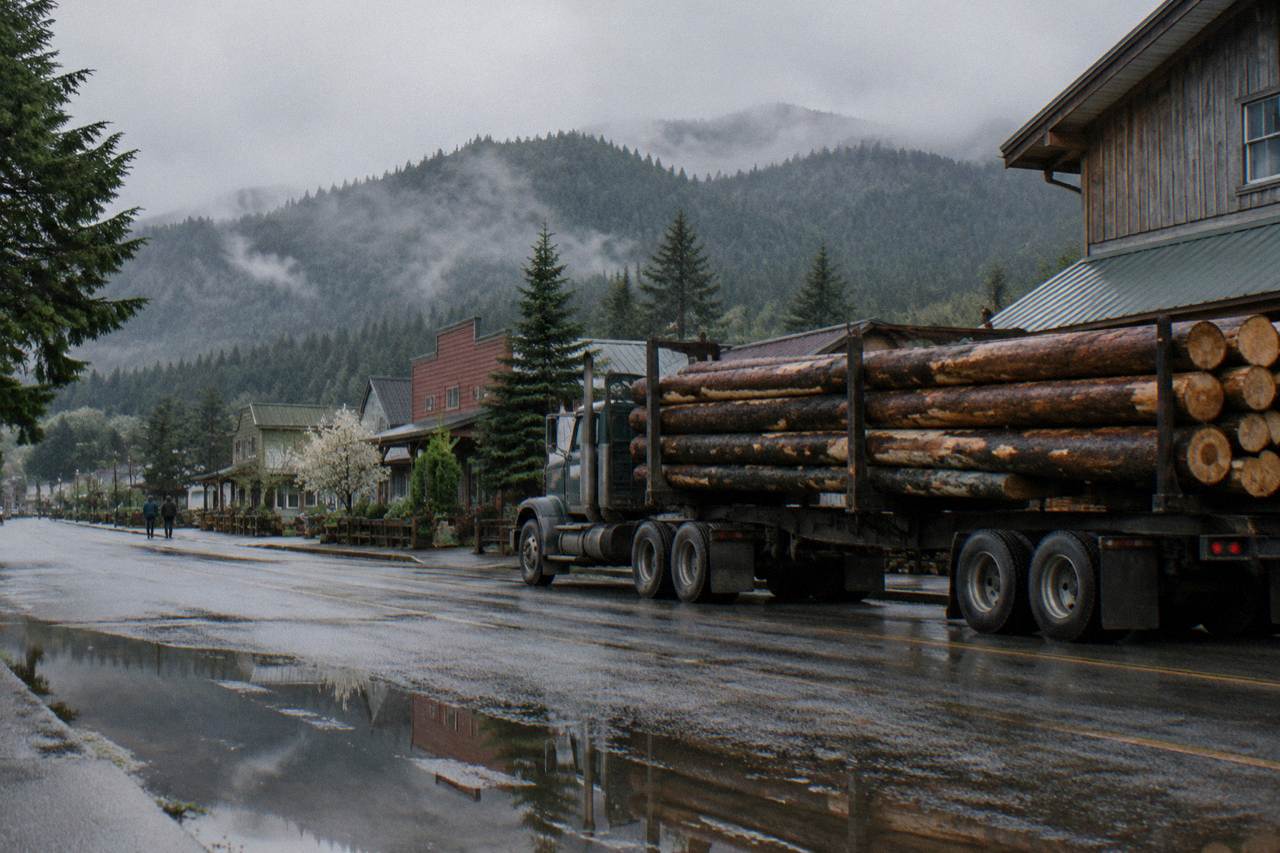
Yes, Forks is a real town, a working community on the west side of the Olympic Peninsula about two hours west of Port Angeles by road. The novels set their story there because the place genuinely exists, and fans have been making the trip ever since. What they find is a small timber town that also happens to sit under some of the wettest weather in the country, within easy reach of the Hoh Rain Forest and the Pacific coast.
The town is not a film set and never was one. It has a main street, a logging history, a hospital, schools and the ordinary infrastructure of any rural American town, plus a visitor industry that grew almost overnight when the books put its name on the map. The Forks Chamber of Commerce leans into the association: visitors will find Twilight-themed signage and photo stops around town, and the local visitor center has long welcomed fans arriving from as far away as Japan and Brazil. None of that is staged scenery. It is a real town responding, with some amusement, to an unusual amount of attention.
What surprises many first-time visitors is how small Forks actually is. This is not a resort village dressed up for tourism. It is a timber town that still runs on forestry, fishing and, increasingly, park tourism, and it sits on a plateau a few miles inland from the Pacific. The surrounding country is the real draw: Olympic National Park wraps around the town on three sides, with the Hoh Rain Forest to the southeast, the coastal strip of Kalaloch and Ruby Beach to the south, and the Mora area to the northwest. A visitor who comes for the Twilight connection and leaves having seen only the town has missed the better half of the trip.
That overlap is exactly why tour operators run products here. The Twilight Forks And Park Day, from $335 per person, pairs the town with surrounding park stops in a single long day out of Seattle, and the Forks And Sol Duc Day Trip, from $255 per person, works the same corner of the peninsula from a Seattle departure. Both are built on the simple fact that Forks is a real place inside real rainforest country, and the drive between the stops is the experience.
Where Is Forks?
Forks sits on the west side of the Olympic Peninsula, on a plateau a few miles inland from the Pacific coast, connected to the rest of the peninsula by Highway 101. Port Angeles lies about two hours northeast by road, and the Hoh Rain Forest is under an hour away via Upper Hoh Road. Seattle is reachable by car ferry plus drive, with the crossing itself running about 35 minutes.
The geography matters more than the trivia. Highway 101 loops the peninsula and is the only practical artery, so almost every Forks itinerary is really a Highway 101 itinerary. Coming from Seattle, most travelers take a Washington State Ferries crossing, either Seattle to Bainbridge Island or Edmonds to Kingston, then drive the rest of the way. The Bainbridge crossing runs about 35 minutes and the Edmonds to Kingston crossing about 30, and neither route uses vehicle reservations: both are first-come, first-served. Washington State Ferries publishes the schedules and fare details, and the ferry system's own site is the place to confirm sailings before a long drive day.
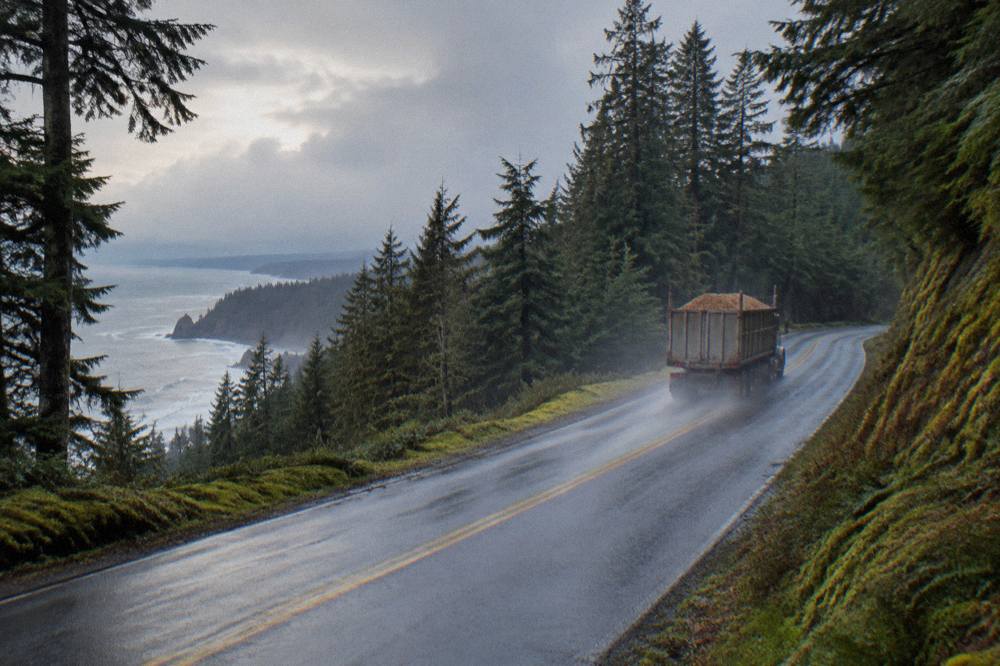
Once on the peninsula, the town works as a base because the park's west-side destinations cluster around it. The Hoh Rain Forest lies under an hour from Forks along Upper Hoh Road, which runs 18 miles off Highway 101, per the park's Hoh visitor page. Kalaloch and Ruby Beach sit directly on Highway 101 to the south, with the Hoh about 45 minutes north of Kalaloch. Port Angeles, the biggest town on the peninsula and the park's main gateway, is the other common base, and travelers weighing the two should read the Port Angeles versus Forks comparison before booking a room.
For most Twilight fans the question is not whether Forks exists but whether it is worth the drive from Seattle, and the honest answer is that the drive is the point. The peninsula's west side is where the rainforest, the rivers and the coast stack up closest together, and a day spent moving between them covers country that rivals any of the park's better-known corners.
What Is Forks, Wa Famous For?
Forks is famous for two things: the Twilight association, which brought a global wave of visitors to a town of a few thousand people, and rain, with NOAA climate normals recording 101.32 inches of precipitation a year. Before the novels, its reputation rested on timber, one of the most productive logging regions in the country, and on steelhead fishing on the surrounding rivers.
The Twilight fame is the modern layer. The novels chose Forks deliberately, for its overcast, drizzly climate, and the town has spent the years since greeting fans with themed signage, a visitors center happy to talk about the books, and a steady stream of tour traffic. The fame is real but the town's relationship to it is practical: Forks was a timber town first and remains one, and the visitor economy sits on top of that rather than replacing it. Fans arriving expecting a movie backlot find a genuine working community instead, which is, in the end, the more interesting thing.
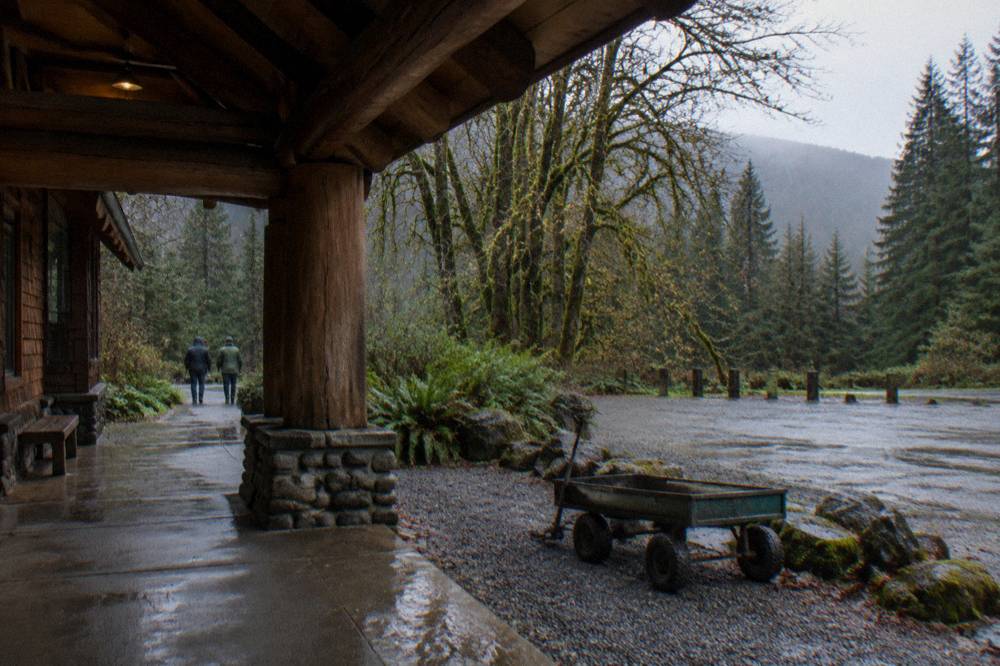
The rain reputation is the older and more durable claim. The park's weather page records annual precipitation of 100 to 170 inches across the coast and western valleys, and Forks sits squarely inside that band. The practical consequence for visitors is simple: waterproof layers are not optional here, and the same clouds that set the mood of the novels are what keep the surrounding rainforest green year-round.
| Forks Claim To Fame | The Reality On The Ground |
|---|---|
| Twilight setting | A real town that welcomes fans with themed stops and a visitor center |
| Timber heritage | Working logging town, historically one of the most productive in the country |
| Rain | 101.32 inches of precipitation a year per NOAA climate normals |
| Steelhead fishing | Surrounding rivers remain a regional draw for anglers |
| Park gateway | Under an hour from the Hoh Rain Forest, close to Kalaloch and Ruby Beach |
Tour operators have built products around the combination. The Twilight Forks And Park Day, from $335 per person with hotel or listed pickup in Seattle, is designed for exactly this reader: someone who wants the town and the rainforest in the same day without renting a car. Its review pool is small, four reviews, so there is no star claim to make, but the concept matches the geography.
Is Forks The Rainiest Place In The Us?
Not quite, but it is close, and the surrounding valleys of Olympic National Park are wetter still. Forks averages 101.32 inches of precipitation a year per NOAA climate normals, while the Hoh Rain Forest records a yearly average of 140 inches. The wettest places in the lower 48 are the park's own western valleys, so Forks sits on the doorstep of the rainiest country in the contiguous United States.
The distinction matters because visitors often arrive expecting Forks itself to be the extreme, when in fact the town is the dry-ish staging area for wetter country inland. The Hoh Rain Forest's 140-inch yearly average, published on the park's own Hoh page, is what feeds the moss-draped spruce and hemlock that make the valley famous, and the town's 101 inches are what keep its lawns green and its gutters busy. December and January are the wettest months on the Olympic Peninsula, and July and August the driest, which is also why those months are the park's most crowded.
For a Twilight fan the overcast is a feature rather than a bug, and this is one of the few destinations where the weather is part of the attraction. The practical planning advice is to pack for it rather than fight it: a real rain jacket, waterproof shoes and layers beat an umbrella, which the wind on the coast will defeat quickly. The park's road and weather recording at 360-565-3131 carries live status for the high-country roads, and the park conditions page is the reference for alerts before any long drive.
How Far Is The Hoh Rain Forest From Forks?
The Hoh Rain Forest is under an hour from Forks via Upper Hoh Road, an 18-mile paved road off Highway 101, making Forks the closest practical base for the valley. Port Angeles is about a two-hour drive away, so staying in Forks cuts the Hoh commute by more than half and puts the rainforest's short trails within an easy morning.
The valley's two signature walks are short and gentle: the Hall of Mosses Trail at 0.8 miles and the Spruce Nature Trail at 1.2 miles, both loop walks from the visitor center area. The Hoh River Trail runs out-and-back toward the Blue Glacier moraine at 18.5 miles for hikers with bigger plans, and the 72-site Hoh campground is open year-round and reservable up to six months ahead. The visitor center is open daily in summer and closed January through early March, with reduced Friday-to-Sunday hours in spring and fall, so off-season visitors should plan around it.
Two logistics notes shape any Hoh day. The Hoh entrance station can see lengthy delays with metering when parking fills, and summer lots can reach capacity by mid-morning, so early starts pay off. And Highway 101 is closed at the Hoh River Bridge for overnight repairs, 7 p.m. to 5:30 a.m. each night October 13 to 19, with no detour across the river; the Hoh Rain Forest stays reachable from Forks, which is another reason the town works as a base. The park's Highway 101 closure page carries the full schedule.
Guided options from Forks itself exist. The Forks Small-Group Hike, from $396 per person, departs Forks for 6 to 8 hours with a medically trained naturalist guide, snacks, transport and park entry fees included, with lunch BYO per the listing; its review pool is small, 11 reviews. Multi-day treks also stage from town, including the 4-Day North Coast Backpacking at from $2,000 per person and the 5-Day Hoh And Blue Glacier Trek at from $2,400 per person, both departing Forks with gear and meals included.
Can You Visit Twilight Sites And The Park In One Day?
Yes, and a guided day tour is the most realistic way to do it from Seattle, because the drive alone is long. The Twilight Forks And Park Day runs from $335 per person and covers the town plus surrounding park stops in one booked day with hotel or listed pickup, while a self-drive version means ferry, Highway 101 and rainforest parking logistics all on your own plate.
The math is what it is: a Seattle departure, a ferry crossing, the drive out Highway 101, the town, a park stop or two and the return adds up to a very full day. Seattle-based tours run 10 to 13 hours on the listings, and the Forks And Sol Duc Day Trip, from $255 per person, is a 1-day tour at that scale. The trade is simple. A guided day buys a driver who knows the roads, entrance logistics handled by the operator where the listing says so, and a fixed itinerary that fits the daylight. A self-drive day buys flexibility and the risk of arriving at the Hoh after the lots have filled.
| Way To Do Forks In A Day | From Price | Duration | Departure | Pickup |
|---|---|---|---|---|
| Twilight Forks And Park Day | $335 per person | 1 day | Seattle | Hotel or listed pickup offered |
| Forks And Sol Duc Day Trip | $255 per person | 1 day | Seattle | Hotel or listed pickup offered |
| Forks Small-Group Hike | $396 per person | 6 to 8 hours | Forks | No pickup |
| Rainforest And Beach Highlights | $285 per person | 12 hours 30 minutes | Seattle | Hotel or listed pickup offered |
The Rainforest And Beach Highlights tour, rated 4.8 across 134 reviews, deserves a mention for readers whose interest in the novels is softer than their interest in the landscape: it runs 12 hours 30 minutes from Seattle and stacks rainforest and coastal stops, with snacks included. One guest review calls it simply: "Great trip and our tour guide Johnny was excellent. He bought us to several rainforests and beaches."
What Do Tourists Actually Do In Forks?
Tourists photograph the Twilight-themed stops around town, visit the visitor center, and then spend most of their time outside it: the Hoh Rain Forest trails, Ruby Beach and Kalaloch on the coast, the Sol Duc Valley, and the rivers around town. Forks functions less as a destination than as the base camp for the wettest, greenest corner of Olympic National Park.
The town itself takes an hour or two. The themed stops and the visitor center are the Twilight portion, and they are genuinely fun for fans, but the peninsula's west side is where days get spent. South of town, Kalaloch and Ruby Beach sit directly off Highway 101, and the park's Kalaloch and Ruby Beach page covers tide safety and access. Ruby Beach is the classic short stop: sea stacks, driftwood and tide pools at the right tide. Tidepooling is best at tides lower than 1 foot, and the park publishes tide guidance for all its coastal beaches.
Northeast of town, the Sol Duc Valley sits about 40 minutes west of Port Angeles along Sol Duc Road, with the Sol Duc Falls overlook walk running about a mile from the parking lot and the Salmon Cascades overlook a popular stop in late October and early November for leaping coho. Readers planning a longer stay can compare bases in the where to stay near the park guide, and the full set of Olympic rainforest and coast tours covers this corner of the peninsula with departures from both Forks and Port Angeles.
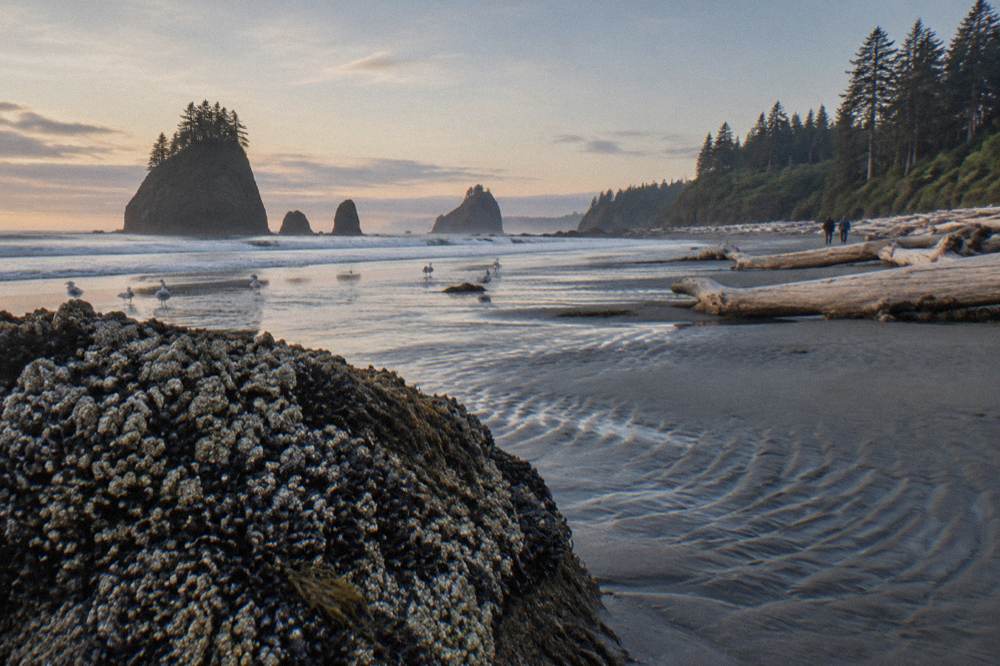
One coastal note that matters for planning: Mora Road is closed to all traffic at the campground and Rialto Beach is not accessible via Mora Road during repairs of severe winter flood damage, per the park's alerts. Some listings in the region name Rialto Beach; anyone considering one should confirm the operator's current route on the listing before booking. Ruby Beach, Kalaloch and Beach 4 are on Highway 101 and are the coastal stops to rely on.
When Is The Best Time To Visit Forks?
July and August are the driest and most popular months, with the park's biggest crowds and the most reliable road access, while September offers lighter traffic and still-good weather. Winter is quiet, very wet and beautiful in its way, but Hurricane Ridge Road runs only Friday through Sunday and holiday Mondays then, and the Hoh visitor center is closed January through early March.
The seasonal rhythm is driven by the rain. Summer brings the long days and the lowest monthly rainfall, roughly two inches in July and August in this region, and that is when the tour calendar is fullest and the Hoh lots fill earliest. Fall is the connoisseur's window: crowds thin, the rainforest turns deeper green under returning moisture, and the salmon start jumping at Salmon Cascades in late October. Winter suits travelers who want moody, empty trails and do not mind 10 inches of monthly rain in December and January.
Hurricane Ridge, the park's high-country destination about two hours northeast of Forks by road, runs a reduced winter schedule: the road is open Friday through Sunday and holiday Mondays, weather permitting, uphill traffic 9 a.m. to 4 p.m., all vehicles below the Heart O' the Hills entrance station by 5 p.m., and tire chains must be carried from November 1 through April 1. The road is closed on Christmas Day. None of this is a reason to skip winter, but it is a reason to plan around the park's hours and seasons page rather than assume summer access year-round.
| Season | Weather In Forks Country | What To Expect |
|---|---|---|
| July to August | Driest months, roughly 2 inches of rain each | Biggest crowds, fullest tour calendar, arrive early at the Hoh |
| September | Cooling, light rain returns | Lighter crowds, good trail conditions |
| October to November | Wet, salmon runs peak | Salmon Cascades leaping coho, quiet coast |
| December to March | Wettest, about 10 inches a month | Empty trails, reduced Ridge road schedule, Hoh center closed part of winter |
How Much Does A Forks Area Tour Cost?
Guided tours touching Forks and the surrounding park run from $255 to $396 per person for day trips out of Seattle or Forks, with the Twilight-themed day at from $335 per person. Multi-day treks from Forks run from $2,000 to $2,400 per person with gear and meals included. Private and small-group day options elsewhere on the roster span from $110 per person to $485 per person depending on group size and inclusions.
The price differences track inclusions more than quality. The Forks And Sol Duc Day Trip at from $255 per person and the Twilight Forks And Park Day at from $335 per person are both 1-day Seattle departures with hotel or listed pickup, while the Forks Small-Group Hike at from $396 per person departs Forks itself, runs 6 to 8 hours and includes snacks, park entry fees and a medically trained naturalist guide. At the trek end, the 4-Day North Coast Backpacking and the 4-Day Seven Lakes Basin Trek both list from $2,000 per person, and the 5-Day Hoh And Blue Glacier Trek lists from $2,400 per person, each with backpacks, sleeping kits, tents and meals included.
Review pools on the Forks-specific products are small, from 4 to 14 reviews, so this site makes no star claims for them. The larger Seattle day-tour operators carry bigger pools: the All-Inclusive Naturalist Day Tour is rated 4.9 across 1,067 reviews, and the Rainforest And Beach Highlights tour 4.8 across 134 reviews. Where a price or rating is not printed here, check the listing.
Is Forks Worth Visiting If You Are Not A Twilight Fan?
Yes, because the Twilight connection is the thinnest layer of what Forks offers. The town is the most practical base on the peninsula's west side for the Hoh Rain Forest, the Kalaloch coast and the Sol Duc Valley, and the surrounding country stands on its own as some of the wettest, greenest landscape in the lower 48. Fans get a bonus; everyone else gets a superb park gateway.
Consider the itinerary a non-fan would build from Forks: a morning in the Hoh Rain Forest on the Hall of Mosses and Spruce Nature loops, an afternoon on Ruby Beach among the sea stacks, and a Sol Duc Falls walk or a hot springs stop on the way back east. Nothing in that day mentions the novels, and nothing in that day is diminished by them. The town's restaurants and motels serve both audiences equally, and the Olympic National Park Tours roster reflects the split: some products lean into the Twilight theme, most simply use Forks as the geography.
The one honest caution is that Forks is a small town, not a destination resort. Travelers who want fine dining, nightlife or a walkable historic district will not find them. What Forks sells is position: rainforest to the southeast, coast to the south and west, and a two-hour drive to Port Angeles and Hurricane Ridge to the northeast. For readers whose real question is whether the whole park justifies the trip, the Mount Rainier versus Olympic comparison works through that decision in detail.
Common Questions About Forks
Is Forks From Twilight A Real Town?
Yes. Forks is a real, working timber town on the west side of the Olympic Peninsula, and the novels set their story there because the place exists. Visitors find a small community with themed signage and a visitor center, surrounded by Olympic National Park's rainforest and coast.
What Is Forks, Wa Famous For?
Forks is famous for the Twilight association and for rain, with NOAA climate normals recording 101.32 inches of precipitation a year. Before the novels it was known for timber and steelhead fishing, and it remains a working logging town.
Is Forks The Rainiest Place In The Us?
Not quite, but it is close. Forks averages 101.32 inches of precipitation a year, while the nearby Hoh Rain Forest averages 140 inches, making the park's western valleys the wettest country in the lower 48 and Forks the doorstep to it.
How Far Is The Hoh Rain Forest From Forks?
The Hoh Rain Forest is under an hour from Forks via Upper Hoh Road, an 18-mile road off Highway 101. Port Angeles is about two hours away, so Forks is the closest practical base for the valley.
Can You Visit Forks And Olympic National Park In One Day From Seattle?
Yes. The Twilight Forks And Park Day runs from $335 per person as a 1-day tour with hotel or listed pickup in Seattle, and the Forks And Sol Duc Day Trip runs from $255 per person. Expect a very full day, since the listings run about 10 to 13 hours door to door.
When Is The Best Time To Visit Forks?
July and August are driest and busiest, September is quieter with good conditions, and winter is wet but atmospheric. In winter, Hurricane Ridge Road runs only Friday through Sunday and holiday Mondays, and the Hoh visitor center is closed January through early March.