Do You Need Bear Spray In Olympic National Park?
Bear spray is not required in Olympic National Park. Here is what the park actually asks hikers to carry, store and do around black bears, elk and cougars, and where guided hikes fit in.
Do You Need Bear Spray In Olympic National Park?
No, bear spray is not required for hiking in Olympic National Park, and most day hikers never carry it. The park's own safety guidance centers on food storage and distance rather than spray: black bears are the only bear species here, there are no grizzlies on the Olympic Peninsula, and the rules that matter are the food-storage requirements and the 100-foot minimum distance from elk.
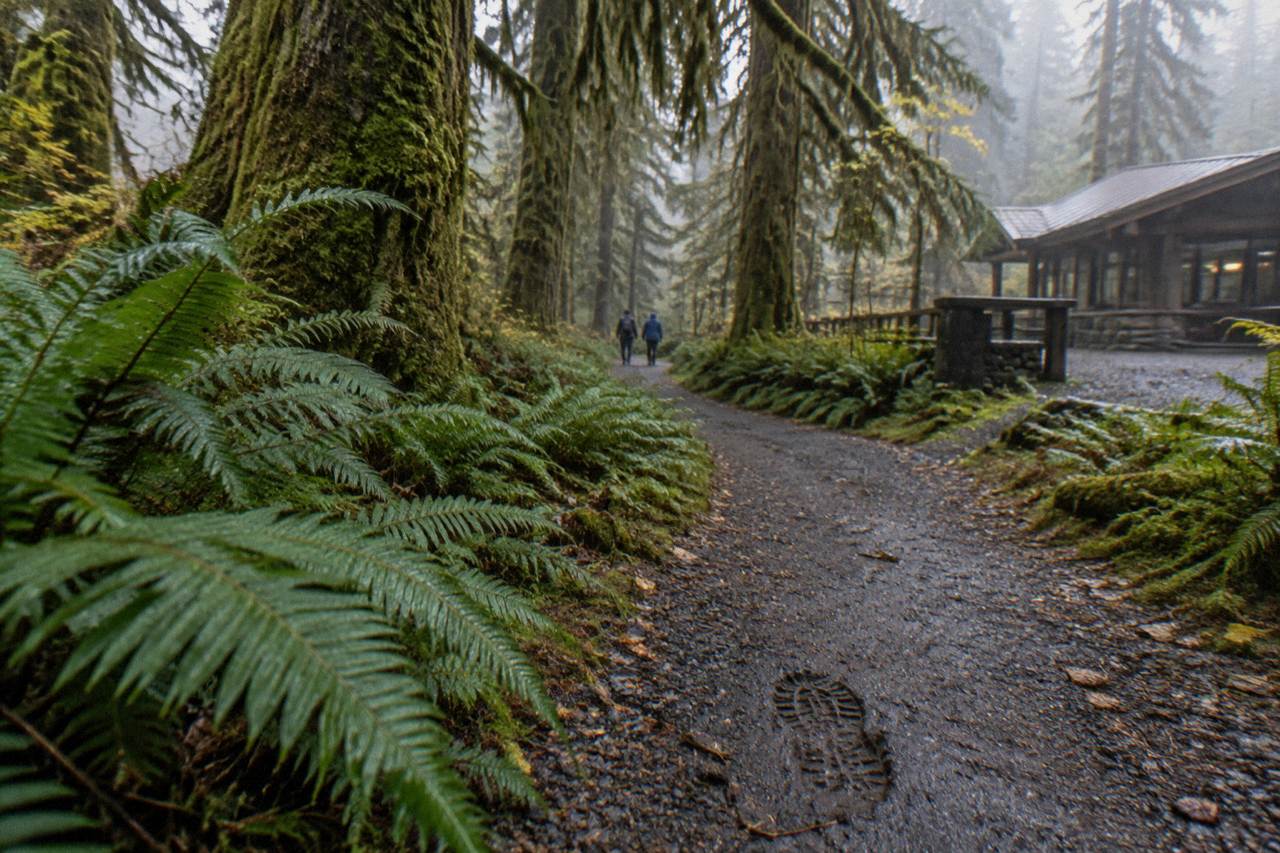
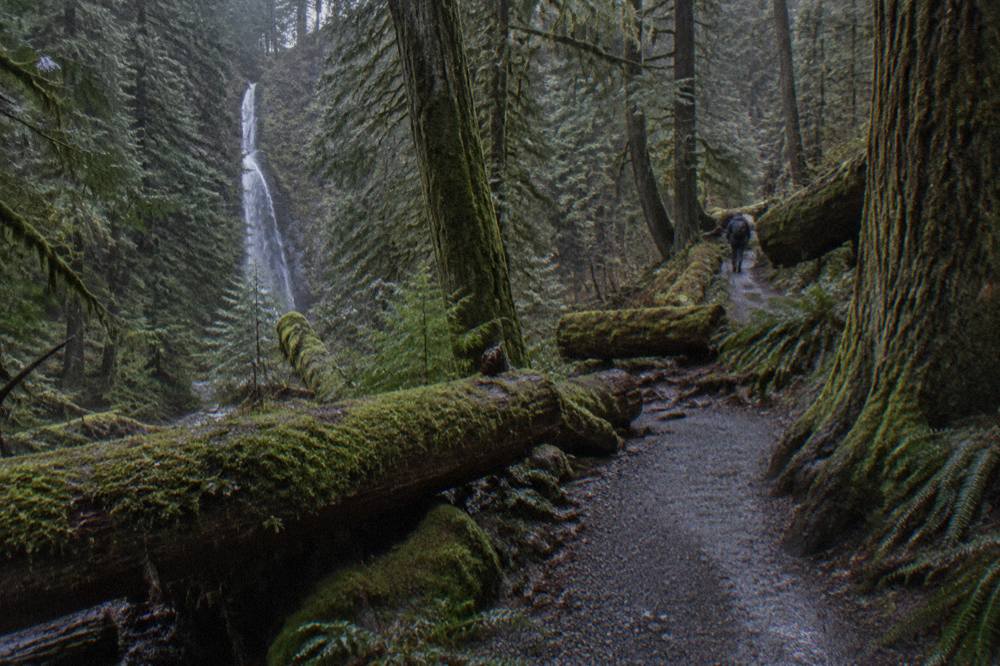
That answer surprises people arriving from grizzly country. In parks like Glacier or Yellowstone, spray is standard kit and rangers may treat an unarmed hiker as unprepared. Olympic National Park is a different ecosystem with a different bear problem, or rather, with barely a bear problem at all. Black bears here live in riparian bottoms, coastal strips, subalpine meadows and old forest, and the park's own species guidance notes they can turn up almost anywhere, but encounters on trail are uncommon and attacks are rarer still. If you'd like to wander through the kind of old growth where those bears actually live, our guide to the Hoh's moss-draped trails is a good place to start.
What the park manages hard is food. A bear that finds a cooler or a dropped granola bar becomes a conditioned bear, and conditioned bears get destroyed. That is why every published rule about wildlife in Olympic bends toward one instruction: secure your food, your trash and anything scented, at all times, everywhere in the park. Rangers enforce this more readily than almost anything else a day visitor does.
There is also a practical layer the first-page Google results rarely mention. Much of the hiking here is guided, and guided products shift the wildlife burden entirely. A trip like the Forks Small-Group Hike puts a medically trained naturalist guide between you and every decision, food included, and the All-Inclusive Naturalist Day Tour from Seattle, rated 4.9 across 1,067 reviews, does the same on a full-day loop from the city. If your question is really "will I be safe," the honest answer is that the park's systems, and its licensed guides, do most of the work.
Which Animals Live In Olympic National Park?
Black bears are the only bear species in Olympic National Park; grizzly bears did not occur on the Olympic Peninsula and are absent from the park. Mountain goats have been removed through active management. The animals you are likely to meet on a trail are black bears, Roosevelt elk and deer, and the park asks visitors to stay at least 100 feet from elk.
The Roosevelt elk herd here is described by the park as the largest fully wild herd in the Pacific Northwest, and the Hoh Rain Forest is one of its favorite haunts. An elk at 100 feet sounds generous until you meet one standing in the middle of the Hall of Mosses loop, which happens. Three bus lengths is the park's own yardstick, and it applies in both directions: an elk that moves toward you is not being friendly, it is being an elk, and you give ground.
Cougars live in the park too, though almost nobody sees one. The standard guidance for a cougar encounter mirrors the bear advice: stand tall, face the animal, speak loudly, back away slowly, and pick up small children without bending fully over or turning your back. Running is the one universal mistake, it triggers chase instinct in both species.
For a fuller breakdown of the park's bear species and why grizzlies never ranged onto the peninsula, the companion piece on the park's bear species explained walks through the record in detail. The short version for pack-planning purposes: your bear plan in Olympic is a food plan.
How Do Food Storage Rules Work In The Park?
Yes, food storage is the single most enforced wildlife rule in Olympic National Park. All food, trash and scented items must be secured at all times parkwide, in a hard-sided vehicle, a park food locker, or an approved bear-resistant canister. On every overnight wilderness trip a park-approved Animal Resistant Food Container is required, and rangers check permits and canisters at trailheads and camps.
The day-use side of this rule is the one visitors break most, usually without noticing. A lunch bag on a picnic table at Lake Crescent while you walk to the shore is a violation, and a scented one in a soft-sided daypack left on a beach log is worse. Hard-sided means a car trunk or vehicle interior with the windows up, or a locker where the campground or trailhead provides one.
The overnight side is stricter still. Every wilderness camper carries a canister from the park's approved model list, which names specific brands and models the park has actually tested. A "bear bag" hung from a branch does not qualify in Olympic, and hanging food is treated as non-compliance rather than a good-faith effort. Bears and other wildlife stay active year-round here, which is why the rule has no seasonal let-up. If these strict rules have you picturing grizzlies, the truth about grizzly bears in Olympic National Park explains which bears and other wildlife you might actually meet on the trails.
| Rule | What it requires | Where it applies |
|---|---|---|
| Secure food and scented items | All food, trash and scented items locked in a hard-sided vehicle, park locker or approved canister, at all times | Everywhere in the park, day and night |
| Bear canister for overnights | A park-approved Animal Resistant Food Container carried on every wilderness overnight | All backcountry camps |
| Campground food lockers | Food stored in the locker provided, not in tents or soft vehicles | Frontcountry campgrounds |
| Distance from wildlife | At least 100 feet from elk and other animals | All trails, meadows and beaches |
Guided trips absorb most of this. The Forks Small-Group Hike, from $396 per person for 6 to 8 hours out of Forks, includes snacks, a selection of beverages and park entry fees; guests pack their own lunch, with the guide handling storage and timing. One guest review from Curtis sums up the difference it makes: "I am Vegan and Khadijah was very accommodating with snacks & delicious lunch." When the food is the operator's problem, the food rules are the operator's problem too.
For travelers matching this trip to the wider region, the hub of Olympic rainforest and coast tours collects the Forks-area departures in one place, which is the right corner of the map for anyone asking wildlife questions on the western side.
Do You Need A Permit And Bear Canister For Overnight Hikes?
Yes, every overnight stay in the Olympic backcountry needs a wilderness permit, booked through Recreation.gov, and the permit carries the canister requirement with it. The fee is $8 per person per night plus a $6 non-refundable reservation fee per permit, youth 15 and under are free, and most quota areas cap groups at 12. Summer-season permits release April 15 at 7 a.m. Pacific.
Permits are required year-round, not just in summer, and the summer release day in mid-April has become a small event of its own. Quota areas include Sol Duc and the Seven Lakes Basin, Grand Valley, Royal Lake and the Ozette coast, and the popular routes fill within hours of release. If your heart is set on the High Divide Loop, the park's wilderness reservations page spells out the timing and the quota maps.
The canister rule rides along with the permit. Your reservation confirms you accepted the food-storage terms, and rangers at the Wilderness Information Center in Port Angeles, reachable at 360-565-3100, can answer route-specific questions before you commit (see Port Angeles Whales). Group size matters here too: twelve is the ceiling in most places, and kids 15 and under are counted toward it even though they pay nothing.
| Overnight cost | Amount | Notes |
|---|---|---|
| Wilderness permit, per person per night | $8 | Ages 16 and up |
| Permit reservation fee | $6 per permit | Non-refundable |
| Youth 15 and under | Free | Still counted toward group size of 12 |
| Frontcountry campground | $15 to $24 a night | Varies by location and season |
| RV dump station | $10 per use | Where provided |
Two roster products handle all of this for you. The 4-Day North Coast Backpacking trip, from $2,000 per person departing Forks, includes backpacks, sleeping bags and pads, tents, trekking poles and all meals; tips and the Olympic National Park entrance pass cost extra, with no reviews on the listing yet. The 5-Day Hoh And Blue Glacier Trek, from $2,400 per person, adds permits and campsites into the price, with a small pool of 4 reviews. On both, the operator secures the permits and the guides carry the food plan.
The backpacking corner of the site, Olympic multi-day and backpacking tours, gathers the multi-day options, including a Two-Day Private Tour And Hike from $1,705 per group that comes with a medically trained naturalist guide and two lunches, held by a small pool of 3 reviews.
Do Guided Hikes Handle Bear Safety For You?
Largely, yes. A licensed guide does not cancel the food rules for you personally, but guided hikes shift most wildlife planning to someone who works in the park: guides hold the permits, choose routes around active animal areas, and brief guests on distance and food discipline. On a guided trip the canister, the itinerary and the food handling are the operator's responsibility.
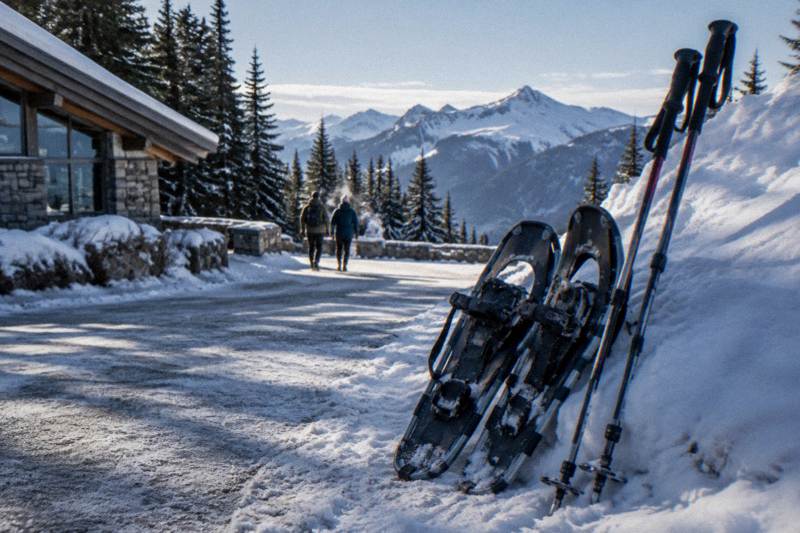
This is the quiet argument for guided hiking in Olympic, and it applies even on short trips. A naturalist guide who walks the same drainages all season knows where the elk herds bed down and which campsite had a bear visit last week. That knowledge is not something a spray can substitute for. The Small-Group Hike Or Snowshoe Day, from $348 per person with Seattle hotel pickup, rated 4.9 across 145 reviews, runs guided hikes or winter snowshoe treks tailored to the group, with a Daniel review capturing the trade: "The tour was more expensive than we would normally choose, but it ended up being well worth the cost." The same logic scales up to the All-Inclusive Naturalist Day Tour, from $368 per person, whose listing features a professional naturalist guide with local knowledge of the forest. Other pages covering the same trip are gathered on Olympic National Park Tours.
| Guided option | From price | Duration | Departs | Reviews |
|---|---|---|---|---|
| Forks Small-Group Hike | $396 per person | 6 to 8 hours | Forks | 4.5 across 11 reviews |
| Small-Group Hike Or Snowshoe Day | $348 per person | 12 hours | Seattle, pickup offered | 4.9 across 145 reviews |
| 4-Day North Coast Backpacking | $2,000 per person | 4 days | Forks | No reviews yet |
| Two-Day Private Tour And Hike | $1,705 per group | 2 days | See listing | 5.0 across 3 reviews |
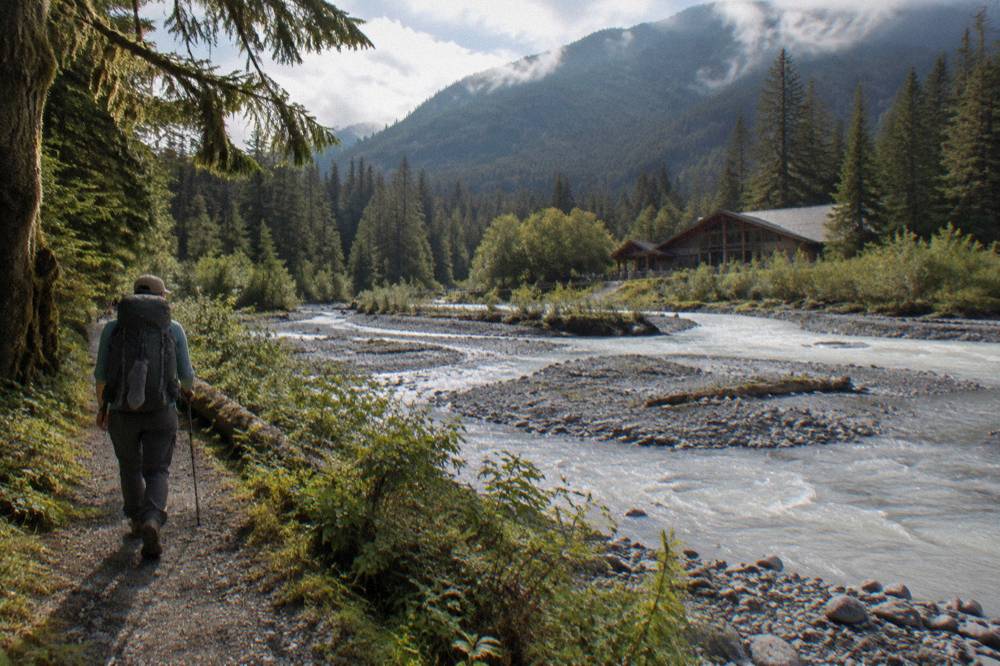
Guides are also the answer for the traveler who reads the food rules and feels their stomach drop. On the 4-Day Seven Lakes Basin Trek, from $2,000 per person, all group camping gear and three dinners, three breakfasts and two lunches are included, which means the food never sits in your tent. The Sol Duc, Lake Crescent And Ridge Day, from $195 per person out of Port Angeles, rated 5.0 across 83 reviews, includes park entrance fees and a commercially authorized guide, and a Ramya review singles out the guide's local fluency.
What Should You Do If You Meet A Black Bear?
Keep your distance, stay calm, and do not run. Olympic's black bears generally avoid people; the park's advice for an encounter is to stand your ground, speak firmly, back away slowly, and give the animal a clear escape route. Never approach, feed, or photograph a bear at close range, and report aggressive behavior to a ranger.
The mechanics matter less than the temperament. A black bear that knows you are there and keeps feeding, or keeps walking, is not a threat, it is a neighbor. Make yourself known on blind corners and in thick brush, which in the Hoh is most of the trail, by talking or clapping. If the bear stands on its hind legs, it is looking, not charging; it is trying to identify you.
The failures the park sees are almost always human-initiated. Someone edges closer for a photograph, or leaves a pack on the ground while they step to a viewpoint, and the lesson costs the bear more than the person. The food rules in the section above exist precisely because a fed bear stops being avoidable. Keep your pack on your back, your snacks sealed inside it, and your distance generous, and the encounter you remember will be the good kind.
How Does Weather Affect Your Safety Kit?
Weather changes your kit more than bears do. Hurricane Ridge traditionally records 30 to 35 feet of snow a year and snow can appear in the high country as early as late September, so layers, rain gear and traction matter more than spray on most trails. The park's road and weather recording at 360-565-3131 gives live status before you leave.
Rain is the park's defining condition. Annual precipitation runs 100 to 170 inches on the coast and in the western valleys, the Hoh averages about 140 inches a year, and even Port Angeles out near the dry side sees its share. Wet hypothermia weather in July is a real scenario on the coast, and the park's weather page is blunt about packing for all four seasons regardless of the forecast you left home with.
Winter adds rules of its own. Above the Heart O' the Hills entrance station, from November 1 through April 1, every vehicle must carry tire chains, including four-wheel drives. Hurricane Ridge Road runs on a limited winter schedule, Friday through Sunday plus holiday Mondays, weather permitting, with uphill traffic roughly 9 a.m. to 4 p.m. and everyone below the station by 5 p.m. These are published schedules, not day-to-day status, and for that the park conditions page and the recorded line carry the live word.
What Else Belongs In Your Daypack?
Beyond food storage and layers, the kit that matters in Olympic is unglamorous: a map or offline route on your phone, more water than you think you need, a headlamp, a first-aid kit, and tide information if your route touches the coast. The park publishes full trail and tidepool guidance, and a guide or visitor center can flag anything route-specific before you set out.
The tide item deserves its own sentence. Coastal stretches can become impassable at high water, and the park tells hikers to check tides before any beach walk, with charts posted at stations and a standing warning about sneaker waves. For tidepooling, the best viewing happens at tides lower than one foot, on rocks slick with algae, in sturdy shoes.
The rest of the list is standard trail craft, and the companion guide on what to bring on an Olympic tour itemizes it against the seasons. One Olympic-specific note: leave the bear bells and the pepper spray money in your pocket, and spend it on a dry bag for the coast and real waterproofs for the forest. If a purchase genuinely eases your mind, a guided day such as the Hurricane Ridge And Lake Crescent Day, from $188 per person out of Seattle, rated 4.6 across 220 reviews, puts the planning, the driving and the wildlife judgment in professional hands for 11 hours.
Common Questions About Bear Spray In Olympic National Park
Do you need bear spray in Olympic National Park?
No. Bear spray is not required and is carried by a minority of hikers here. Black bears are the only bear species in the park, there are no grizzlies on the Olympic Peninsula, and the park's enforced safety rules concern food storage and keeping at least 100 feet from elk and other wildlife.
Are there grizzly bears in Olympic National Park?
No. Grizzly bears did not occur on the Olympic Peninsula and are absent from the park. The park's species guidance is explicit on this point, which is why Olympic's bear advice differs so sharply from parks in the northern Rockies.
Is bear spray allowed in Olympic National Park?
The park's published wildlife guidance does not require spray, and its enforcement attention goes to food storage instead. If you choose to carry spray, treat it as you would any aerosol deterrent: know how to use it, and never deploy it around food or camps as a repellent, since residue can attract bears.
What do you do with food on a day hike?
Keep all food, trash and scented items sealed inside your pack and on your body at all times. Never leave a pack unattended on a beach or trailside. The requirement to secure food around the clock applies parkwide, not just at campgrounds.
Do you need a bear canister for backpacking in Olympic?
Yes. A park-approved Animal Resistant Food Container is required for every overnight wilderness stay, and the permit you book on Recreation.gov carries that requirement. Hanging food in a tree does not qualify. Guided multi-day trips, such as the 4-Day North Coast Backpacking from $2,000 per person, include the gear and the food plan.
Do guided hikes make bear safety easier?
Yes, in practice. Licensed guides hold the permits, carry or manage the food, and choose routes with current wildlife activity in mind. Trips like the Forks Small-Group Hike from $396 per person and the Small-Group Hike Or Snowshoe Day from $348 per person shift the wildlife planning to a naturalist who works in the park.