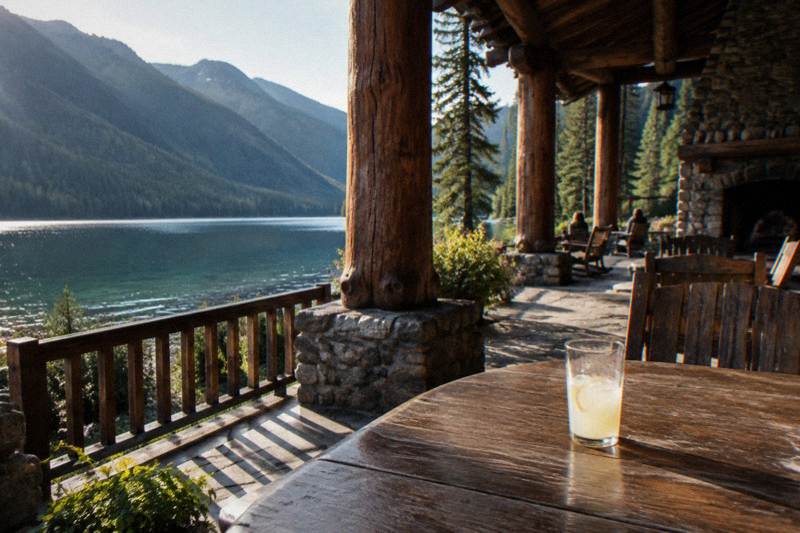
Whale Watching In Port Angeles: Season, Boats And What You See
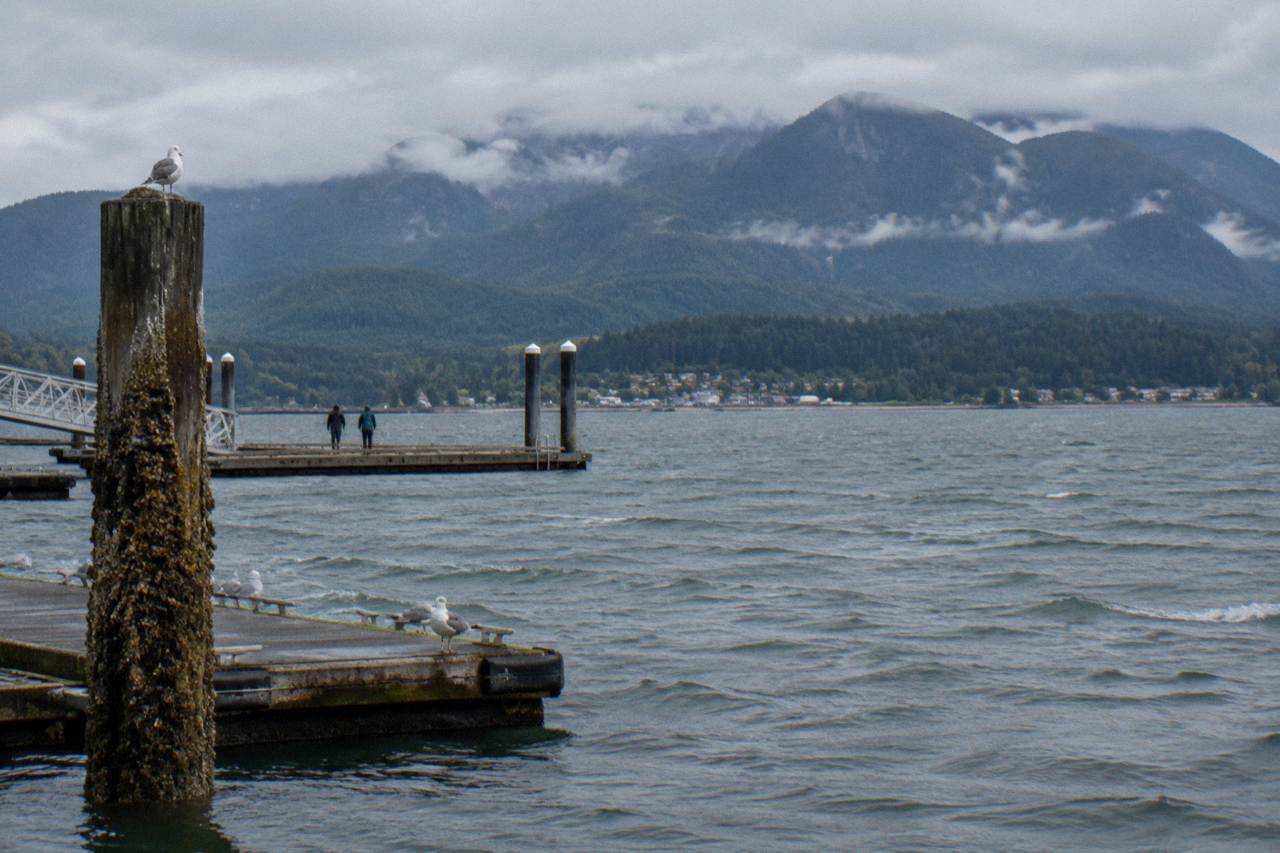
Port Angeles sits on the Strait of Juan de Fuca, one of the most reliable stretch of water for whale sightings in the Pacific Northwest, and it doubles as the main gateway to Olympic National Park.
Short answer
Port Angeles whale watching runs as half-day boat trips from the town wharf, with Puget Sound Express the established operator. Humpbacks, Bigg's (transient) orcas and other marine mammals are the staple sightings. A boat trip takes about half a day, which leaves room to bundle it with a guided park tour departing from Port Angeles.
Port Angeles is the only town in the Pacific Northwest where a whale watching boat and a mountain road share the same harbor. The Strait of Juan de Fuca funnels nutrient-rich water past the town wharf, and humpbacks, orcas, seals, porpoises and seabirds move through it on predictable seasonal patterns. Twenty minutes south of the docks, Hurricane Ridge Road climbs into Olympic National Park. Very few gateways in the country let you watch a humpback feed in the morning and stand at 5,242 feet the same afternoon.
This guide covers the season, the species, the boats and the one decision most visitors get wrong: treating the whale trip as a standalone half day when it slots neatly in front of, or behind, a guided park tour departing from the same town. The land-side options matter here, because Port Angeles is the departure point for several of the strongest tours in the region.
When Is Whale Watching Season In Port Angeles?
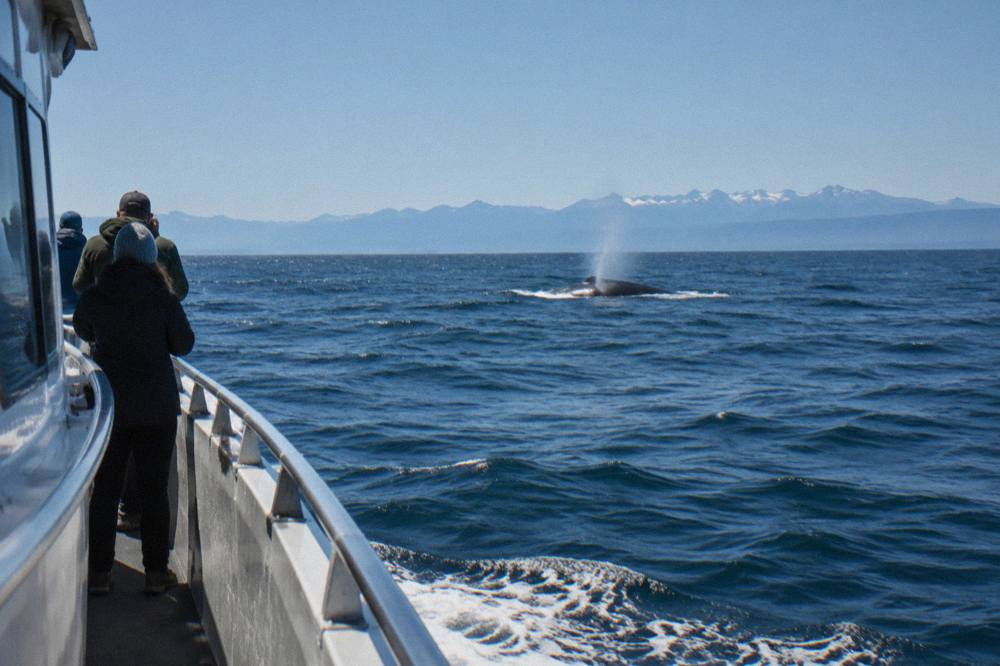
Whale watching season in Port Angeles runs from spring through early fall, with boat trips departing the town wharf in the warmer months when whale activity is strongest. Humpbacks are the marquee species through the operating season, gray whales pass through the strait on their spring migration, and Bigg's (transient) orcas appear unpredictably year round, though trips pause in the off-season, so check the operator's schedule before booking.
The season structure matters for planning. Half-day whale watching trips from Port Angeles Wharf, run by the established operator Puget Sound Express, operate as a warm-month pattern, with daily departures through the fall shoulder season before boats pause for winter. That rhythm matches the park's own calendar: June through September are the most popular months for both the water and the mountains, and the September overlap, when crowds thin but humpbacks are still feeding, is arguably the sweet spot.
Spring brings gray whales close to the Washington coast on their northbound migration, though they hug open coastline more than the strait. Summer belongs to humpbacks, which feed in the strait for weeks at a time, and to the possibility of orcas. Bigg's orcas, the mammal-hunting population of the Salish Sea, do not follow a schedule; they chase prey, and a sighting is a matter of timing and a sharp-eyed captain. Any operator promising a specific species on a specific day is overpromising, and the honest ones frame every trip as a wildlife cruise with whales as the headliner rather than a guarantee.
Weather shapes the season as much as biology does. The strait is exposed water, and the park's own weather page notes that July and August are the driest, most settled months, while snow can appear in the high country as early as late September. A calm morning on the water paired with an afternoon at Hurricane Ridge works best in that July-to-September window, when both halves of the day tend to cooperate.
| Season | Typical sightings from Port Angeles | Trip availability | Notes for planning |
|---|---|---|---|
| Spring | Gray whales on migration, early humpbacks, seabirds | Trips resume as weather settles | Pair with waterfalls at full spring flow |
| Summer | Humpbacks feeding, Bigg's orcas possible, seals, porpoises | Daily departures, the busiest stretch | Book the park tour ahead; quota areas fill |
| Early fall | Humpbacks still feeding, orcas possible, quieter water | Daily departures through the shoulder season | Lighter crowds in the park, best combined value |
| Winter | Orcas possible but unpredictable | Boat trips paused or reduced | Focus the day on Hurricane Ridge winter access instead |
What Whales And Wildlife Can You See From Port Angeles?
Humpback whales are the signature sighting in the Strait of Juan de Fuca, often feeding in the same areas for days, and Bigg's (transient) orcas are the thrilling wildcard, hunting seals and porpoises in small family groups. Gray whales pass on migration, and the supporting cast is constant: harbor seals, Steller sea lions, Dall's porpoises, bald eagles and seabird colonies. Puget Sound Express, the Port Angeles operator, advertises humpbacks, Bigg's orcas and other marine wildlife on its half-day trips.
Humpbacks are the reliable stars. Individual whales, identified by the white patterns on their flukes, return to the same feeding grounds summer after summer, and a resident-summer whale often lunges through bait balls within sight of the shore. When a humpback dives, the fluke rise is the photograph everyone on the boat is waiting for. Bigg's orcas are the other headline: unlike the salmon-eating southern resident orcas, whose numbers have declined and whose range centers farther east, Bigg's transients travel the strait in pursuit of marine mammals and their numbers have grown. A visit from a Bigg's pod is not schedulable, but captains share sightings by radio, and a trip that connects with a pod is the one people talk about for years.
The strait's non-whale wildlife is worth the ticket on its own. Harbor seals haul out on rocks and buoys, Steller sea lions gather at navigational markers, Dall's porpoises bow-ride in quick bursts, and the bird life ranges from pigeon guillemots to bald eagles perched on the shoreline. Good naturalist guides, the kind who narrate the whole trip rather than only the whale stops, turn the transit into the best marine biology lecture you will ever get.
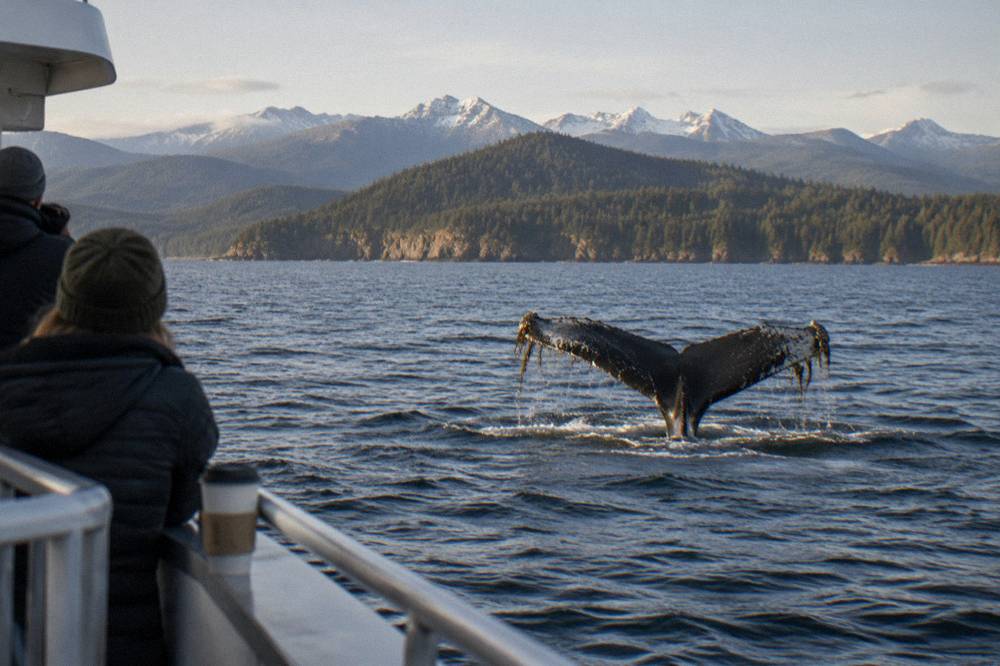
One honest caveat belongs here: no operator can guarantee a whale. Conditions, tides and fish movement decide the day. If the whales stay away, you still get the strait, the Olympics rising behind Port Angeles, and Vancouver Island on the horizon, which is a decent consolation.
For readers whose wildlife interest extends inland, the park's own animal list is a different cast entirely. Black bears, Roosevelt elk and the intertidal life of the coast are the land-side draws, and several guided tours in the roster pair naturally with a whale morning, a comparison covered later in this guide.
Which Boat Operators Run Whale Watching From Port Angeles?
Puget Sound Express is the established whale watching operator running half-day trips from Port Angeles Wharf, with humpbacks, Bigg's (transient) orcas and other marine wildlife as the advertised sightings. The half-day format is the standard trip, departing around midday in the fall shoulder season. Booking is through the operator's own channels, and prices, schedules and seasonal start and end dates are printed on the live listing.
The half-day structure is what makes Port Angeles whale watching so stackable. A trip that occupies roughly four hours, with check-in at the wharf downtown, leaves the morning or the afternoon free for the park. That is unusual among whale watching ports, many of which base their fleets a longer transfer from the mountains. Here the wharf and the Hurricane Ridge Road turnoff are a short drive apart.
This guide does not print boat prices or sailing dates, both of which shift with the season and the operator's calendar. The same rule applies to the guided tours compared on this site: every price printed in this article comes from the tour listings, and whale trip fares come from the operator's own booking page.
What the tour roster does add is the land-side half of the day. Three Port Angeles departures anchor the pairing options, and they are among the strongest listings on the site:
The Sol Duc, Lake Crescent And Ridge Day, from $195 per person for a 9-hour loop, is rated 5.0 across 83 reviews and includes the Olympic National Park entrance fee, roundtrip van transport and a commercially authorized guide. Ramya_V's review of that tour captures the pairing logic: "10/10 experience! I especially loved the views of Hurricane Ridge. Our tour guide, Eric, was so friendly and fun too." The Lake Crescent Half-Day Tour, from $110 per person for 4 hours, fits a smaller pool of 39 reviews and covers the lake shoreline with entrance-fee handling left to the listing. The Hoh And Rialto From Port Angeles trip, from $195 per person for 9 hours, is rated 5.0 across 172 reviews; its listing names Rialto Beach, but Mora Road to Rialto is closed to traffic during flood-damage repairs, so confirm the operator's current coastal route on the listing before booking. A reviewer, Patricia_S, describes the rainforest half: "Great day experiencing the beautiful rainforest. The walk was easy and can be experienced by almost anyone."
The practical arithmetic: a whale trip is a half day, and every tour above is either a half day or a 9-hour full day. Whale morning plus 9-hour tour is a long day, better suited to splitting across two days of a trip, which the pairing section below works through.
How Long Does A Whale Watching Trip From Port Angeles Take?
A Port Angeles whale watching trip is a half-day outing, roughly four hours on the water plus check-in at the wharf, run by Puget Sound Express as its standard format. Departures cluster around midday in the shoulder season, which frees the morning for a park tour or an early start on a trail. Count the full experience, parking, check-in, the cruise and the return, as about half a day when planning the rest of your schedule.
Four hours is long enough to reach the feeding grounds in the eastern strait, work a whale or two, and cruise past seal and sea lion haul-outs on the way home, without the fatigue of a full-day offshore trip. It is also short enough that seasickness-prone passengers usually manage fine, though medication taken an hour before boarding is still the standard advice.
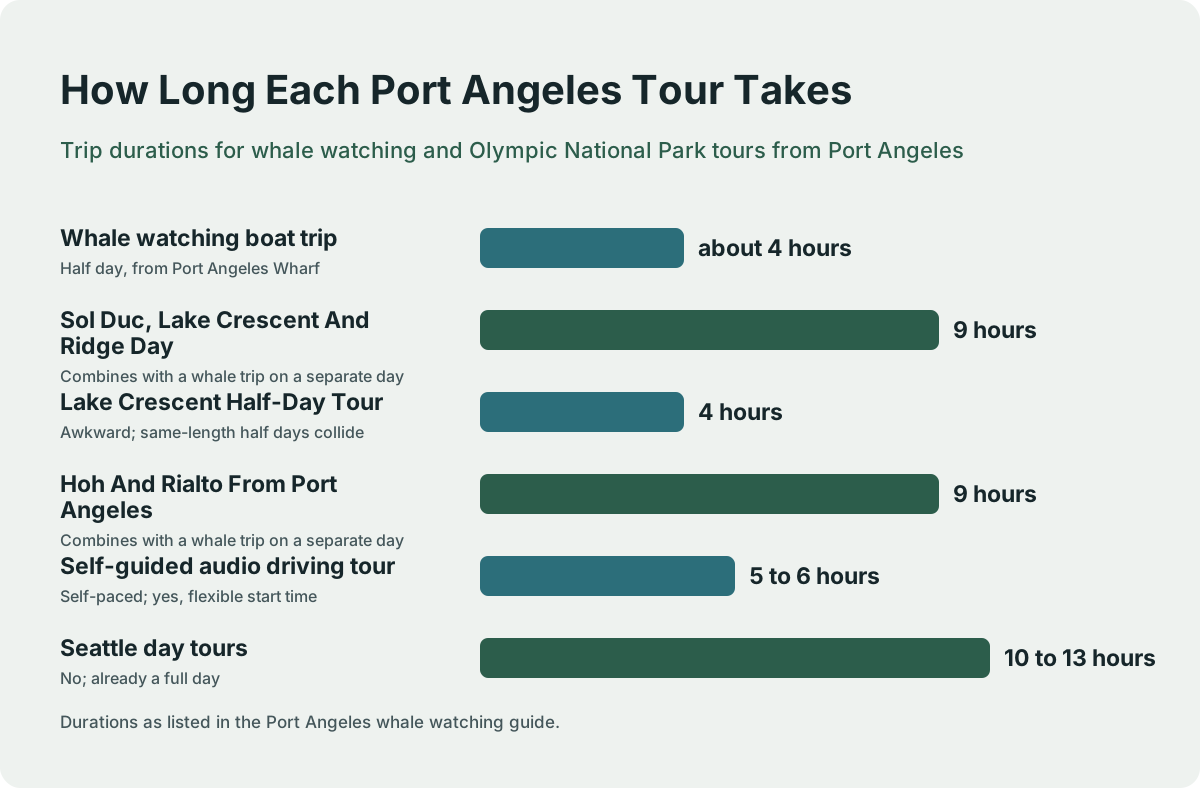
The timing question is really a scheduling question. A midday departure means the morning is the natural slot for the park. The Lake Crescent Half-Day Tour from Port Angeles runs 4 hours, which collides with a midday boat, so the clean combinations are a whale trip plus a full-day tour on separate days, or a whale trip plus a free morning of self-guided sightseeing. Lake Crescent is about 18 miles west of Port Angeles, close enough that a pre-boat scenic drive to the lake shore and back is a realistic morning.
For travelers staying overnight in Port Angeles rather than day-tripping from Seattle, the two-day stack is the comfortable version: whales and tide pools one day, mountains and rainforest the next. Port Angeles also anchors the Seattle day-tour routes, which cross Puget Sound by ferry and reach the peninsula in a long but well-run day; the Seattle departures run 10 to 13 hours on the listings, so they are their own commitment and don't combine with a boat trip on the same day.
| Option | Duration | Departure point | Combines with a whale trip? |
|---|---|---|---|
| Whale watching boat trip | Half day, about 4 hours on the water | Port Angeles Wharf | The anchor of the day |
| Sol Duc, Lake Crescent And Ridge Day | 9 hours | Port Angeles | Yes, on a separate day |
| Lake Crescent Half-Day Tour | 4 hours | Port Angeles | Awkward; same-length half days collide |
| Hoh And Rialto From Port Angeles | 9 hours | Port Angeles | Yes, on a separate day |
| Self-guided audio driving tour | 5 to 6 hours, self-paced | Port Angeles, your own car | Yes, flexible start time |
| Seattle day tours | 10 to 13 hours | Seattle | No; already a full day |
Can You Pair Whale Watching With A Day In Olympic National Park?
Yes, and it is the single best reason to base yourself in Port Angeles. A half-day whale trip from the wharf leaves the rest of the day free, and the same town is the departure point for guided tours covering Hurricane Ridge, Lake Crescent, Sol Duc and the Hoh, so you can do whales one day and a 9-hour guided loop the next, or combine the boat with a self-paced driving tour whose start time you control.
The full-day tours from Port Angeles are built around exactly this base. The Sol Duc, Lake Crescent And Ridge Day strings together Hurricane Ridge at 5,242 feet, the Sol Duc Falls overlook walk and Lake Crescent in a single 9-hour loop from town, with the park entrance fee included in the from price of $195 per person. Hurricane Ridge Road is 17 paved miles south of Port Angeles, so the tour's mountain leg starts minutes after pickup. The park's Lake Crescent page places the lake about 18 miles west of Port Angeles, which is why the lake and the ridge combine so easily in one day.
The Self-Guided Audio Driving Tour deserves a special mention for whale watchers. At from $17 per group for 5 to 6 hours, with GPS-triggered audio stories that work offline, it is the one park option whose schedule bends around a fixed boat departure. Start it after the whale trip returns and let the narration carry you along Lake Crescent's shore, or run the first half in the morning and finish after the boat. Its review pool stands at 41 reviews, a lean review pool so far, but the format is the flexible one.
Travelers with more time and a taste for the coast can push the pairing further. The Forks Small-Group Hike, from $396 per person for 6 to 8 hours departing Forks, includes a medically trained naturalist guide, park entry fees, snacks and beverages; pack your own lunch. A reviewer, Curtis_F, describes the terrain covered: "Fantastic tour of Quinault Lodge, rain forest, Ruby Beach, Sitka Spruce and Tree of Life." Note that the whale boat and the Forks hike are on opposite ends of the peninsula; combining them means an overnight in Forks or a very long drive.

The multi-day options go further still. The 4-Day North Coast Backpacking trip, from $2000 per person with all gear and meals included on the trail, turns the whole peninsula into the itinerary, and a whale trip tagged on before or after the trek is the natural bookend. The Two-Day Private Tour And Hike, from $1705 per group, adds a private guide and accommodations for a fully arranged two-day version of the same idea.
What Weather Should You Expect On The Water And In The Park?
Expect sharp contrasts: the coast and western valleys receive 100 to 170 inches of precipitation a year, Port Angeles averages 25 to 30 inches, and Hurricane Ridge traditionally records 30 to 35 feet of snow annually. The Strait of Juan de Fuca turns calmer and drier in July and August when the high country is at its best, September brings quieter water and thinner crowds, and you should dress in layers on the boat regardless of the forecast.
The marine layer is the wildcard on the water. Even a sunny August morning can start gray and flat on the strait, with the sun burning through by late morning, and the boat's wind chill is real at cruising speed. Waterproof outer layers, warm hats and gloves in the shoulder months, and sunglasses with a strap are the standard kit. On the land side, the same layers serve Hurricane Ridge, where the temperature drop from Port Angeles is noticeable even in summer.
The pairing season is July through September, with a nod to October for humpbacks still feeding before the boats pause. The park's most popular months are June through September, and October through May brings reduced hours, closed roads and winter driving rules, including the chain-carry requirement above the Heart O' the Hills entrance station from November 1 through April 1. For live status on any park road, the park's road and weather recording at 360-565-3131 is the number to call before setting out.
For readers planning the full trip, the seasonal guide on Olympic National Park Tours breaks the month-by-month tradeoffs in more depth, including the shoulder-season windows when the strait is quiet and the ridge road is still open daily.
What Wildlife Will You See Inside Olympic National Park?
Inside Olympic National Park you will see Roosevelt elk, the largest fully wild herd in the Pacific Northwest, plus black bears, the park's only bear species, since no grizzlies live on the Olympic Peninsula. Along the coast, tide pools at Kalaloch and Beach 4 reveal anemones, sea stars and urchins at tides lower than 1 foot, and salmon leap at the Salmon Cascades overlook on Sol Duc Road in late October and early November.
The elk are the reliable land sighting. The Hoh Rain Forest is a noted viewing area, and meadow edges along the park's western valleys host herds through the day. The 100-foot rule, three bus lengths, is a hard park rule rather than a suggestion, and the calmest encounters happen from inside a vehicle. Black bears roam forest and subalpine areas and are active year round; park rules require all food, trash and scented items to be secured around the clock, in hard-sided vehicles, park lockers or approved bear-resistant canisters on overnight trips (see Bear Spray In Olympic).
The marine-land overlap is the fun part of a Port Angeles base. The same strait that feeds the humpbacks feeds the salmon that leap up the Sol Duc watershed, and the same tides that set whale-feeding patterns set the tide pools. The park's tidepool guidance is specific: the best viewing is at tides lower than 1 foot, a minus tide, watch for sneaker waves, and keep children close on algae-slick rocks.
Guided tours earn their keep on the wildlife leg. A commercially authorized naturalist guide knows the meadows where elk bed down, reads the forest for bear sign and explains the intertidal zone in a way a trailhead sign never does. The Seattle departures stack that expertise with transport: the All-Inclusive Naturalist Day Tour, from $368 per person for 12 hours with a naturalist guide, guided hikes or snowshoe treks, coffee, lunch and the full-day itinerary included, is rated 4.9 across 1067 reviews, the largest review pool in the Seattle roster. Ruth_M's review names the difference a guide makes: "Marty was a wealth of information about the forest, especially the mushrooms."
How Much Does A Port Angeles Whale And Park Combination Cost?
A Port Angeles whale and park combination costs a season-shifting whale fare you must check on the operator's live listing, plus either a guided park tour from $110 per person for the Lake Crescent half day up to $195 per person for the 9-hour Sol Duc, Lake Crescent And Ridge loop, or do-it-yourself entry at $30 per private vehicle for 7 days, $15 per person on foot, free on foot for ages 15 and under.
Stacking the two is where the budget math gets interesting. A whale trip plus the $195 Sol Duc, Lake Crescent And Ridge Day, with its entrance fee included, is a complete two-day peninsula experience with no rental-car mileage on the park day. The same two days self-driven means the $30 vehicle pass, gas, parking time at full lots and your own navigation through the Hoh entrance station's metering delays, which the park warns can stretch long during day hours.
The fee-free days are the budget lever the park publishes: February 16, May 25, June 14, July 3 to 5, August 25, September 17, October 27 and November 11 all waive entrance fees for US citizens and residents. Note the tour listings that include the entrance fee make the waiver moot on those dates; the pass is already paid. The park does not accept cash for fees, so carry a card or pre-pay entry on Recreation.gov.
| Cost item | Price | Notes |
|---|---|---|
| Whale watching boat trip, half day | Check the operator's listing | Seasonal schedule, no price printed here |
| Sol Duc, Lake Crescent And Ridge Day | From $195 per person | 9 hours and entrance fee included |
| Lake Crescent Half-Day Tour | From $110 per person | 4 hours from Port Angeles |
| Hoh And Rialto From Port Angeles | From $195 per person | 9 hours and entrance fee included |
| Self-Guided Audio Driving Tour | From $17 per group | 5 to 6 hours, your own car |
| Park entry, private vehicle | $30, 7 consecutive days | Covers all occupants, card only |
| Park entry, on foot or bike | $15 per person, 7 days | Ages 15 and under free |
The Seattle option changes the math again. Seattle day tours to the park run from $178 per person (Round-Trip Day Tour With Lunch, no reviews yet) through $188 for the Small-Group Ferry Day Tour, rated 4.6 across 943 reviews, up to $368 for the all-inclusive naturalist day. Those prices include the ferry crossing and, on several listings, lunch and the park entrance fee, but they are their own 10-to-13-hour day and cannot absorb a whale trip.
Is Whale Watching In Port Angeles Worth It?
For most visitors building an Olympic trip, yes, because the half-day format costs little schedule and the strait delivers humpbacks more reliably than most whale ports deliver anything. The value rises further when the whale morning is stacked against a guided park day from the same town, turning a single boat outing into a two-day mountain-and-marine itinerary. The main caveat is seasonal: outside the operating window, the boats pause, and the trip simply is not available.
The honest framing is that a whale trip is a wildlife cruise, not a guarantee. Humpbacks feed in the strait through the season, Bigg's orcas appear when they appear, and the supporting cast of seals, sea lions, porpoises and eagles fills every trip. Travelers who frame the day that way, rather than as a specific-whale hunt, consistently rate the experience higher in the review patterns this site tracks.
The land side is the stronger guarantee. Hurricane Ridge's views, Marymere Falls and the Sol Duc Falls overlook walk are there every day the roads are open, and the guided tours that cover them carry 5.0 ratings across 83 and 172 reviews respectively on the Port Angeles departures. A two-day Port Angeles plan, whales and a ridge-to-lake loop, hedges the whole itinerary: if the strait is quiet, the mountain day still delivers.
For travelers with only one day and a hard choice, the deciding factor is what you came for. The park is the reason most people are on the peninsula, and the whale trip is the bonus that the geography makes almost free to add. Readers deciding between base towns can compare Port Angeles against Forks as a base, or dig into the guide to Hurricane Ridge tours for the mountain half of the pairing. The broader things to do in Olympic National Park guide rounds out the options.
Common Questions About Whale Watching In Port Angeles
When Is Whale Watching Season In Port Angeles?
Boat trips run from Port Angeles Wharf as a warm-month pattern, with daily departures through the fall shoulder season before a winter pause. Humpbacks are the staple sightings, gray whales pass in spring and Bigg's orcas appear unpredictably. The operator's live listing carries the current schedule.
What Whales Can You See From Port Angeles?
Humpback whales are the signature sighting, Bigg's (transient) orcas are the unpredictable highlight, and gray whales pass on migration. Harbor seals, Steller sea lions, Dall's porpoises and seabirds round out every trip.
Who Runs Whale Watching Trips From Port Angeles?
Puget Sound Express operates half-day whale watching trips from Port Angeles Wharf, advertising humpbacks, Bigg's orcas and other marine wildlife. Prices and sailing dates are on the operator's own booking page.
How Long Is A Port Angeles Whale Watching Trip?
About four hours on the water plus check-in, a half-day format that leaves the rest of the day free for Olympic National Park. Departures cluster around midday in the shoulder season.
Can You Combine Whale Watching With An Olympic National Park Tour?
Yes. Port Angeles park tours depart from the same town: the Sol Duc, Lake Crescent And Ridge Day runs 9 hours from $195 per person with entrance fee included, and the Lake Crescent Half-Day Tour runs 4 hours from $110 per person. Whales one day and the guided loop the next is the cleanest plan.
Do You Need A Tour To See Wildlife In Olympic National Park?
No, but a commercially authorized naturalist guide changes what you notice, from elk behavior to intertidal life, and several listings include the park entrance fee, lunch and transport. Roosevelt elk must be given 100 feet and all food must be secured around the clock either way.