Are There Grizzly Bears In Olympic National Park?
No, there are no grizzly bears in Olympic National Park. Here is what bears and other wildlife you may actually meet on Olympic trails, and how a nervous hiker should plan for them.
Are There Grizzly Bears In Olympic National Park?
No. There are no grizzly bears in Olympic National Park. The park's own species information is blunt about it: grizzly bears did not occur on the Olympic Peninsula and are absent from the park. Black bears are the only bear species found here. That single fact reframes almost every fear a first-time Olympic hiker arrives with, and it is worth repeating plainly.
The nervous hiker's mental picture of the Pacific Northwest often includes a grizzly. That picture comes from Alaska and from the northern Rockies, places like Glacier and Yellowstone, where grizzlies are a real trail presence with real protocols built around them. Olympic National Park sits on its own peninsula, isolated by water on three sides and by the Seattle metro area to the east. Large mammals here are effectively trapped on an island of habitat, and the grizzly was never part of that island's cast. The park covers 922,651 acres of mountains, rainforest and coast, and none of it holds a grizzly population.
This matters for planning more than most visitors realize. In grizzly country, hikers are told to make noise constantly, travel in groups, carry bear spray as standard kit, and know how to handle a defensive charge from a sow with cubs. In Olympic, the risk profile is genuinely different. Black bears here are typically shy, forest-dwelling omnivores that avoid people, and the park's guidance centers on food storage rather than confrontation. A hiker who prepares for Glacier is over-preparing for Olympic in some ways and under-preparing in others, because the park's real wildlife questions involve elk, food discipline and tide charts more than bears. If you're still weighing whether a can belongs in your pack, our bear spray guide explains what the park actually asks hikers to carry instead.
It is also honest to say what "absent" means. It does not mean a stray animal could never wander in from somewhere; it means there is no population, no breeding presence, and no realistic expectation of a grizzly sighting on any Olympic trail. The park's wildlife pages treat the species as not part of the park's fauna, and no verified grizzly record contradicts that. For a nervous hiker, the practical takeaway is simple: the bear you might, rarely, see in Olympic is a black bear, and the precautions that matter are the ordinary ones.
For anyone who would still rather not hike alone the first time, a guided option pairs well with this reassurance. The trio below covers a guided rainforest hike from Forks, a small-group hike or snowshoe day from Seattle, and a fully guided four-day coastal backpacking trip, which is the most supported way to meet the park's wilder corners.
If the price of peace of mind is a guide who knows the trails, the wildlife and the weather windows, that trade is easy to make. The rest of this article walks through what you might actually encounter, what the park asks of you, and how to turn a worry into a plan.
Are There Grizzly Bears On The Olympic Peninsula?
No, not on the Olympic Peninsula as a whole. The peninsula's isolation kept grizzlies out historically, and the park's species list reflects that absence rather than a decline from an earlier population. Black bears roam the peninsula widely, in riparian corridors, coastal strips, subalpine meadows and lowland forest, but the grizzly was never established here. The distinction is geographic, not a management success story.
The Olympic Peninsula is a biological island. Puget Sound and the Strait of Juan de Fuca cut it off on the north and east, the Pacific on the west, and the Chehalis River valley and developed lowlands limit access from the south. Wide-ranging predators that were never present cannot easily colonize across that moat. This is the same geography that gave the peninsula its own endemic subspecies, like the Roosevelt elk, and it is why the park's mammal list reads differently from the Cascades or the Rockies.
Visitors sometimes report "a grizzly" anyway, usually after seeing a large cinnamon-colored black bear. Black bears in Olympic come in a range of colors, including brown and cinnamon phases, and a big brown black bear in bad light is the classic false grizzly. Size estimates at a distance are unreliable, and no Olympic sighting has ever held up to scrutiny. If someone in your group insists they saw one, the more useful question is whether the animal had the grizzly's distinctive shoulder hump and dish-faced profile, because a black bear, whatever its color, has a straight facial profile and larger ears.
Mountain goats are the other animal people misidentify and worry about. Goats are non-native here; they were introduced long ago and later removed through an active capture and relocation program, with ongoing maintenance removals to keep numbers down. Current status is rare and non-native. They are not a predator concern in any case, but it helps to know that the white animal on a cliff is almost certainly a remnant goat, not evidence of anything larger.
Still want a guide's eyes and local knowledge on your first hike? Check availability on the Forks Small-Group Hike, or keep reading for the full wildlife picture.
The bottom line for the peninsula matches the park: no grizzlies, no expectation of grizzlies, and a wildlife plan built around black bears, elk and food storage instead.
What Bears Will You Actually Meet In Olympic National Park?
Black bears, and not many of them. Black bears are the only bear species in the park, living in riparian areas, on the coast, in subalpine meadows and throughout the forests. They are generally wary of people, and the park's safety messaging emphasizes securing food and scented items around the clock rather than defensive tactics. Seeing one at all is a highlight, not a hazard report.
A black bear in Olympic is usually foraging: berries in the meadows in late summer, salmon along the rivers in fall, roots and grubs in the forest the rest of the season. Adults here are typically much smaller than a grizzly, with a straight face profile, taller rounded ears, and no shoulder hump. Most will detect a group of hikers long before the hikers detect them and will leave. The encounters that go badly almost always involve food, either a bear that has learned to associate people with meals or a careless camper leaving garbage out.
The park's food-storage rule applies parkwide, year-round: all food, trash and scented items must be secured at all times, in a hard-sided vehicle, a park food locker, or an approved bear-resistant canister. For overnight wilderness trips, a park-approved Animal Resistant Food Container is required, and the park publishes a specific approved model list. This is not bureaucratic fine print; it is the single behavior that keeps bears wild and people safe. A fed bear in a park like this is the one that ends up in trouble.
Day hikers carry less responsibility but still some. Do not leave snacks in an open pack at a viewpoint, and do not abandon food wrappers on a trail, because that trains the next bear on the next hiker. If you do see a black bear, the standard advice holds: make yourself known, stand your ground, back away slowly, and never run or climb a tree to escape, since black bears climb far better than people. The park's conditions page is the place to check for any active wildlife alerts before a trip: current park conditions and alerts.
How Common Are Black Bear Encounters On Olympic Trails?
Genuinely uncommon, and most hikers never see one. Olympic's black bears are forest animals in a park that is overwhelmingly forest, and they avoid the sound and scent of groups. Encounters cluster around dawn and dusk, around berry patches in the subalpine, and around salmon runs in fall. The park does not publish encounter statistics, so any specific frequency claim should be treated as anecdote rather than data.
What the park does publish is habitat and behavior, and both point toward low encounter odds on the busiest trails. The Hoh Rain Forest, the Lake Crescent corridor and Hurricane Ridge's meadow trails carry steady foot traffic through the peak season, and human presence during daylight hours pushes bears into quieter hours and quieter drainages. Solo hikers moving silently at first light are the profile most likely to surprise one, which is one argument, among many, for hiking in a guided group if the whole subject makes you tense.
The seasonal pattern matters too. Berries ripen in the subalpine through late summer, and that is when meadow-side sightings tick up: a bear grazing a slope a few hundred yards off, completely uninterested in the trail. In fall, bears work the rivers for spawning salmon. Snow can appear in the high country as early as late September, which pushes both bears and hikers downhill around the same time. The park's weather page describes these patterns in the context of trip planning: Olympic National Park weather.
| Season | Where Bears Are Most Active | What It Means For Hikers |
|---|---|---|
| Spring | Lowland forests, river valleys | Fresh sign common on muddy trails; sightings still rare |
| Summer | Berry patches, subalpine meadows | Most likely sighting window, usually at a distance |
| Late summer and fall | Salmon streams, berry slopes | Feeding bears are focused; give rivers and berry thickets space |
| Winter | Dens, mostly inactive | High country snowbound; effectively no bear activity on trails |
A practical rule of thumb for a nervous hiker: hike in daylight, hike with others, keep conversation at a normal volume, and store every scrap of food properly. Those four habits cover the overwhelming majority of bear-related risk in a park whose only bear is a shy one.
What Other Wildlife Should You Plan For Instead?
Roosevelt elk deserve more of your attention than bears. The peninsula hosts the largest fully wild Roosevelt elk herd in the Pacific Northwest, and the park asks visitors to stay at least 100 feet, about three bus lengths, from any elk. Add tide-pool creatures on the coast, salmon at the Sol Duc Cascades overlook in late fall, and a remnant population of non-native mountain goats in the high country, and you have the real Olympic wildlife checklist.
Elk are the animal that actually injures people in Pacific Northwest parks, usually when someone approaches a herd for a photo. A cow with a calf in spring and a bull during the autumn rut are both capable of charging if crowded. The Hoh Rain Forest is noted as an excellent elk viewing area, and the sight of a herd moving through the moss-hung trees is one of the park's signature moments, best enjoyed from the trail with a long lens rather than from ten feet away. The 100-foot rule is the park's own, and it is the number to hold in your head.
Mountain goats, as covered above, are non-native and largely removed, but a few may persist in high terrain. They are drawn to salt, which is why hikers in goat country are told to urinate well away from camps and trails. Obstruction Point Road, the gravel spur that climbs from Hurricane Ridge, is open from mid-June through October 15, weather permitting, and its trailheads access the kind of high, open terrain where any remnant goat would be found. Treat them as a curiosity to view from a distance, not a hazard.
The coast is its own wildlife show. Tide pools at Kalaloch's Beach 4 are among the park's most popular, best at tides lower than one foot, when anemones, sea stars and urchins sit exposed. The park's tidepool guidance asks for sturdy shoes, a close watch on children, and awareness of sneaker waves, and the same caution applies to any coastal walk. For leaping salmon, the Salmon Cascades overlook on Sol Duc Road is the reliable fall stop, with coho jumping in late October and early November.
| Animal | Where You're Likely To See It | The Rule That Matters |
|---|---|---|
| Roosevelt elk | Hoh Rain Forest, meadows, river valleys | Stay at least 100 feet, three bus lengths, away |
| Black bear | Forests, berry patches, salmon streams | Secure all food and scented items at all times |
| Mountain goat | High country, sparse and rare | View from a distance; keep salt away from camps |
| Tide-pool life | Kalaloch Beach 4, other coastal shelves | Go at tides below one foot; watch for sneaker waves |
| Coho salmon | Salmon Cascades overlook, Sol Duc | Watch from the overlook in late October and November |
None of this requires luck so much as timing and a little local knowledge, which is exactly what a naturalist guide contributes. A guest review of the Forks Small-Group Hike puts it well: Curtis_F writes, "Fantastic tour of Quinault Lodge, rain forest, Ruby Beach, Sitka Spruce and Tree of Life I am Vegan and Khadijah was very accommodating with snacks & delicious lunch." Guides who know where the elk are and when the tides are low turn a wildlife wish list into an actual itinerary.
Do You Need Bear Spray In Olympic National Park?
Most Olympic hikers do not carry bear spray, because the park's only bear is a shy black bear and the park's guidance centers on food storage rather than defense. Unlike some grizzly-country parks, Olympic does not make spray part of its standard safety message. Anyone who wants the psychological comfort can carry it legally, but it should never replace the habits that actually prevent trouble: noise, daylight, company and proper food handling.
The comparison with grizzly parks is instructive. In Glacier or Yellowstone, bear spray is close to mandatory equipment because a surprise encounter with a defensive grizzly is a realistic scenario with minutes to respond. In Olympic, that scenario essentially does not exist. The black bear risk that remains is a food-conditioned animal, and no aerosol fixes a habituated bear; only prevention does. The park's overnight rules, requiring approved bear canisters and 24/7 food security, are the real defense system.
If you do carry spray, know that it is a weapon with a learning curve. It is ineffective in wind, useless in a pack, and dangerous if deployed in a tent or vehicle. The hikers who benefit from it are the ones who practiced drawing it. For most visitors, especially those on guided hikes, the weight is better spent on rain gear, because Olympic's weather is a far more certain adversary than its wildlife.
For a fuller treatment of the spray question, including the practical arguments on both sides, read the companion piece on bear spray on Olympic trails. The short version stands: in a park with no grizzlies and skittish black bears, awareness and food discipline outrank hardware.
What Food Storage Rules Apply To Overnight Trips?
Every overnight wilderness stay requires a park-approved bear-resistant food container, and parkwide rules require all food, trash and scented items to be secured around the clock, in a hard-sided vehicle, a park locker or an approved canister. Wilderness permits are required year-round, booked through the national reservation system, with summer-season permits releasing April 15. The rules protect bears as much as people.
The approved container list is specific. The park names particular models, and containers not on the list do not satisfy the requirement, so check the list before buying or renting. The reason is simple: a bear that defeats a flimsy canister learns a lesson that ends badly for the bear and for every camper after it. The park's wildlife staff update the approved list periodically, and the current version is the one to trust.
The permit system interlocks with all of this. Backpacking permits are required year-round, and summer-season permits for May 15 through October 15 release on April 15 at 7:00 AM Pacific, with quota areas including the Sol Duc and Seven Lakes Basin, Grand Valley, Royal Lake and the Ozette coast. Permits cost $8 per person per night plus a $6 reservation fee, with youth 15 and under free. Anyone considering a self-guided overnight trip should also read the guide to multi-day and backpacking tours of Olympic, where the guided alternatives, like the four-day North Coast Backpacking trip from $2000 per person with group gear, permits and meals included, remove most of the logistics burden.
For day visitors the rule is looser but not absent. A cooler left open at a trailhead, snacks in an unzipped pack at Marymere Falls, or a wrapper dropped on the Spruce Railroad Trail all feed the same habituation cycle. The cleanest habit is to treat every scented item as something a bear would want, because it is.
Is A Guided Hike A Good Idea For A Nervous Hiker?
For many first-time visitors, yes. A guided hike trades a modest fee for local knowledge of trails, wildlife behavior, weather windows and the park's less obvious hazards, and it puts a medically trained naturalist between a nervous hiker and every decision. The Forks Small-Group Hike from $396 per person runs 6 to 8 hours with snacks, park entry fees and private transport included; lunch is not included, so pack a picnic, and it is built for exactly this kind of guest.
The reassurance a guide provides is not just emotional. Guides know which drainages hold elk in the morning, which trailheads fill by mid-morning, and how to read a weather front moving in off the Pacific. They carry first-aid training, they manage the pace for the slowest member of the group, and they handle the small logistics, parking, timing, tide checks, that turn a good hike into a stressful one when done alone. The Forks Small-Group Hike's review pool is small at 11 reviews, but the tone is consistent, and the Curtis_F review quoted above is representative of the guiding quality guests describe.
The Seattle-departure equivalent is the Small-Group Hike Or Snowshoe Day, from $348 per person for roughly 12 hours, rated 4.9 across 145 reviews. Its includes list covers a guided hike or winter snowshoe trek tailored to the group, with lunch and snacks, and a guest named Daniel described the value plainly: "The tour was more expensive than we would normally choose, but it ended up being well worth the cost. It covered the ferry (over and back), snacks, lunch by a beautiful lake, and much more." For a hiker whose nervousness is about being alone with the unknown, that is the product answering the question.
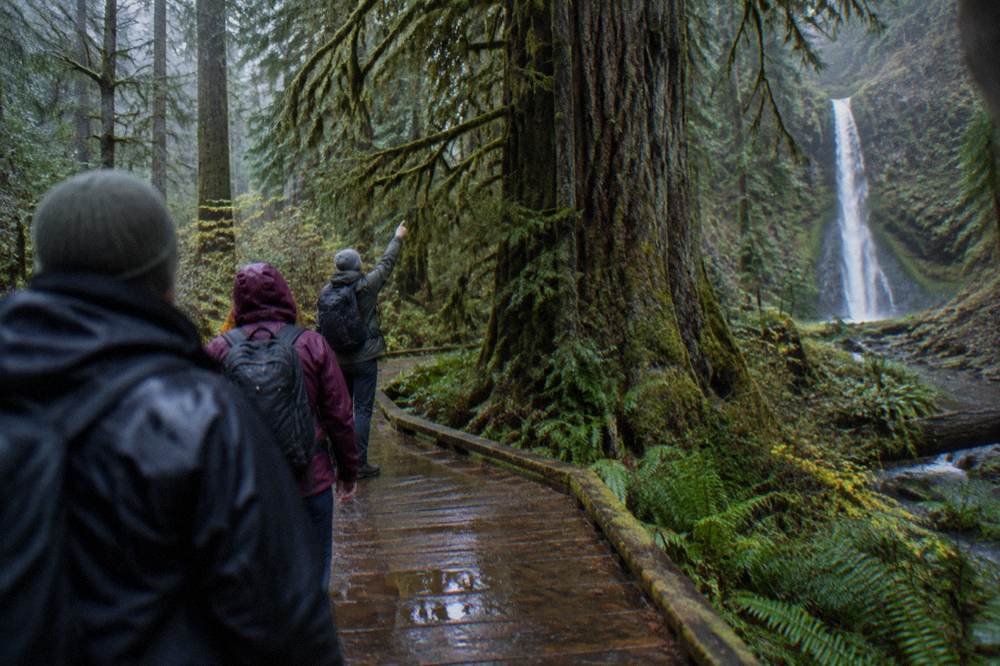
Whether guided or independent, the deeper answer for the nervous hiker is that Olympic rewards preparation rather than courage. The park has no grizzlies, its black bears avoid people, and its genuine hazards, weather, tides, elk at close range, all yield to information. The site's broader coverage of Olympic National Park Tours exists because knowledge is the thing most visitors are actually short of.
What Should A Wildlife-Aware Olympic Itinerary Look Like?
Build around three anchors: a rainforest day in elk country, a subalpine or lakeside day, and a coastal day timed to a low tide. Each carries one wildlife focus, elk, bear habitat or tide pools, so nothing is rushed and no rule gets bent for a photo. Slot guided segments where local knowledge pays, as with the Olympic rainforest and coast tours, and leave slack in each day for weather, which is the one variable that always demands respect.
A rainforest day built on the Hoh puts you in the park's best elk habitat. The Hall of Mosses Trail at 0.8 miles and the Spruce Nature Trail at 1.2 miles are short, gentle loops under the canopy, and the visitor center there operates daily through summer but closes January through early March and runs Friday to Sunday in spring and fall. The Hoh sees heavy arrival pressure in peak season, with entrance-station delays and parking that can fill by mid-morning, so an early start or a guide who manages timing is worth real money. The Forks And Sol Duc Day Trip from $255 per person is another Seattle option that pairs rainforest and valley terrain in one long day.
A lakes-and-mountains day can combine Lake Crescent, about 18 miles west of Port Angeles, with the Sol Duc Valley, roughly 40 minutes further west. Marymere Falls via the Barnes Creek trail and the mile-long Sol Duc Falls overlook walk are both manageable walks, and rowboat rentals operate at Lake Crescent Lodge through the main season. Kayak, canoe and paddleboard rentals at the lodge run first-come, first-served from late May through October, and the lake's water stays below 50 degrees year-round, which is why the park recommends life jackets and wetsuit or drysuit protection for paddling. Sol Duc Hot Springs Resort generally opens late March through the last weekend in October, a reliable bookend for a valley day.
A coastal day lives and dies by the tide table. Ruby Beach and Kalaloch sit directly off Highway 101, with the Hoh Rain Forest about 45 minutes north of Kalaloch, making a rainforest-plus-coast pairing natural. Time the beach for a tide under one foot if tide pools are the goal. One hard fact to plan around: Mora Road is closed to all traffic at the campground during repairs of severe winter flood damage, so Rialto Beach is not accessible via Mora Road, and any listing that names Rialto, including the Hoh And Rialto tours, needs its current route confirmed on the operator's live listing before booking. Highway 101 is also closed overnight at the Hoh River Bridge, 7 p.m. to 5:30 a.m. each night October 13 to 19, with no detour across the river, though the Hoh stays reachable from Forks.
The itinerary logic is the safety logic:分散 attention across habitats, keep every wildlife encounter at a respectful distance, and let a guide absorb the timing pressure where the stakes, or the nerves, are highest.
Common Questions About Bears And Wildlife In Olympic National Park
Are There Grizzly Bears In Olympic National Park?
No. Grizzly bears did not occur on the Olympic Peninsula and are absent from the park. Black bears are the only bear species in Olympic National Park, and they are generally shy, forest-dwelling animals that avoid people.
Are There Grizzly Bears On The Olympic Peninsula?
No. The peninsula's geographic isolation meant grizzlies were never established here, and the park's species information lists them as absent rather than extirpated. Black bears are widespread across the peninsula's forests, coasts and subalpine meadows.
What Is The Most Dangerous Animal In Olympic National Park?
By the park's own guidance, the animal most likely to hurt a visitor is a Roosevelt elk approached too closely, not a bear. The park requires staying at least 100 feet from elk, and cows with calves or rutting bulls can charge when crowded. Give all wildlife distance and the question mostly disappears.
Do Black Bears In Olympic Ever Attack People?
Attacks are extremely rare and are almost always associated with food-conditioned bears. The prevention is the park's food storage rule: secure all food, trash and scented items at all times, use approved bear canisters overnight, and never leave food or wrappers unattended on trails or at viewpoints.
Should I Hike Alone In Olympic National Park?
Solo hiking is common and reasonable on the park's popular trails in daylight. If wildlife or navigation nerves are the concern, a guided option like the Forks Small-Group Hike, from $396 per person with a naturalist guide and transport included, or the Small-Group Hike Or Snowshoe Day from Seattle adds company and local knowledge.
What Should I Do If I See A Black Bear On The Trail?
Stand your ground, make yourself known by speaking firmly, and back away slowly. Never run and never climb a tree, since black bears climb better than people. Give the bear a clear escape route, keep your group together, and report any food-conditioned behavior to park staff.
For a deeper dive into the trails where these animals live, the guide to the best hikes in Olympic National Park covers the routes mentioned here and more, with the same eye toward what a cautious first-timer actually needs to know.