Ruby Beach, Washington: Tides, Parking And How To Visit
Ruby Beach sits directly off Highway 101 on the Olympic National Park coast, which makes it one of the easiest beaches in the park to reach by car. What trips up most first-time visitors is not the drive, it is the tide.
Short answer
Ruby Beach is a roadside beach on the Olympic coast, reached directly from Highway 101 with a short walk from the parking area to the sand. Plan around the tide: tides lower than 1 foot open the tide pools, high tides push water against the driftwood. Several guided coast tours from Seattle and Forks stop here.
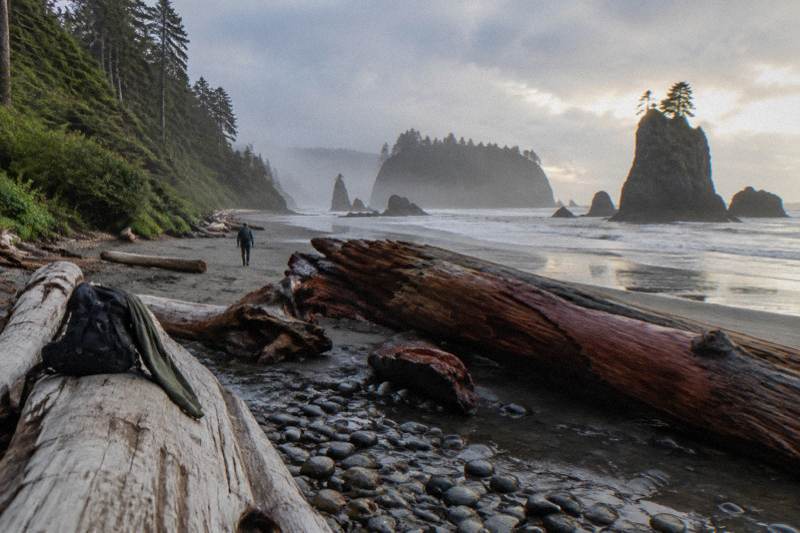
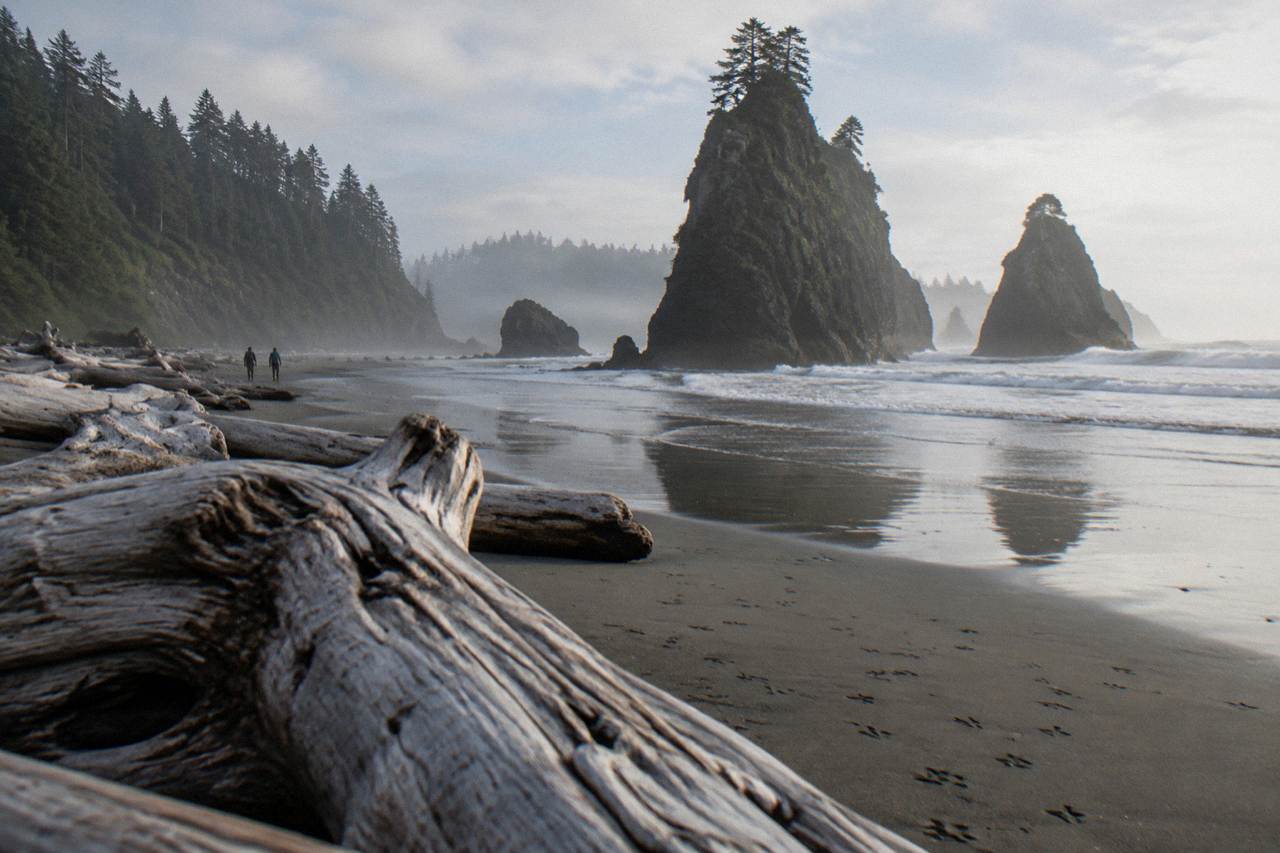
Ruby Beach sits directly off Highway 101 on the southwest coast of Olympic National Park, which makes it one of the few major beaches in the park a visitor can reach without a long approach road. The parking area sits above the beach, a short path drops through the trees and driftwood to the sand, and the sea stacks rise close enough to shore that low tide turns the whole beach into a walkable landscape of tide pools, slick rock and polished stones.
That accessibility is also the trap. The same tide that opens the tide pools can push water across the sand, and the park is direct about the hazard: watch for sneaker waves, and always check the tides, because areas can become impassable. This guide covers the tide rules, the walk down, the drive, the parking situation, and the guided tours that include Ruby Beach in their itineraries. For the wider coast picture, the Olympic National Park Tours hub compares every category of trip from Seattle and the peninsula towns.
Where Is Ruby Beach And How Do You Get There?
Ruby Beach is on the southwest coast of Olympic National Park, accessed directly from Highway 101, with no long spur road required. A parking area sits just off the highway and a short walk leads down to the sand. Kalaloch and Ruby Beach sit on the 101 corridor, while the Hoh Rain Forest lies about 45 minutes north of Kalaloch, which makes a combined rainforest and beach day the classic pairing.
The beach is named plainly on the park's Kalaloch and Ruby Beach pages, and that is the first practical point in its favor: unlike Rialto Beach, which sits at the end of Mora Road, or Ozette, which requires a hike in, Ruby Beach is a roadside stop. Travelers driving the coastal stretch of Highway 101 between Forks and the southern beaches pass the turnoff directly.
The drive down the coast is the reason many people structure a whole day around this stretch. Coming from the north, Forks is the last town of any size before the beach corridor; coming from the south, Kalaloch is the anchor, and the Hoh Rain Forest about 45 minutes north of Kalaloch is the natural inland partner. A reader deciding between a self-drive day and a guided one can compare the tradeoffs in the guide to Olympic National Park tours vs driving yourself.
One road closure matters for anyone planning this coast in the near term. Highway 101 is closed at the Hoh River Bridge for overnight repairs, with closures from 7 p.m. to 5:30 a.m. each night from October 13 to 19. There is no detour across the river, and alternate routes around the east side of the park add at least four hours. The Hoh Rain Forest stays reachable from Forks. Anyone driving the coast late in the day should plan to be on the correct side of the bridge before evening, and the park's road conditions page carries the live status. The park also operates a road and weather recording at 360-565-3131.
Which Guided Tours Stop At Ruby Beach?
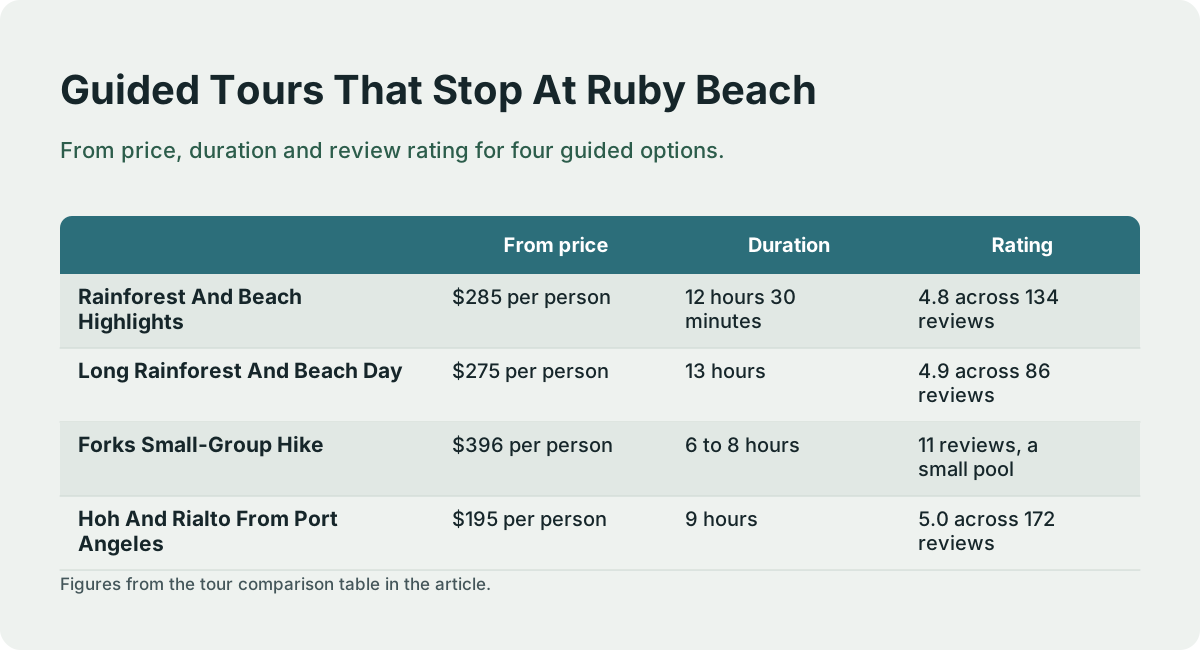
Several guided tours include Ruby Beach or the Kalaloch coast in their itineraries, and the listing details matter more than the headline. The Rainforest And Beach Highlights tour from Seattle runs 12 hours 30 minutes from $285 per person, rated 4.8 across 134 reviews, and its itinerary pairs rainforest and coastal stops. The Long Rainforest And Beach Day runs 13 hours from $275 per person, rated 4.9 across 86 reviews.
Reading the listings closely pays off here, because "beach" means different things on different itineraries. The Rainforest And Beach Highlights tour includes snacks such as craft chocolate bars, nuts and drinks; lunch is extra, almonds, pistachios, water and drinks, and a guest review from Daisy_C describes the day plainly: "Great trip and our tour guide Johnny was excellent. He bought us to several rainforests and beaches." That tour is the featured pick on this page, and it is worth checking its current stops on the live listing before booking, since coast itineraries shift with road conditions.
| Tour | From price | Duration | Departure | Rating |
|---|---|---|---|---|
| Rainforest And Beach Highlights | $285 per person | 12 hours 30 minutes | Seattle, hotel or listed pickup | 4.8 across 134 reviews |
| Long Rainforest And Beach Day | $275 per person | 13 hours | Seattle, hotel or listed pickup | 4.9 across 86 reviews |
| Forks Small-Group Hike | $396 per person | 6 to 8 hours | Forks, no pickup | 4.5 across 11 reviews |
| Hoh And Rialto From Port Angeles | $195 per person | 9 hours | Port Angeles, no pickup | 5.0 across 172 reviews |
Two notes on that table. First, the Forks Small-Group Hike departs from Forks itself, which suits travelers already overnighting on the coast rather than day-tripping from Seattle; its listing includes snacks, beverages, park entry fees, lunch, private transportation and a medically trained naturalist guide, and a review from Curtis_F mentions "Fantastic tour of Quinault Lodge, rain forest, Ruby Beach, Sitka Spruce and Tree of Life." Second, the Hoh And Rialto From Port Angeles tour is rated 5.0 across 172 reviews, but its listing names Rialto Beach, and Mora Road to Rialto is closed to traffic during flood-damage repairs, so anyone considering it must confirm the operator's current route on the listing before booking.
The Seattle day-tour category is broad, and the full Olympic rainforest and coast tours hub lists every coast itinerary in one place. For travelers based in the city without a car, the Olympic National Park Seattle day tours hub covers the complete range of departures, including the Larger-Group Ferry Day Trip from $239 per person, rated 4.9 across 400 reviews, which takes a more budget-friendly, bigger-vehicle format. Solo drivers who prefer a small-group format with more trail time can read the Hurricane Ridge and Lake Crescent tours hub for the northern half of the park.
What Are The Tide Rules At Ruby Beach?
Always check the tide table before walking Ruby Beach, because the park states plainly that areas can become impassable and that sneaker waves are a hazard. Tide charts for this coast use the Destruction Island tide station. The best tide pooling happens at tides lower than 1 foot, sometimes called a minus tide, when the ocean pulls back and exposes the rocks around the sea stacks.
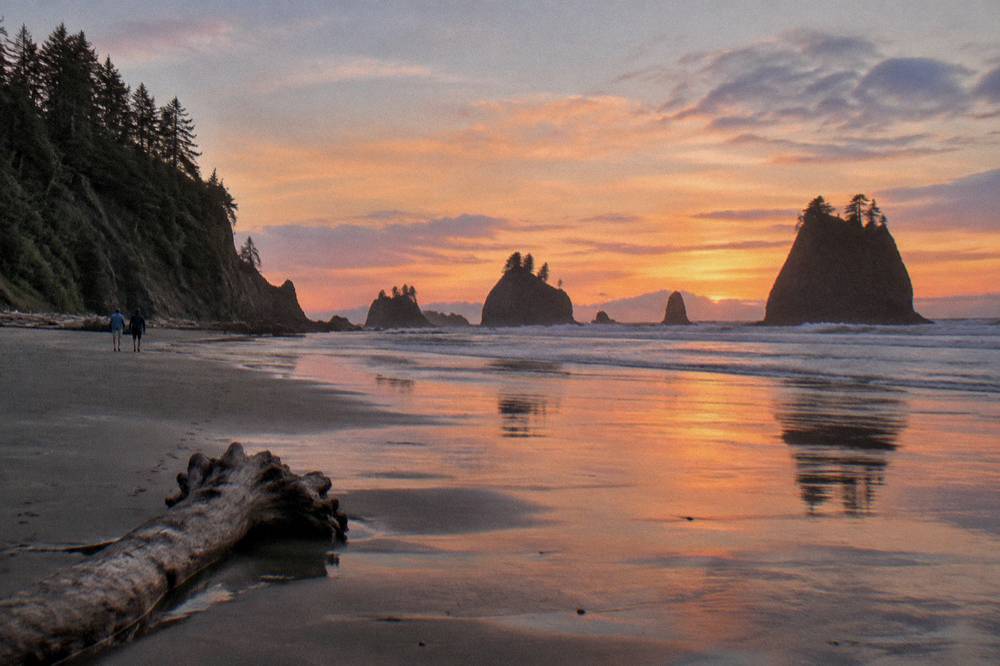
The tide is not a detail at Ruby Beach, it is the whole plan. At a high tide, water reaches the driftwood line at the back of the beach and the walkable sand shrinks to a narrow strip. At a low tide, especially a tide lower than 1 foot, the beach widens dramatically, tide pools appear in the rocky stretches, and the sea stacks that stand just offshore become part of a walkable landscape rather than a distant view. If you're deciding whether to time your trip around the tide, our guide to whether you really need low tide at Ruby Beach explains exactly what the water level controls and how to plan around it.
Sneaker waves are the second rule. These are single waves that run much farther up the beach than the ones before them, and the park's tide pool guidance is blunt about them: watch for sneaker waves, keep children close, and wear sturdy shoes on the algae-covered rocks, which are slippery even when dry. Never turn your back on the surf, and never camp against the driftwood at the high tide line, because that is where a sneaker wave runs.
The practical routine most experienced visitors follow is simple. Look up the Destruction Island tide table for the day, find the low tide time, and plan to be on the beach for the two hours either side of it. Arrive at high tide only if the goal is photographs of waves against the sea stacks, and stay well back from the water. The park's tide pool page carries the full guidance, including the 1-foot threshold and the sneaker wave warnings, and it applies to Ruby Beach, Kalaloch and Second Beach alike.
What Is The Walk From Parking To The Sand Like?
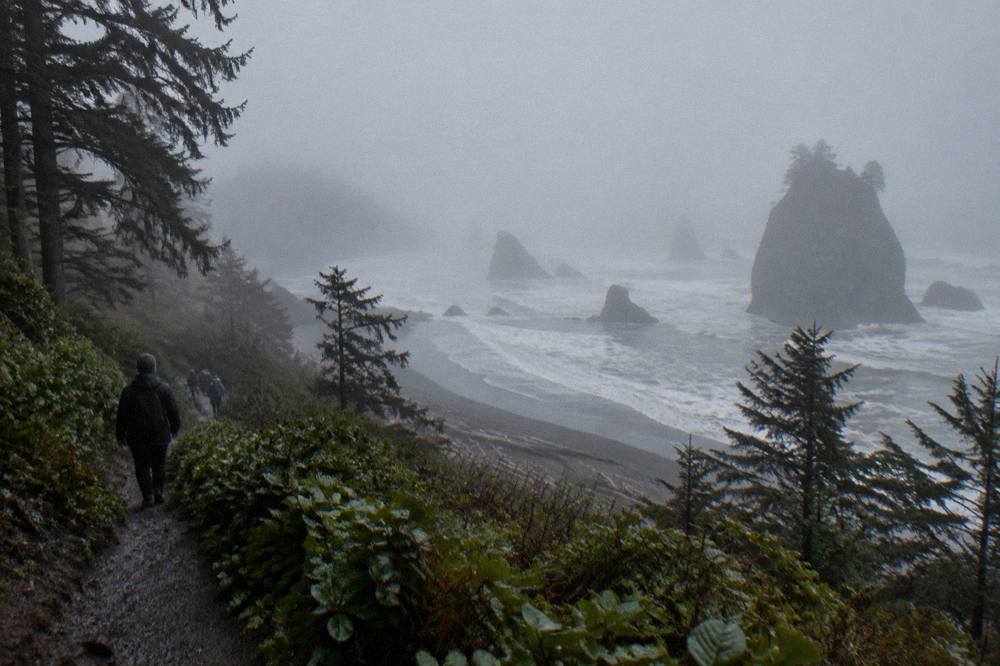
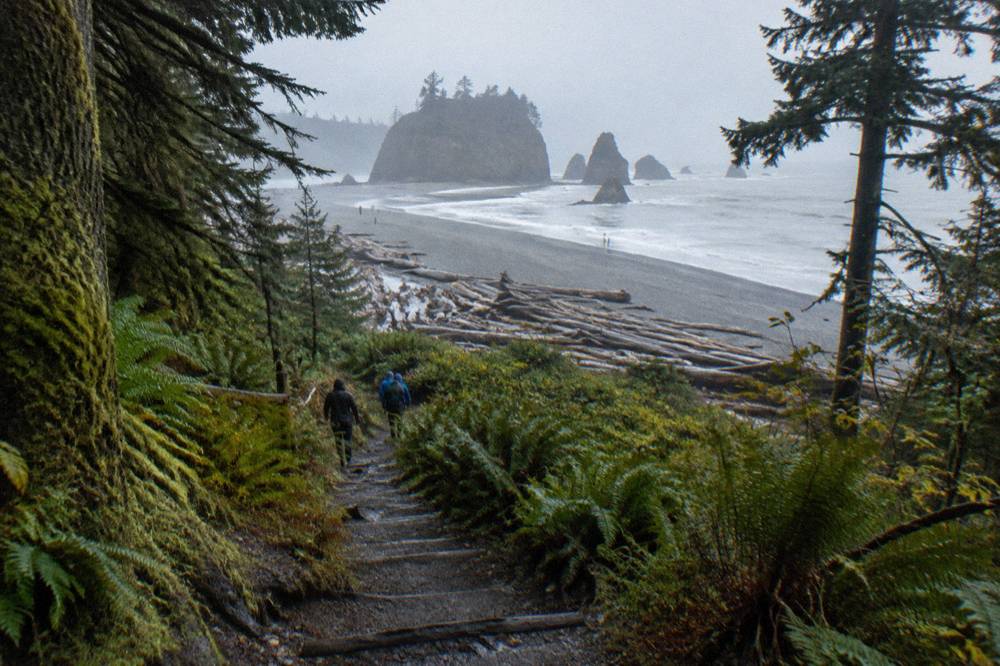
The walk from the Ruby Beach parking area to the sand is short, on an established path that drops through coastal forest to the top of the beach, but it ends at a driftwood line rather than open sand. Visitors cross logs and driftwood to reach the beach itself, which calls for shoes with grip rather than flip-flops. The park describes the beach as directly off Highway 101 with no long approach.
The parking area sits above the beach in the coastal forest strip, and the path down takes only a few minutes on foot. The character of the arrival surprises some first-time visitors: instead of stepping from grass to sand, the path delivers you to the top of a broad bank of driftwood logs, deposited by years of winter storms, and the crossing of that bank is the most awkward part of the whole visit. Steady footing matters most here, particularly on a wet day when the logs are slick.
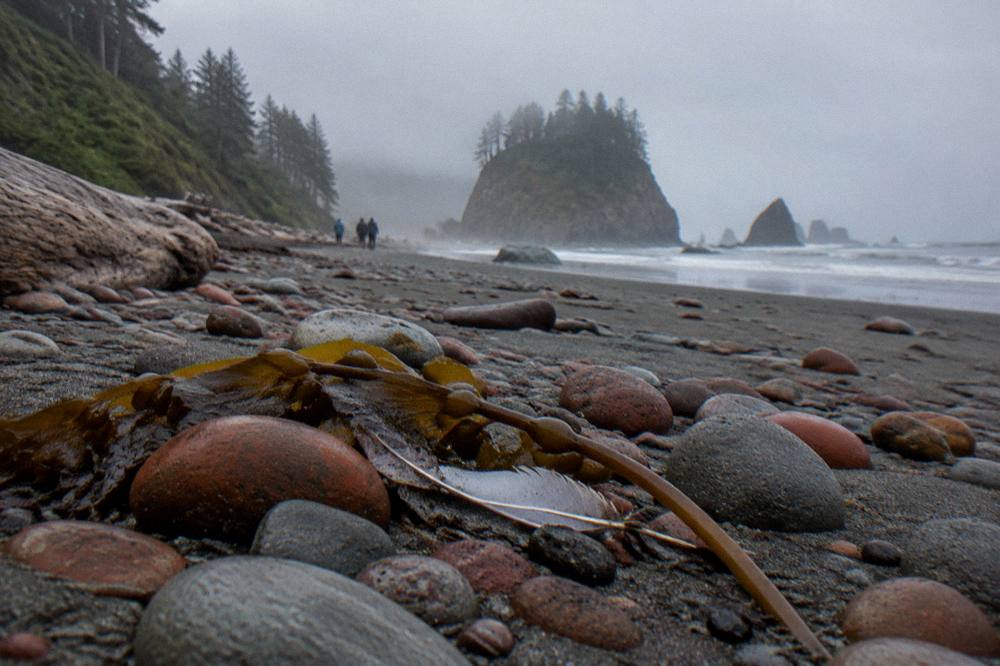
Once past the driftwood, the beach opens out. Cedar Creek crosses the sand at Ruby Beach, sometimes cutting a channel that requires a short wade or a detour depending on the season and recent rain, and the sea stacks stand offshore with a couple of the closer ones reachable on foot at lower tides (see Ruby Beach Tides). The stones that give the beach its name, scattered across the sand in bands, are part of the appeal, and many visitors spend as much time bent over the pebbles as looking at the horizon.
There is no trail mileage or elevation figure printed for this walk in the park's published materials, and this guide will not invent one. The essentials are simple: a short walk, a driftwood crossing, a creek running toward the tide, and tide pools at low water. For visitors who want a guided version of exactly this kind of terrain, with trekking poles, water filtration and professional guides included, the Rialto Tide Pooling Hike from $315 per group departs from Forks, though its listing names Rialto Beach, and Mora Road to Rialto is closed to traffic during flood-damage repairs, so its current route must be confirmed on the listing before booking.
Can You See Tide Pools At Ruby Beach?
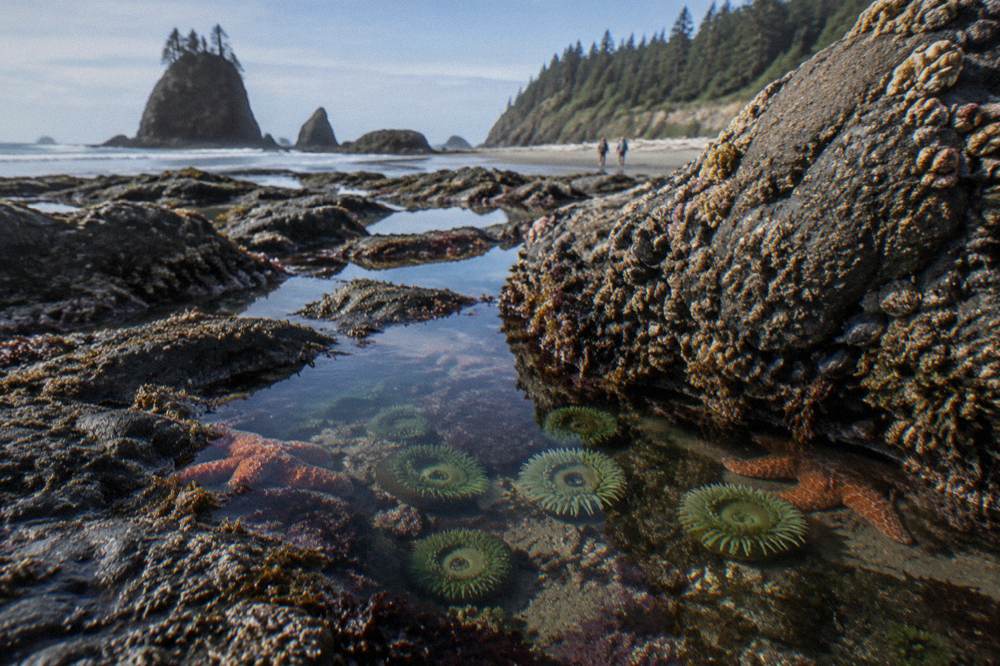
Yes, Ruby Beach has tide pools at low tide, though the park names Beach 4 at Kalaloch and Hole-in-the-Wall as its most popular tide pool sites. Tide pooling works best at tides lower than 1 foot, a minus tide, when the water pulls back from the rocks around the sea stacks. Sturdy shoes are advised, the algae-covered rocks are slippery, and children should stay close.
The tide pool comparison along this coast is worth knowing before you commit to a stop. Beach 4 at Kalaloch, a short drive south of Ruby Beach on the same 101 corridor, is one of the two most popular tide pool sites in the park, and Hole-in-the-Wall at Rialto is the other. But Rialto Beach is not accessible via Mora Road while flood-damage repairs close the road to traffic, which pushes the accessible tide pool options on this coast toward Ruby Beach, Kalaloch and Beach 4.
What lives in the pools depends on the tide and the season, and the park's guidance focuses on behavior rather than a species census: touch gently with a wet finger or not at all, never pry animals off rocks, and replace any turned stones. The pools around Ruby Beach's sea stacks hold the usual coastal cast, anemones, barnacles, mussels, sea stars and crabs, but this guide will not print a wildlife count, because the park does not publish one.
Timing is everything, and the rule from the previous section applies here in one line: tides lower than 1 foot, checked against the Destruction Island tide table, are the window. The park's Kalaloch and Ruby Beach page is the primary source for both beaches, and it repeats the sneaker wave and tide warnings that should shape any visit with children.
What Does It Cost To Visit Ruby Beach?
Ruby Beach is inside Olympic National Park, so the park entrance fee applies: $30 for a private non-commercial vehicle, valid for 7 consecutive days and covering all occupants. Travelers on foot or bicycle pay $15 per person, ages 16 and up. The Olympic Annual Pass costs $55, and the park does not accept cash, so prepaying entry through Recreation.gov saves time at entrance stations.
The fee structure is published plainly by the park, and the table below restates it for trip budgeting. One distinction matters for tour customers: commercial tour operators pay their own entrance fees, $75 for a van, $100 for a mini-bus and $200 for a motor coach per entry, and those are business costs, not visitor prices. Several roster tours state that park entry is included in the ticket, among them the Small-Group Ferry Day Tour from $188 per person and the All-Inclusive Naturalist Day Tour from $368 per person, rated 4.9 across 1,067 reviews; where a listing does not say entry is included, assume you may need to show a pass.
| Pass or fee | Price | Validity |
|---|---|---|
| Private vehicle | $30 | 7 consecutive days, covers all occupants |
| Motorcycle | $25 | 7 days, up to 2 motorcycles and 4 passengers |
| Per person, on foot or bicycle | $15 | 7 days, ages 16 and up; 15 and under free |
| Olympic Annual Pass | $55 | One year from month of purchase |
| Campgrounds | $15 to $24 per night | Varies by location and season |
The 2026 fee-free days, when the entrance fee is waived for United States citizens and residents, are February 16, May 25, June 14, July 3 to 5, August 25, September 17, October 27 and November 11. Other fees still apply on those days. The full fee detail, including the America the Beautiful pass range, is on the park's fees page, and the Recreation.gov site handles entry prepayment and campground reservations.
When Is The Best Time To Visit Ruby Beach?
July and August are the most popular months parkwide, with the driest weather and the most reliable low tides during daylight, but they also bring the biggest crowds to the coast. September offers a quieter shoulder with longer, more dramatic light and the first fall storms. Winter visits are possible since the park is open year-round, but the coast receives 100 to 170 inches of annual precipitation and storms reshape the driftwood line.
The seasonal logic on this coast is driven by two overlapping cycles. The first is daylight: in midsummer the low tides and the long evenings line up so that a late afternoon arrival can still catch good light on the sea stacks. The second is weather: July and August are the driest months on the Olympic coast, while the October-through-March period delivers the storms that make this coast what it is, dramatic, wet and occasionally closed by wind damage.
Photographers often prefer the shoulder and winter months precisely because of that weather. Fog wrapping the sea stacks, storm surf against the rocks and post-storm skies produce the images this beach is known for, and a gray day at Ruby Beach is a genuinely different experience from a blue-sky one. The tradeoff is simple: check the road and weather recording at 360-565-3131 and the park's conditions page before any winter coast trip, and build in flexibility, because conditions change fast.
The summer crowding picture comes mostly from the inland destinations rather than the beach itself. The Hoh Rain Forest parking lots can reach capacity by 10 a.m. in summer, with traffic metered at the entrance station, and Hurricane Ridge draws its own peak. Ruby Beach's parking area also fills on peak summer days, since the beach is a 101 roadside stop, so an early morning or evening arrival is the standard advice for the peak weeks.
How Does The Highway 101 Closure Affect A Ruby Beach Trip?
Highway 101 is closed overnight at the Hoh River Bridge, from 7 p.m. to 5:30 a.m. each night from October 13 to 19, with no detour across the river. Ruby Beach and Kalaloch sit south of the closure, while Forks, the Hoh Rain Forest, Port Angeles, Hurricane Ridge, Lake Crescent and Sol Duc sit north. The Hoh Rain Forest stays reachable from Forks.
The geography matters more than the headline. The Hoh River Bridge carries Highway 101 across the river south of Forks, and the closure splits the coast corridor in two. A traveler overnighting in Forks and driving to Ruby Beach crosses that bridge; during the overnight closure hours, that crossing is impossible, and the alternate route around the east side of the park adds at least four hours. The simple fix is timing: cross during the day, and check the park's closure page before setting out, since the published schedule lists the overnight windows plainly.
For guided-tour travelers, the operator handles this. Coast itineraries adjust to road conditions, and the listings that name specific stops, such as the Hoh And Rialto tours, carry the strongest reason to confirm the current route before booking, because Mora Road to Rialto is closed to traffic during flood-damage repairs. Ruby Beach, Kalaloch and Beach 4 all sit directly on Highway 101 and remain the coastal stops to rely on.
The park's Highway 101 closure page is the authoritative source for the bridge schedule, and its current conditions page carries every live alert, including the Mora Road closure. Both are worth a read the week you travel; neither changes the fact that the coast itself stays open.
What Should You Bring For A Ruby Beach Visit?
Bring layered waterproof clothing, sturdy closed shoes for the driftwood and algae-slick rocks, and a tide table checked before you leave. The park advises sturdy shoes for tide pooling and warns that sneaker waves can occur at any tide. Water, snacks and a full fuel tank matter too, because services along this stretch of Highway 101 are sparse and the nearest towns are small.
The packing list for this beach is short but unforgiving. The driftwood crossing at the top of the beach punishes thin-soled shoes, the weather can move from sun to sideways rain inside an hour even in summer, and the coast receives 100 to 170 inches of precipitation a year in the wettest zones, so a rain shell lives in the pack year-round. For tide pooling, the park's guidance names sturdy shoes and close supervision of children as the basics.
| Condition | What to pack | Why |
|---|---|---|
| Any visit | Rain shell and layers | Coast weather shifts fast, 100 to 170 inches of annual precipitation in coastal zones |
| Tide pooling | Sturdy closed shoes with grip | Algae-covered rocks are slippery; driftwood logs are slick when wet |
| With children | Extra layer and close watch | Sneaker waves and rising tides are the park's stated hazards |
| Long coast day | Water, snacks, fuel | Services along the Highway 101 corridor are sparse |
| Photography | Cloth and dry bag | Sea spray and rain reach camera gear quickly |
Travelers booking a guided day can lighten this list considerably. The Rainforest And Beach Highlights tour includes snacks of craft chocolate bars, almonds, pistachios, water and drinks, and its Check availability page details what else is covered. The Forks Small-Group Hike includes snacks, a selection of beverages, park fees, van transport and a guide; lunch is not included, so pack your own, which suits visitors who want the gear handled by someone else.
What Else Can You Combine With Ruby Beach?
The classic pairing is Ruby Beach with the Hoh Rain Forest, which sits about 45 minutes north of Kalaloch on the same Highway 101 corridor, though the bridge closure hours shape the timing. South along the coast lie Kalaloch and Beach 4, the park's most popular tide pool site on this stretch. North of Forks, the Sol Duc Valley is about 40 minutes west of Port Angeles, with its falls overlook walk about a mile from the parking lot.
The coast-and-rainforest combination is what most Seattle day tours actually sell, because the two landscapes sit close together and contrast completely: moss-draped temperate rainforest in the morning, sea stacks and surf in the afternoon. The Rainforest And Beach Highlights itinerary follows exactly that shape over 12 hours 30 minutes from Seattle, and the Long Rainforest And Beach Day stretches the same idea across 13 hours for travelers who want more time on the ground.
| Nearby stop | What it offers | Access note |
|---|---|---|
| Kalaloch and Beach 4 | Popular tide pools, broad sandy beach | Directly off Highway 101 |
| Hoh Rain Forest | Hall of Mosses Trail 0.8 miles, Spruce Nature Trail 1.2 miles | Upper Hoh Road off Highway 101, about a two-hour drive from Port Angeles, under an hour from Forks |
| Sol Duc Valley | Falls overlook walk about a mile, hot springs resort generally open late March through the last weekend in October | Sol Duc Road, 14 miles from Highway 101, about 40 minutes west of Port Angeles |
| Lake Crescent | Marymere Falls trail, Spruce Railroad Trail on the north shore, rowboat rentals at Lake Crescent Lodge | About 18 miles west of Port Angeles |
For travelers structuring a multi-day coast trip rather than a single long day, the Forks departures are the efficient choice. The Forks Small-Group Hike runs 6 to 8 hours from $396 per person with a naturalist guide included, and it suits an overnight in Forks or La Push. Travelers splitting their nights between the coast and the north should read the best time to visit Olympic National Park guide for the seasonal picture, and the things to do in Olympic National Park guide for the full activity map.
Should You Visit Ruby Beach On Your Own Or With A Tour?
Visit on your own if you have a car, a tide table and daylight to spare, because the beach is a roadside stop with a short walk. Choose a tour if you are based in Seattle without a vehicle, or if you want the tide timing, the bridge closure hours and the rainforest pairing handled by a guide. Seattle tours run 10 to 13 hours and cover a selection of stops, not the whole park.
The honest comparison comes down to time and logistics. A self-drive day from Seattle to Ruby Beach means a ferry crossing, hours of highway, fuel and the entrance fee, plus every decision about tides and timing made solo. A guided day from $275 to $285 per person bundles pickup, transport, lunch and the itinerary, and reviews suggest the guides carry real local knowledge. Daniel, reviewing the Small-Group Hike Or Snowshoe Day, put the tradeoff plainly: "The tour was more expensive than we would normally choose, but it ended up being well worth the cost. It covered the ferry (over and back), snacks, lunch by a beautiful lake, and much more."
The budget end of the guided range is real too. The Larger-Group Ferry Day Trip runs from $239 per person for 13 hours, rated 4.9 across 400 reviews, and the Hurricane Ridge And Lake Crescent Day matches the $188 entry point for the northern highlights, rated 4.6 across 220 reviews. Travelers anchored in Port Angeles get the shortest coast access of all, with the Hoh And Rialto From Port Angeles tour at 9 hours from $195 per person, rated 5.0 across 172 reviews, Rialto caveat noted above.
For visitors spending a night on the peninsula rather than returning to Seattle, a half-day option can complete the trip. The Lake Crescent Half-Day Tour runs 4 hours from $110 per person out of Port Angeles with 39 reviews, a small pool, and pairs naturally with a coast morning. The where to stay decision between Port Angeles and Forks shapes which end of the park you reach first, and the coast is best reached from the Forks side.
Common Questions About Ruby Beach, Washington
Where is Ruby Beach?
Ruby Beach is on the southwest coast of Olympic National Park, directly off Highway 101, the corridor that also carries Kalaloch and Beach 4. A parking area sits just off the highway and a short walk leads down through coastal forest and across a driftwood line to the sand. The Hoh Rain Forest is about 45 minutes north of Kalaloch on the same corridor.
Can you drive to Ruby Beach?
Yes. Ruby Beach is one of the park's roadside beaches, reached directly from Highway 101 with no long spur road. Note that Highway 101 is closed overnight at the Hoh River Bridge, from 7 p.m. to 5:30 a.m. each night from October 13 to 19, with no detour across the river, so plan daytime crossings and check the park's road conditions page before driving.
Do you need to visit Ruby Beach at low tide?
Low tide is the best time, especially for tide pools. The park states that the best tide pooling happens at tides lower than 1 foot, a minus tide, checked against the Destruction Island tide table. At high tide the water reaches the driftwood line and the walkable beach shrinks. Always watch for sneaker waves at any tide.
How much does it cost to visit Ruby Beach?
Ruby Beach is inside Olympic National Park, so the entrance fee applies: $30 for a private vehicle, valid 7 consecutive days and covering all occupants, or $15 per person on foot or bicycle for ages 16 and up. The park does not accept cash. Several guided tours state that park entry is included in the ticket.
Is Ruby Beach or Rialto Beach better?
They are different stops, and access is the deciding factor right now. Rialto Beach is not accessible via Mora Road while flood-damage repairs close the road to traffic. Ruby Beach sits directly on Highway 101 and remains reachable. Tours that name Rialto in their listings should have their current route confirmed on the listing before booking.
Which tours stop at Ruby Beach?
Coast itineraries from Seattle include the Rainforest And Beach Highlights tour, from $285 per person for 12 hours 30 minutes, rated 4.8 across 134 reviews, and the Long Rainforest And Beach Day, from $275 per person for 13 hours, rated 4.9 across 86 reviews. From Forks, the Forks Small-Group Hike runs 6 to 8 hours from $396 per person. Always confirm current stops on the live listing, since coast routes adjust to road conditions.