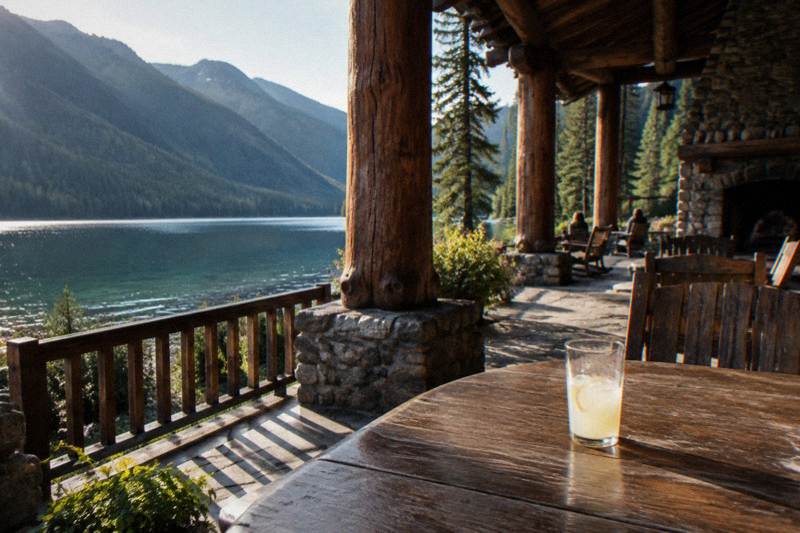
Lake Crescent Kayak Tour: Rentals, Guided Paddles And What To Expect
Lake Crescent is the paddling lake of Olympic National Park, cold, blue and ringed by steep forest. Here is how the rental operation at the lodge actually works, what a guided alternative looks like, and what the water and wind will do to your plan.
Short answer
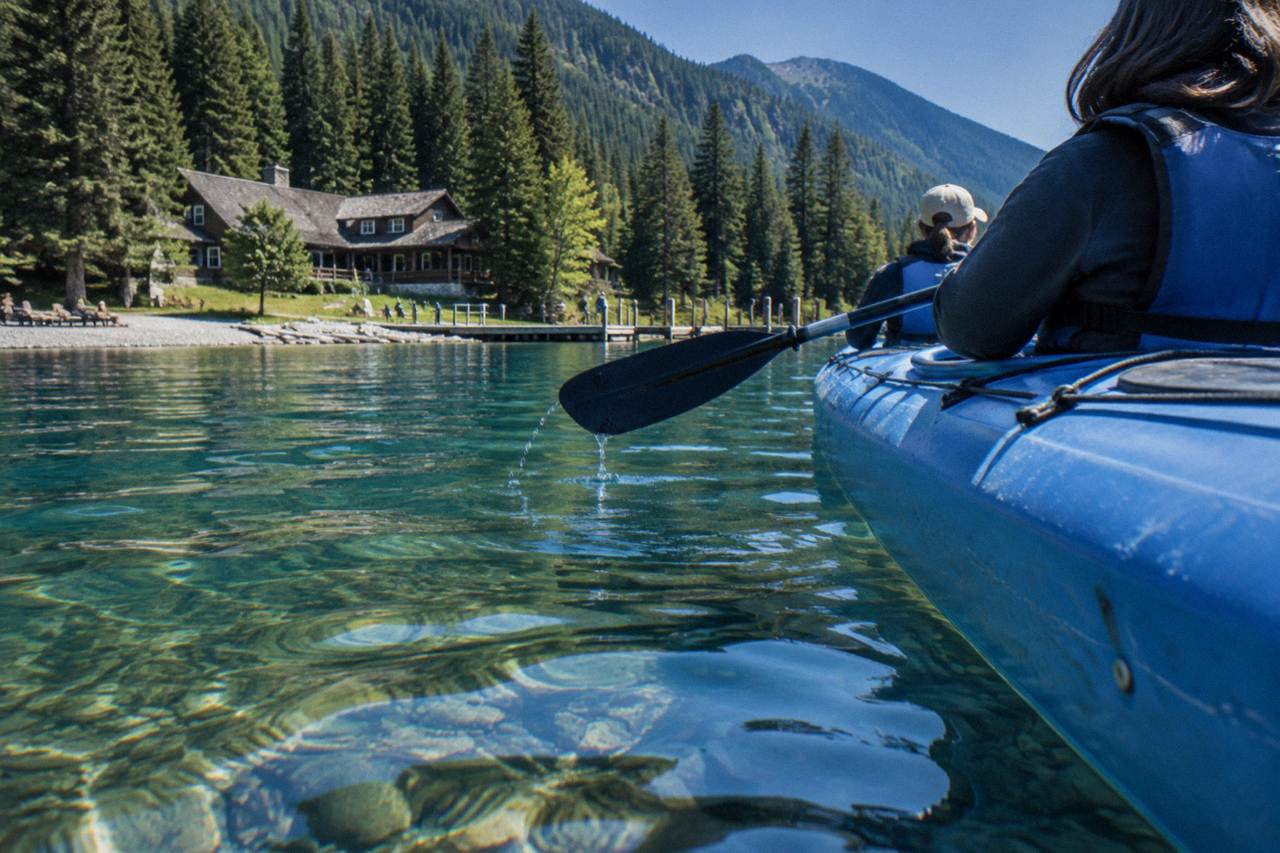
Lake Crescent Lodge rents kayaks, canoes, paddleboards and rowboats seasonally from late May through October, first-come, first-served, and no guided paddle product exists on this site's roster. The guided alternatives are van day tours from Port Angeles, from $110 per person, which you can pair with your own rental time on the shore.
Lake Crescent sits about 18 miles west of Port Angeles, a deep glacial lake held between the flanks of the Olympic Mountains, and it is the one stretch of water in Olympic National Park where a visitor can reasonably show up and paddle. The color is the first thing people mention: a blue-green that looks tropical until you put a hand in and find water that never really warms up. The lake is also a working part of the park's road system, with Highway 101 running along its south shore and two vehicle launches serving paddlers, which makes it one of the easiest backdrops in the park to build a day around.
The catch, and the reason this page exists, is that "kayak tour" means two different things here. There is the rental, a self-guided paddle from the lodge dock or a public launch, and there is the guided day tour, a van-based trip that shows you the lake, its waterfalls and its neighboring valleys without putting you in a boat. No guided paddle product exists on this site's tour roster, so anyone searching for a lake crescent kayak tour is really choosing between renting alone and booking a guided land tour, possibly both on the same trip. This guide lays out both sides honestly, with the season, the costs, the water temperature and the wind, so the choice is made on facts rather than on a booking page's best photo.
Can You Kayak Lake Crescent Without A Tour?
Yes, easily. Lake Crescent Lodge rents kayaks, canoes, paddleboards and rowboats on a seasonal, first-come, first-served basis, and the park allows non-motorized boats with launches at Storm King Ranger Station and Fairholme. No guided paddle product exists on this site's roster, so a do-it-yourself rental is the realistic way onto the water.
The rental operation at Lake Crescent Lodge is the practical answer for most visitors. It runs seasonally, opening in late May and running through the end of October, weather permitting, with rentals handled at the dock between 9 a.m. and 3 p.m. There is no reservation system for boats: it is first-come, first-served, which means a summer Saturday can see the fleet go out early and late arrivals turned away. The lodge itself operates its main season from mid-April into early January, so the boat window is narrower than the lodge window, and paddling in the shoulder months means bringing your own craft or waiting for the next season.
The lake rewards the effort. The shoreline is steep and forested, the water is startlingly clear, and the north shore carries the Spruce Railroad Trail, a paved path along the water that includes tunnels and connects to the Olympic Discovery Trail. Paddlers share the lake with non-motorized rules that keep it quiet: motorized vessels are limited to 5 mph with no wake within 300 feet of the shorelines, so a kayak here is not dodging powerboats the way it would be on a lowland reservoir. For the full picture of the lake's hikes, lodges and shoreline stops, the companion guide to Lake Crescent in Washington covers the areas a paddle or a tour will pass.
One honest note on expectations: the word "tour" in a search box often conjures a guide in a kayak leading a flotilla. That product is not in this site's roster, and inventing one would be a disservice. What the roster does carry is a set of guided van tours that use Lake Crescent as a centerpiece, several departing Port Angeles, and those pair naturally with a rental morning or afternoon on the water.
Renting At The Lodge Vs Booking A Guided Tour: Which Fits You?
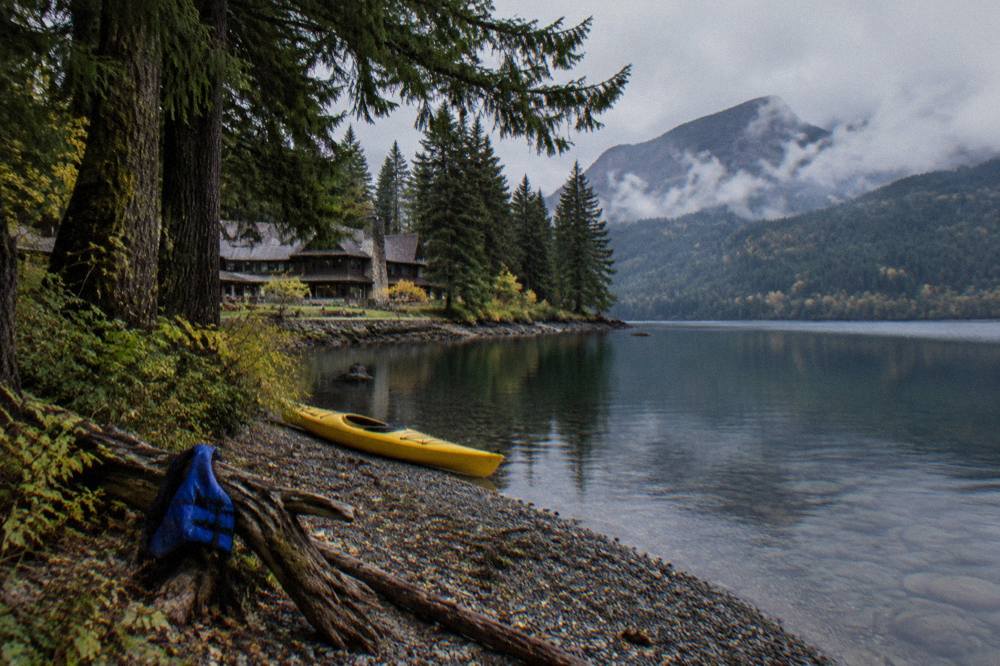
Rent if you want time on the water at your own pace and can accept first-come, first-served risk and cold-water safety responsibility. Book a guided tour if you want the lake's story, its waterfalls and its neighboring valleys explained, with transport handled. The Lake Crescent Half-Day Tour runs from $110 per person; rental prices are set at the lodge dock, so check on arrival.
The two options serve different travelers, and the difference is mostly about what you want to carry home. A rental gives you the water itself: an hour or three of quiet paddling, the north shore's cliffs, maybe a pause near the Devil's Punchbowl area where the Spruce Railroad Trail's second tunnel sits close to the shore. What it does not give you is interpretation, transport or a backup plan. You drive yourself, you read the sky yourself, and if the afternoon wind stands up whitecaps against you, you solve that yourself.
A guided tour inverts the trade. The roster's Lake Crescent Half-Day Tour, from $110 per person for a 4-hour trip departing Port Angeles, is built around the lake country: commercially authorized guide, roundtrip transport in a 12 or 15 passenger van included, with a small review pool of 39 reviews so far. Longer options add valleys and ridgelines. The Sol Duc, Lake Crescent And Ridge Day, from $195 per person over 9 hours, ties the lake to Sol Duc Falls and Hurricane Ridge and carries a 5.0 rating across 83 reviews. The Sol Duc Falls and hot springs guide walks through what that valley adds to a lake day.
| Factor | Lodge rental (self-guided) | Guided day tour |
|---|---|---|
| Booking | First-come, first-served at the dock | Reserve ahead on the operator's listing |
| Price basis | Set at the lodge, check on arrival | From $110 per person (half-day, Port Angeles) |
| Time on water | Yes, the whole point | None; tours are van and foot based |
| Interpretation | Your own research | Commercially authorized guide |
| Weather risk | You manage it | Operator adjusts route and timing |
| Transport | Your own vehicle | Roundtrip van from Port Angeles or Seattle |
For many visitors the answer is both, not either. A morning rental when the water is calmest, then an afternoon or a second day on a guided trip that reaches places a kayak cannot, is the pattern that gets the most out of the area. The wider family of Hurricane Ridge and Lake Crescent tours collects the guided options that use the lake as an anchor.
What Does A Lake Crescent Paddle Or Tour Day Cost?
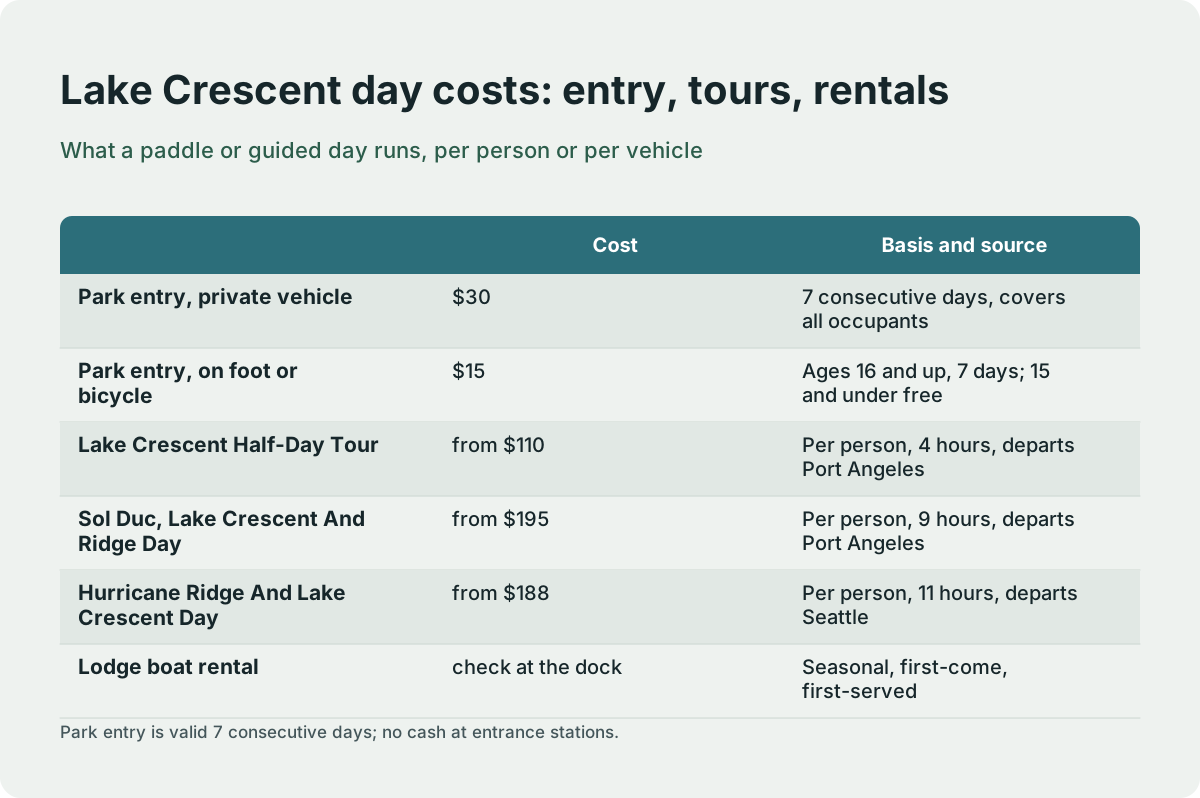
Park entry is $30 per private vehicle, valid 7 consecutive days, or $15 per person on foot or bicycle. The Lake Crescent Half-Day Tour starts at $110 per person; longer guided days run from $188 to $195 per person departing Port Angeles or Seattle. Rental fees are set at the lodge dock, and the park accepts no cash at entrance stations.
Budgeting a lake day means separating three numbers that often get mashed together in forum threads. The first is entry, which is charged whether you paddle, tour or just photograph the shore: a private non-commercial vehicle pays $30 for seven consecutive days, covering all occupants, and the park does not accept cash, so pre-pay at Recreation.gov if you want to skip the station queue. The second is the boat itself, priced at the lodge and best treated as a day-of expense. The third is the guided layer, which is where the roster's published prices live.
| Item | Cost | Basis and source |
|---|---|---|
| Park entry, private vehicle | $30 | 7 consecutive days, covers all occupants |
| Park entry, on foot or bicycle | $15 | Ages 16 and up, 7 days; 15 and under free |
| Lake Crescent Half-Day Tour | from $110 | Per person, 4 hours, departs Port Angeles |
| Sol Duc, Lake Crescent And Ridge Day | from $195 | Per person, 9 hours, departs Port Angeles |
| Hurricane Ridge And Lake Crescent Day | from $188 | Per person, 11 hours, departs Seattle |
| Lodge boat rental | check at the dock | Seasonal, first-come, first-served |
One figure worth internalizing before you plan: an annual Olympic pass is $55, so a second park visit within the year pays for it. The full fee structure, including the 2026 fee-free days, is laid out in the guide to park entrance fees and passes, and the official detail sits on the park's fees page.
How Cold Is The Water, And How Dangerous Is The Wind?
The water is below 50 degrees Fahrenheit year-round, cold enough that immersion becomes a hypothermia problem within minutes rather than hours. The park recommends life jackets and wetsuits or drysuits for paddling, and afternoon winds routinely build waves on the open lake, so mornings are the safer window.
This is the section that separates a pleasant paddle from an incident report. Lake Crescent is fed by snowmelt and mountain streams, and its temperature barely moves across the seasons: consistently under 50 degrees, which the park treats as a genuine hazard rather than a footnote. A capsize in water that cold drains coordination fast, and the steep shoreline means a swimmer may be some distance from an easy exit. The park's guidance is direct: wear a life jacket, wear a wetsuit or drysuit, and treat the water, not the distance, as the limiting factor.
Wind is the second half of the risk. The lake sits in a valley that funnels air, and calm mornings regularly give way to breezy afternoons, with waves building on the longer fetches toward the lake's western end. A paddler who starts late, heads west and turns back at 2 p.m. is paddling into the day's worst water. The practical pattern locals follow is to launch early, stay within a reasonable distance of the launch, and be off the water or ashore for lunch when the wind arrives. Conditions change with elevation and season across the whole park; the park's weather page and the recorded road and weather line at 360-565-3131 are the reliable sources for what a given day is doing.
Two further cautions round out the safety picture. Stay well clear of the shoreline cliffs where rockfall is possible, and keep a wide margin from any motorized vessel, since even at the no-wake limit a boat's blind spots are real. Children should be within arm's reach the entire time, and a leash plus a whistle per paddler is cheap insurance the rental counter may not provide. None of this makes the lake forbidding; it makes the lake a place where a drysuit or an early start is simply what competence looks like.
Where Do You Launch, And What Rules Apply On The Water?
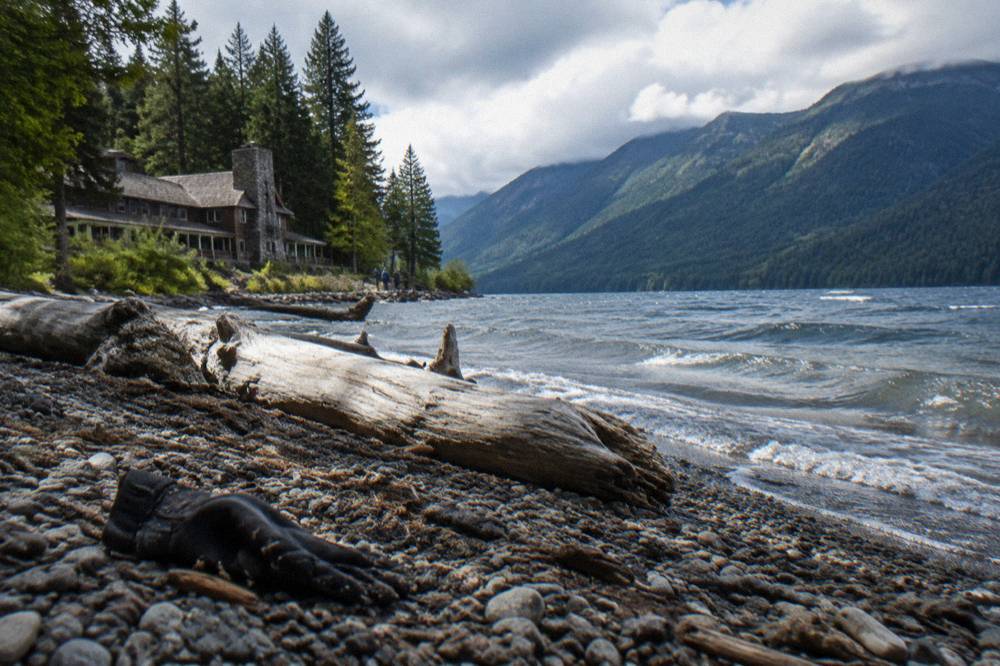
The park lists two launches for non-motorized boats: Storm King Ranger Station on the south shore and Fairholme at the lake's west end. Motorized vessels may not exceed 5 mph or create a wake within 300 feet of any shoreline, which keeps the lake quiet and the water clean for paddlers.
Storm King Ranger Station is the launch most visitors will use, sitting just off Highway 101 and doubling as the trailhead for Marymere Falls and the Storm King trail. It puts you on the water near the lake's midpoint with the lodge a short paddle east and the north shore's cliffs and tunnel country to the north and west. Fairholme, at the western tip, is the quieter, more remote option and the starting point for paddling the narrows toward the lake's deep western basin, but it is also the stretch where afternoon wind funnels hardest, so it rewards an early start even more than the mid-lake does.
The rules that matter are simple and worth repeating because they shape the whole experience. Within 300 feet of shore, motorized craft are held to 5 mph with no wake, and outside that zone the lake belongs mostly to sail and paddle anyway. Life jackets are the park's standing recommendation for everyone in a non-motorized boat given the water temperature. There is no separate permit or fee to put a kayak on Lake Crescent beyond park entry itself, and no day-use registration for paddlers, so the barrier is equipment and judgment, not paperwork.
Choosing between the launches comes down to the day's plan. If Marymere Falls is on the itinerary, and it should be, the Barnes Creek trail to the falls starts near Storm King, so a launch there lets one parking spot serve both the paddle and the hike. If the goal is solitude and the western narrows, Fairholme wins, with the caveat that the Fairholme store closes outside the main season and services are thin at that end of the lake.
| Launch | Location | Best for | Watch for |
|---|---|---|---|
| Storm King Ranger Station | South shore, off Highway 101 | Mid-lake paddling, pairing with Marymere Falls | Busiest access in summer |
| Fairholme | West end of the lake | Quiet water, the western narrows | Afternoon wind funnels; store closed off-season |
| Lodge dock (rentals) | South shore near the lodge | Renters; no personal launch needed | First-come, first-served availability |
The lake's shore features, including the Spruce Railroad Trail tunnels and the falls, are described in detail on the park's Lake Crescent page.
When Is Kayak Season On Lake Crescent?
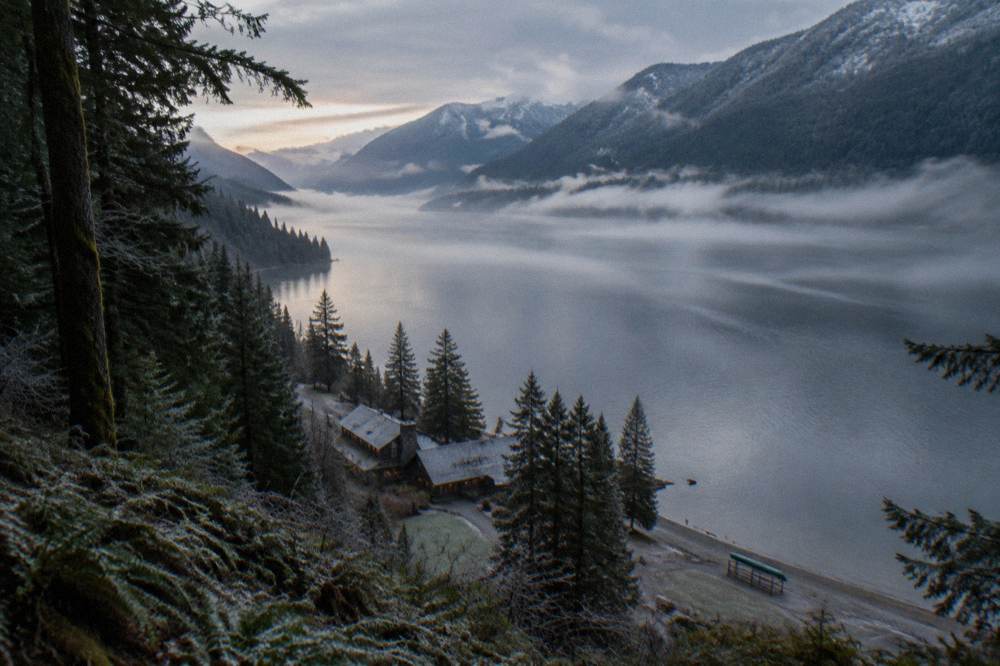
Rentals at the lodge run from late May through October, with boats out between 9 a.m. and 3 p.m., weather permitting. July and August are the warmest and driest months, roughly 2 inches of rain each, but they are also peak season, so September offers lighter crowds with the rental window still open.
The season is dictated by two calendars that overlap rather than match. The lodge's boat rental window, late May through October, is the hard boundary for anyone relying on rented equipment, and within it the daily 9 a.m. to 3 p.m. dock hours mean a rental day is really a morning commitment. The weather calendar runs longer: the lake itself never freezes in any practical sense, and private boaters paddle earlier and later than the rental fleet, but the cold-water math of the previous section argues for the warm months regardless.
July and August are the park's most popular months overall, and Lake Crescent absorbs a share of that pressure, with parking and rental demand peaking on summer weekends. The rainfall numbers explain the crowds: the driest months see about 2 inches each against roughly 10 inches in the depths of winter, and high temperatures around 71 to 72 degrees make for comfortable paddling. September is the connoisseur's month, with the rental operation still running, summer crowds thinning, and the first hints of fall color on the shoreline. By late October the window closes, the lodge scales back toward its winter weekend-only cabins, and the lake settles into its quiet season.
| Period | Rental availability | Typical conditions | Crowd level |
|---|---|---|---|
| Late May to June | Open, weather permitting | Showers possible, water at its coldest | Moderate |
| July to August | Open, busiest | Driest months, highs around 71 to 72 degrees | Peak |
| September | Open through the month | Mild, lighter traffic | Moderate and falling |
| October to late October | Final weeks, weather permitting | Cooler, wetter, shorter days | Low |
Winter paddling exists for properly equipped locals with their own boats and drysuits, but it is not a visitor proposition, and no rental or tour product on the roster supports it. For planning the rest of a trip around the lake window, the guide to the best time to visit Olympic National Park breaks the whole park's seasons down.
Can You Pair A Paddle With A Guided Tour Of The Park?
Yes, and it is the strongest way to use the area. A morning rental from the lodge or Storm King covers the water; a guided half-day or full-day tour covers the interpretation, the falls and the neighboring valleys. The roster's Port Angeles departures make the pairing logistically clean, since the lake sits about 18 miles west of the city.
The Lake Crescent Half-Day Tour is the natural companion to a rental day. It runs 4 hours from Port Angeles at from $110 per person, with a commercially authorized guide, roundtrip van transport, gratuities extra, and its 39-review pool is still small so the listing's own reviews are the place to read recent experiences. Because it is a half-day product, it can share a day with a dock-side morning, or serve as the fallback if the rental fleet is out when you arrive. Linda_B's review of it captures the register these guides aim for: "An awesome day and experience I'll never forget. A must do activity! Tour guide was awesome and very interesting and knowledgeable!"
For a fuller arc, the Sol Duc, Lake Crescent And Ridge Day from $195 per person spends 9 hours connecting three of the park's signatures: the Sol Duc Valley's falls, the lake, and Hurricane Ridge at 5,242 feet. It carries a 5.0 rating across 83 reviews, with park entrance fees in the listed inclusions. Ramya_V's review of it lands on exactly the combination a paddler cannot reach by boat: "10/10 experience! I especially loved the views of Hurricane Ridge. Our tour guide, Eric, was so friendly and fun too."
Seattle-based travelers have a parallel option. The Hurricane Ridge And Lake Crescent Day, from $188 per person over 11 hours with hotel or listed pickup, ties the lake and Marymere Falls into a loop out of the city, rated 4.6 across 220 reviews. And for travelers building an entirely self-directed day, the Self-Guided Audio Driving Tour, from $17 per group, turns your own car into the guide, with offline GPS audio for the park's driving routes. The Olympic National Park Tours site covers each of these in detail on its tour pages.
What Should You Bring For A Lake Crescent Paddle?
Pack for cold water and changeable mountain weather: a life jacket worn, not stowed, a wetsuit or drysuit over swimwear, synthetic layers, a windproof shell, water, snacks, a whistle and a dry bag for keys and phones. Water below 50 degrees makes cotton a liability, and afternoon wind makes a shell non-negotiable even on a sunny forecast.
The kit list for this lake is shorter than for a coastal paddle but stricter about materials. Water that never touches 50 degrees means any clothing plan built around "if I get wet" is really a plan for how fast you get warm again, so synthetics or wool against the skin, a wetsuit or drysuit for anything beyond a sheltered float near the dock, and a genuine windproof layer for the return leg. Footwear should be something that can walk a rocky shore: the beaches here are gravel and driftwood, not sand.
The small items earn their space. A leash keeps the boat with you after a capsize, a whistle carries farther than a voice across wind, and a dry bag preserves the car key, which is the single most consequential item on the lake. Sunglasses with a retainer, sunscreen and a hat cover the bright side of the forecast; the Olympic Peninsula's precipitation averages 100 to 170 inches a year on the coast and western valleys, so a rain layer lives in the bag even in July. If a full day of activities is planned beyond the paddle, the packing guide for what to bring on an Olympic National Park tour extends this list to hikes and ridgelines.
Rental logistics deserve one line of planning. Because the dock is first-come, first-served between 9 a.m. and 3 p.m., arriving early serves two purposes at once: it beats the fleet to empty and it puts you on the water in the calmest, safest wind window. Check at the lodge about what is included with a rental, since personal flotation devices, paddles and basic safety gear vary by operator and should be confirmed on the spot rather than assumed.
Is Kayaking Lake Crescent Worth It Without A Guide?
For confident paddlers dressed for cold water, yes, and the rental route delivers the lake's best moments at the lowest cost. For travelers who want context, transport and a safety net, or anyone uneasy on cold water, the guided tours deliver more value per dollar, from $110 per person for the half-day lake tour.
The honest verdict is that the lake is friendly to both approaches in a way few park destinations are. The rental path suits visitors who already own the judgment the water demands: reading wind, dressing for immersion, turning back early. Their reward is the lake at its most private, a quiet morning on blue-green water.en water under 5,242-foot ridgelines, with the north shore cliffs and tunnel country all reachable at paddle pace. The cost is low, the logistics are simple, and the only real failure mode is showing up at noon in August to find the fleet gone.
The guided path suits everyone else, and that is not a backhanded description. A commercially authorized guide turns the shoreline from scenery into a story, handles the driving on roads that reward local knowledge, and builds in the falls and valleys a boat can never reach. The comparison below lines up the roster's Lake Crescent-anchored options side by side.
| Tour | Departs | Duration | From price | Reviews |
|---|---|---|---|---|
| Lake Crescent Half-Day Tour | Port Angeles | 4 hours | $110 per person | 5.0 across 39 reviews |
| Sol Duc, Lake Crescent And Ridge Day | Port Angeles | 9 hours | $195 per person | 5.0 across 83 reviews |
| Lake Crescent And Poulsbo Day | Seattle | 1 day | $195 per person | No reviews yet |
| Hurricane Ridge And Lake Crescent Day | Seattle | 11 hours | $188 per person | 4.6 across 220 reviews |
| Self-Guided Audio Driving Tour | Port Angeles | 5 to 6 hours | $17 per group | 4.1 across 41 reviews |
One roster entry deserves a special mention for the do-it-yourself traveler. The Lake Crescent And Poulsbo Day, from $195 per person departing Seattle with no pickup, pairs the lake with the Nordic-flavored waterfront town of Poulsbo, and it carries no reviews yet, so read the listing closely before booking. It is the format for a traveler who likes a scaffold but wants the day to feel self-directed.
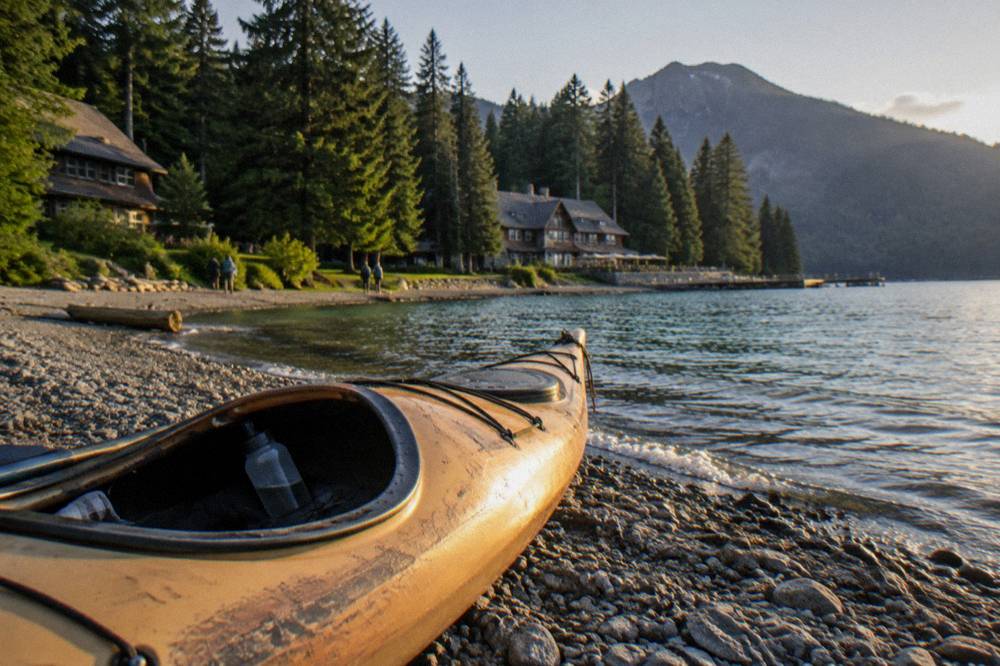
The pairing strategy remains the strongest play: rental morning, guided afternoon, or a rental day followed by a full guided day that adds Sol Duc and Hurricane Ridge. Whichever way the balance tips, book the guided side early, since the small-van Port Angeles departures fill faster than the big Seattle coaches, and check the operator's live listing for the current schedule before locking in travel dates.
Common Questions About Kayaking Lake Crescent
Can You Kayak Lake Crescent Without a Tour?
Yes. Lake Crescent Lodge rents kayaks, canoes, paddleboards and rowboats seasonally from late May through October, 9 a.m. to 3 p.m., first-come, first-served. The park also allows you to launch your own non-motorized boat at Storm King Ranger Station or Fairholme. No guided paddle product exists on this site's roster.
How Cold Is Lake Crescent Water?
The water stays below 50 degrees Fahrenheit year-round. The park recommends life jackets and wetsuits or drysuits for paddling, and treats immersion as a hypothermia risk even in summer. Dress for the water temperature, not the air temperature.
Where Do You Launch a Kayak on Lake Crescent?
The park lists two launches for non-motorized boats: Storm King Ranger Station on the south shore, near the Marymere Falls trailhead, and Fairholme at the west end. Renters use the lodge dock. Motorized vessels are limited to 5 mph with no wake within 300 feet of shore.
When Can You Rent Kayaks at Lake Crescent Lodge?
Rentals run from late May through October, weather permitting, between 9 a.m. and 3 p.m., first-come, first-served. No reservations are taken for boats, so arrive early in the day, especially on summer weekends.
Is There a Guided Kayak Tour of Lake Crescent?
Not on this site's tour roster. The guided alternatives are van-based tours that feature the lake and its surroundings, such as the Lake Crescent Half-Day Tour from $110 per person departing Port Angeles, or the Sol Duc, Lake Crescent And Ridge Day from $195 per person.
Do You Need a Permit to Kayak Lake Crescent?
No separate permit or fee is required to put a non-motorized boat on Lake Crescent. Park entry applies: $30 per private vehicle for 7 consecutive days, or $15 per person entering on foot or by bicycle.