Is Ruby Or Rialto Beach Better?
Ruby Beach and Rialto Beach compared: access, tide pools, scenery and closures, with honest guidance on which coastal stop to plan your Olympic National Park trip around.
The Olympic coast gives visitors a choice that looks even on a map and is not even in practice. Ruby Beach and Rialto Beach both deliver sea stacks, driftwood-lined shores and Pacific surf, and both anchor the itineraries of the big coast-and-rainforest day tours. But one of them sits directly off Highway 101 with a parking lot a short walk from the sand, and the other sits at the end of a road that flood repairs have closed to all traffic. That single fact reshapes the answer for almost every traveler, and this page works through the rest of the comparison honestly: scenery, tide pools, hiking, tides, tour logistics and what each beach is genuinely like on the ground.
Is Ruby Or Rialto Beach Better?
Ruby Beach is the better choice for nearly every visitor right now, because it sits directly off Highway 101 and is always reachable by car, while Rialto Beach cannot be reached via Mora Road during repairs of severe winter flood damage. Ruby Beach delivers the classic Olympic coast look, sea stacks, tide pools and a short walk from parking, and while Rialto remains spectacular on paper, planning a visit there today means confirming access first.
The park's own alerts page states the situation plainly: Mora Road is closed to all traffic at the campground, and Rialto Beach is not accessible via Mora Road during repairs. The practical translation is that a reader who builds a day around Rialto may arrive at a gate. The park also points to its road and weather recording at 360-565-3131 for live status, and any traveler set on Rialto should call it or check the park conditions page before driving out.
That said, "better" depends on what a visitor wants from the coast. The two beaches are not substitutes for each other. Ruby Beach is the dependable headline stop, the one that appears on most tour itineraries for a reason. Rialto, when the road reopens, is the wilder, more committed experience, with the Hole-in-the-Wall sea arch sitting about 1.5 miles north of the trailhead. A traveler with flexibility and a confirmed-open road may still prefer Rialto. A traveler with one day, a rental car and no appetite for uncertainty should pick Ruby.
This is also why the guided options matter. The Seattle day tours that cover the coast make their beach stop decisions with the road network in mind, and the operators adjust routes when access changes. Travelers weighing the full set of Olympic rainforest and coast tours will notice that the listings name their stops, and reading those stop lists carefully tells you which beach you would actually visit.
Which Is Better, Rialto Beach Or Ruby Beach?
Judged on scenery alone the beaches are close, with Ruby Beach offering sea stacks, reddish sand and tide pools right at the parking area, and Rialto offering a wilder cobbled shore, dramatic offshore rocks and the Hole-in-the-Wall arch 1.5 miles north. Judged on access, Ruby wins outright while Mora Road is closed. Judged on tide pools, both reward a minus tide, but Ruby Beach and nearby Beach 4 are the reliable stops today.
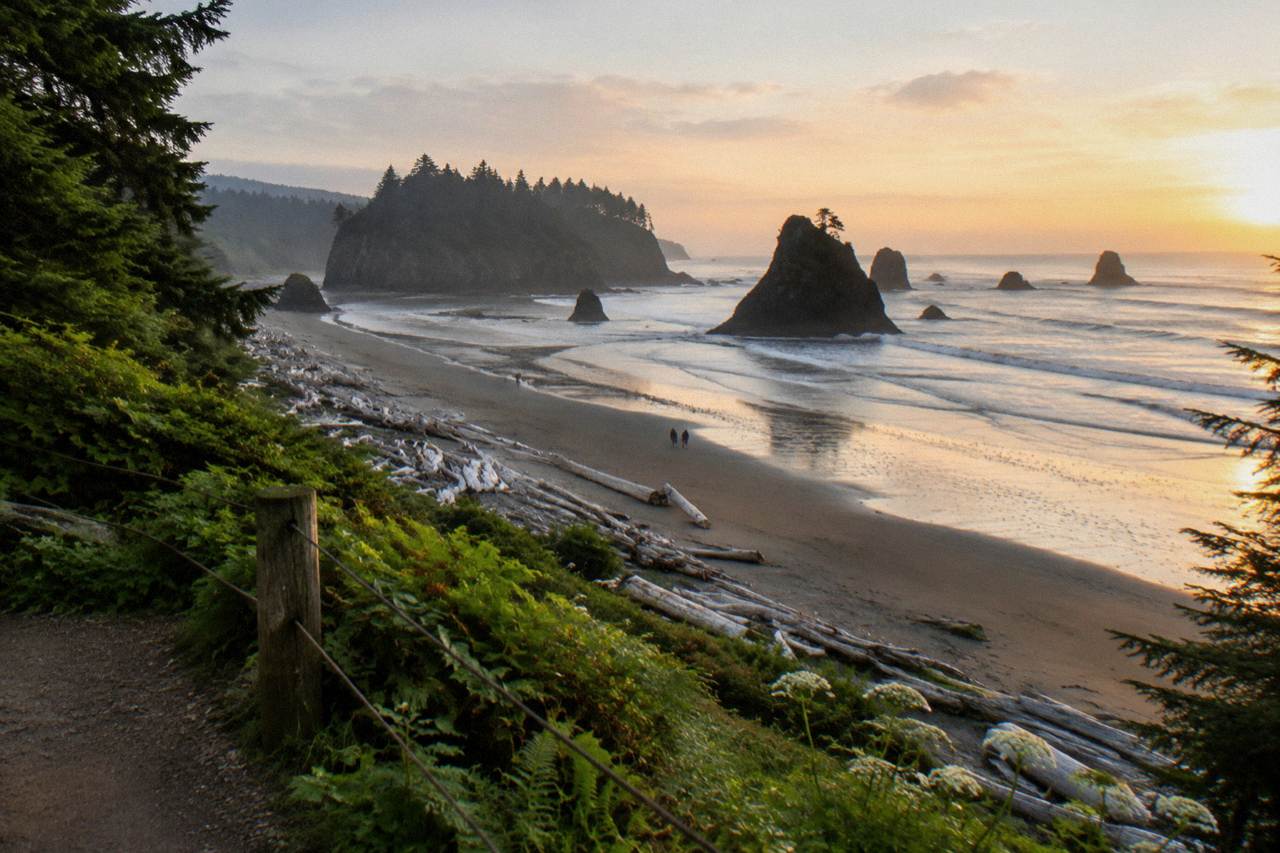
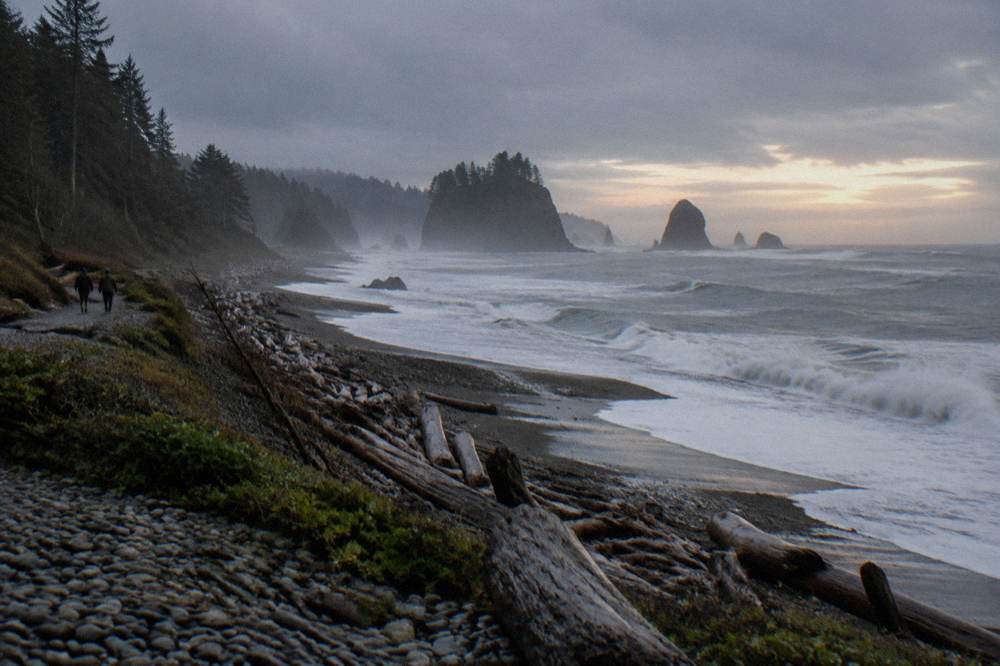
Start with what each beach actually looks like. Ruby Beach is the postcard: a broad sand-and-cobble beach framed by sea stacks, with Abbey Island offshore, driftwood logs stacked along the high-tide line and a creek running across the sand. The walk from the parking lot down to the beach is short, which is why tour buses and families both favor it. On a busy summer afternoon it is the most crowded stretch of the Olympic coast, and the parking lot fills early.
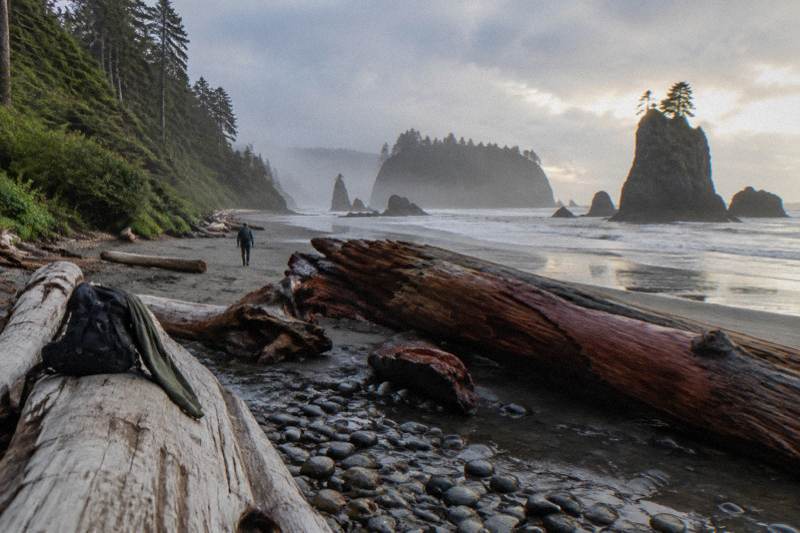
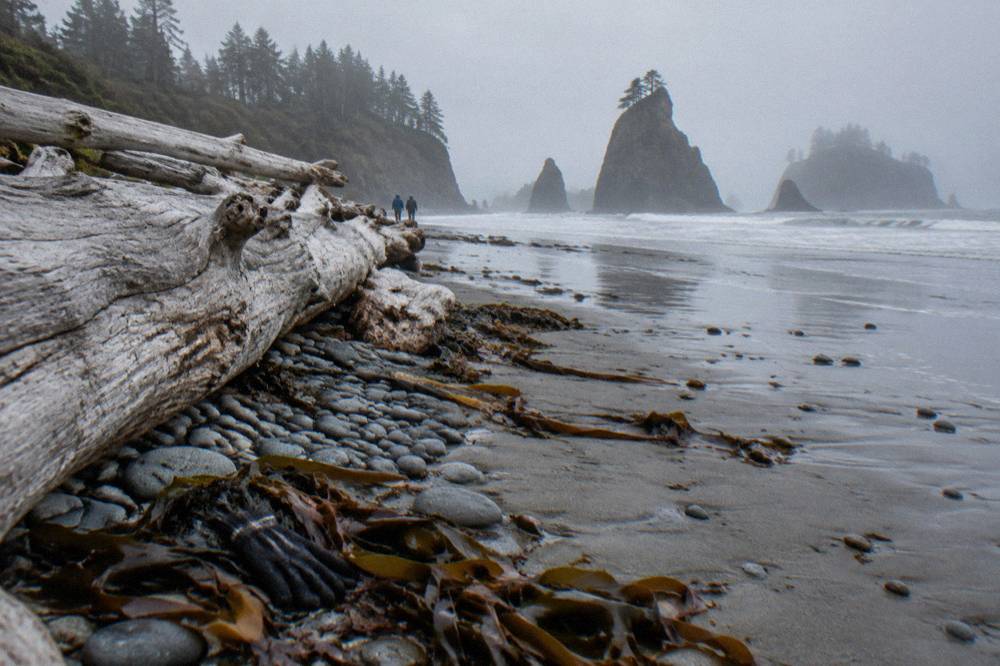
Rialto Beach is a different animal. The shore is heavier with cobbles and driftwood, the surf is loud, and the sense of remoteness is stronger because the beach sits at the end of a road through the Mora area, miles past any town. James Island rises offshore. The payoff hike north along the beach leads toward Hole-in-the-Wall, the sea-carved arch about 1.5 miles from the trailhead, and that walk is one of the best easy coastal hikes in the Pacific Northwest when it can be done. The park warns that the route depends on tides and that areas can become impassable, so the arch is a tide-dependent objective, never a guarantee.
| Feature | Ruby Beach | Rialto Beach |
|---|---|---|
| Access road | Directly off Highway 101 | Mora Road off La Push Road, closed to all traffic during flood repairs |
| Walk from parking | Short trail to sand | Beach at trailhead when road is open |
| Signature feature | Sea stacks and Abbey Island | Hole-in-the-Wall arch, 1.5 miles north of trailhead |
| Tide pools | At hand for minus tides | Beach 4 and Hole-in-the-Wall are popular tidepool spots per the park |
| Crowds | Busiest coast stop in summer | Quieter by nature of its dead-end location |
| Plan-around status | Reliable, no detour needed | Confirm access with the park before committing |
The honest verdict for a reader booking a trip is that Ruby Beach is the stop you can plan around and Rialto is the stop you plan for. Readers who want both beaches, or who want the coast paired with the Hoh Rain Forest, are exactly who the Rainforest And Beach Highlights tour from Seattle is built for: 12 hours 30 minutes, hotel or listed pickup, from $285 per person, rated 4.8 across 134 reviews. A guest named Daisy_C described it simply: "Great trip and our tour guide Johnny was excellent. He bought us to several rainforests and beaches." The tour page has the full stop list, and travelers can also Check availability alongside the details on the Ruby Beach visitor guide.
For independent travelers, the deciding question is usually the tide table rather than the beach itself. The park publishes its tidepool guidance for the whole Kalaloch and Ruby Beach stretch, and the same minus-tide logic applies at Rialto. Readers planning a low-tide visit should read the low-tide guide for Ruby Beach before locking a schedule, because the tide matters more than the choice between the two beaches.
Is Ruby Beach Worth Going To?
Yes, Ruby Beach is worth going to for almost every visitor, and it is the coast stop the park's own materials, the tour operators and the tide charts all support. It combines immediate access from Highway 101, genuine tide pools at minus tides, sea stacks offshore and a walk short enough for any fitness level. Its only real drawbacks are summer crowds and a parking lot that fills, which an early arrival solves.
The case for Ruby Beach is mostly about efficiency. The beach sits directly on Highway 101 on the southwest coast, so it costs a traveler no detour at all. A driver running the coastal stretch between Kalaloch and Forks passes the turnoff whether they stop or not. The Hoh Rain Forest is about 45 minutes north of Kalaloch, which means a single well-planned day can pair a rainforest walk with a beach stop, and that pairing is the backbone of the most popular Seattle day tours.
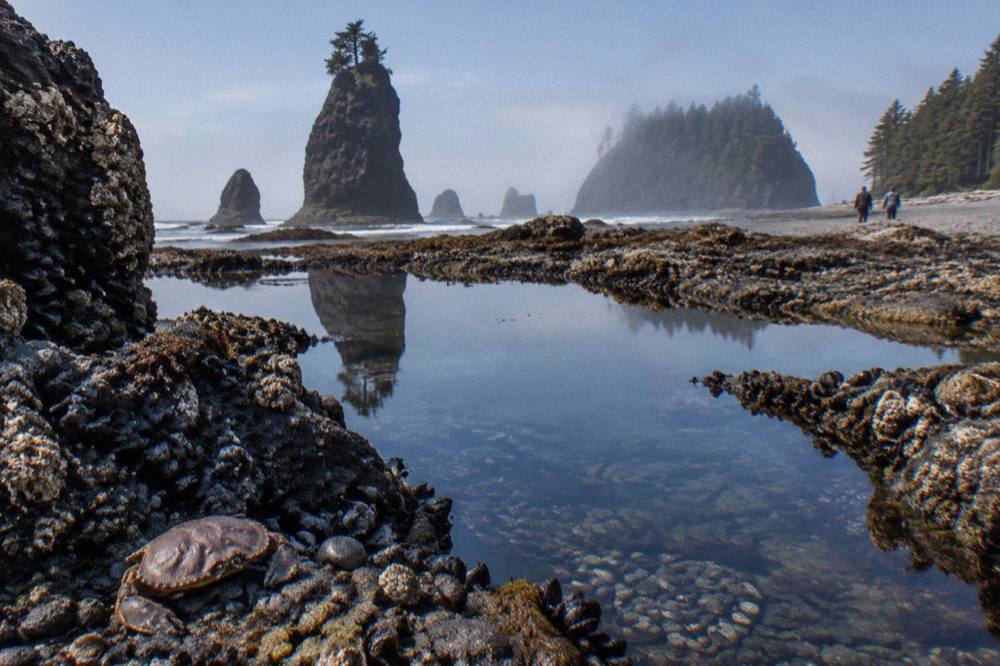
What you get on the sand justifies the stop. At low tide, the rocks near the base of the sea stacks hold anemones, sea stars and hermit crabs; the park's tidepool page notes that the best viewing happens at tides lower than 1 foot, what beachgoers call a minus tide. At any tide, the stacks and the driftwood make it the most photogenic quarter mile of coast in the park. Sunset here is a legitimate event, with the sun dropping behind the stacks into open Pacific.
The honest negatives: in July and August the beach is busy, the parking area can feel full by mid-morning, and on foggy days the stacks disappear entirely. None of that changes the verdict. A traveler who arrives before 10 a.m., checks the tide chart and wears real shoes for the cobble will get the full experience. Visitors who want the same coastline with a guide driving can look at the Long Rainforest And Beach Day tour, 13 hours from Seattle at from $275 per person, rated 4.9 across a smaller pool of 86 reviews, which stretches the day to cover more rainforest and coast stops than the shorter versions.
How Do You Get To Each Beach?
Ruby Beach is reached directly off Highway 101 south of the Hoh River, with a parking lot and a short trail to the sand, no side roads and no closures. Rialto Beach is reached via Mora Road off La Push Road, about 75 miles from Port Angeles, and Mora Road is closed to all traffic at the campground during flood-damage repairs, so the beach is not accessible by vehicle.
The Ruby Beach route could hardly be simpler. The turnoff is marked on Highway 101, the lot sits a few hundred yards off the highway, and a maintained trail drops through forest to the beach in a matter of minutes. There are no seasonal gates on this access, no washouts in play, and the only real variable is lot capacity on peak days. Motorists running the coast south toward Kalaloch and Beach 4 pass through the same stretch of highway, which is why the park's guidance treats Ruby Beach, Kalaloch and Beach 4 as one dependable coastal cluster.
Rialto is the longer commitment even when its road is open. The approach runs out through La Push and Mora, well off Highway 101, and the park's own description puts Rialto about 75 miles from Port Angeles. Today the equation is starker: Mora Road is closed to all traffic at the campground, per the park's alerts, and Rialto Beach is not accessible via Mora Road during the repairs. Mora Campground itself remains open, which matters for campers, but the beach is out of reach by car until the park reopens the road.
One more road reality affects any coastal day on this stretch. Highway 101 is closed at the Hoh River Bridge for overnight repairs, with closures from 7 p.m. to 5:30 a.m. each night October 13 to 19, and there is no detour across the river; alternate routes around the east side add at least four hours. The Hoh Rain Forest stays reachable from Forks. North of the bridge sit Port Angeles, Hurricane Ridge, Lake Crescent, Sol Duc, Forks, Mora and the Hoh; south of it sit Kalaloch, Queets and Quinault (see Hoh Or Quinault). A driver planning a Ruby Beach day from the Seattle side should simply check the bridge schedule before setting out.
Travelers who would rather not manage any of this themselves have real options. The Hoh And Rialto From Port Angeles tour, from $195 per person for 9 hours and rated 5.0 across 172 reviews, names both the Hoh and Rialto in its title; because Mora Road to Rialto is closed to traffic, a reader must confirm the operator's current route on the listing before booking. There is also a Seattle departure version, Hoh And Rialto From Seattle, from $455 per person with no reviews yet, and the Small-Group Ferry Day Tour from Seattle, from $188 per person for 11 hours, rated 4.6 across 943 reviews, which reaches the park by ferry and covers a selection of highlights.
What Can You See At Each Beach?
Ruby Beach serves up sea stacks, Abbey Island, tide pools at minus tides and sunset views over open Pacific, all within a short walk of parking. Rialto Beach offers James Island offshore, a wild cobbled shore and the Hole-in-the-Wall sea arch about 1.5 miles north of the trailhead, a beach walk that depends on the tide. Wildlife-wise, both coasts can show eagles, gulls, seals and tide-pool life.
The tide pools deserve their own paragraph because they are a genuine differentiator for families. Around Kalaloch and Ruby Beach, Beach 4 and the Ruby Beach rocks are among the park's most popular tidepool spots, and the park's guidance is consistent: the best viewing comes at tides lower than 1 foot, sturdy shoes are recommended, algae-covered rocks are slippery, sneaker waves are a real hazard and children should stay close. The same guidance governs tidepooling anywhere on this coast, including at Rialto's Hole-in-the-Wall when access allows. Anemones, sea stars, crabs and mussels are the usual finds.
The hiking comparison favors Rialto in ambition and Ruby in reliability. Ruby Beach is a wander, not a hike: walk north or south along the sand, poke around the stacks, come back. Rialto's beach walk north toward Hole-in-the-Wall is a genuine objective, 1.5 miles each way over cobbles and driftwood, and the arch itself is one of the most photographed formations on the Olympic coast. The park is direct that tides govern this route and that sections can become impassable, so the walk belongs to visitors who check the Destruction Island tide chart, the reference the park names for this coast, and start with hours of ebb tide in front of them. If reading tide charts and timing your walk around the ebb sounds like more planning than you want, a guided beach tour on the Olympic coast puts those decisions in a local's hands.
For travelers who want a guided version of the tide-pool experience, the Rialto Tide Pooling Hike runs from Forks, from $315 per group for 4 to 6 hours, includes trekking poles, and has no reviews yet. Its listing names Rialto Beach; with Mora Road to Rialto closed to traffic, a reader must confirm the operator's current route on the listing before booking. The profits from that operator help support youth scholarships for outdoor adventures, a detail worth knowing for families weighing it.
Birders and photographers will find material at both beaches. Eagles and gulls work both shorelines, seals haul out on offshore rocks, and the driftwood fields at both beaches make strong foregrounds for the stacks. The difference is purely logistical: everything Ruby offers sits a short walk from a highway parking lot, while Rialto's best material sits behind a road closure and a tide table.
Can You Visit Both Beaches In One Day?
Not realistically while Mora Road is closed, because Rialto is unreachable by car, and even with the road open the two beaches sit far apart on different road systems. A one-day coast visit today means Ruby Beach, often paired with the Hoh Rain Forest or with Kalaloch and Beach 4, and that pairing is exactly what the coast day tours from Seattle and Forks deliver.
Geography is the obstacle. Ruby Beach sits on Highway 101 south of the Hoh River. Rialto sits at the end of Mora Road near La Push, reached by driving out through Forks and then west toward the coast, and the park places it about 75 miles from Port Angeles. A loop hitting both plus the Hoh Rain Forest is a very full driving day under the best conditions, and with the Hoh River Bridge work restricting Highway 101 crossings overnight, the margin for error shrinks further. Forks is the natural base for anyone attempting it, and readers deciding where to sleep should weigh it against Port Angeles for their whole itinerary. If those overnight bridge closures have you wondering whether the Hoh itself is still open, our guide to what's actually closed at the Hoh and how to plan around it has the answers.
The guided market has already absorbed this reality. The Rainforest And Beach Highlights tour pairs rainforest and coastal stops across 12 hours 30 minutes from Seattle, from $285 per person. The Long Rainforest And Beach Day stretches to 13 hours, from $275 per person. Travelers already based on the west side can look at the Forks Small Group Hike, from $396 per person for 6 to 8 hours with a naturalist guide and snacks; a guest named Curtis_F noted it covered "Quinault Lodge, rain forest, Ruby Beach, Sitka Spruce and Tree of Life." Ruby Beach, not Rialto, is the dependable coastal anchor on these runs.
For independent drivers, the proven one-day formula on the south coast is Highway 101 south from Forks: the Hoh in the morning before the parking fills, then Ruby Beach and Beach 4 or Kalaloch in the afternoon, timed against the tide table rather than the clock. That route involves no closed roads and no detours, and it is what most self-driving visitors actually do. Readers wanting the full lay of the land can browse Olympic National Park Tours for the guided versions of the same loop.
What Should You Know About Tides, Fees And Safety?
Tides govern everything on this coast: the park recommends tides lower than 1 foot for tide pools, warns that beach sections can become impassable at high tide, and urges caution around sneaker waves. Entry costs $30 per private vehicle for 7 days or $15 per person on foot, the park does not accept cash, and a minus tide plus sturdy shoes is the combination that makes either beach rewarding.
The fee side is simple and worth knowing before arrival. Olympic National Park charges $30 for a private non-commercial vehicle, valid 7 consecutive days and covering all occupants, or $15 per person for visitors arriving on foot or by bicycle, with ages 15 and under free on foot. The park does not accept cash, and pre-paying entry on Recreation.gov cuts waits at entrance stations. Commercial tours pay their own entrance fees, so a guest on a guided tour does not separately buy a pass unless the listing says otherwise.
Safety on the sand is mostly tide sense and footwear. The park's guidance for the whole coast is to check tide charts before walking any stretch that narrows at high tide, to watch for sneaker waves that can surge far up the sand, and to keep children close on slippery, algae-covered rocks. Sturdy shoes matter on both beaches because the substrate is cobble and driftwood rather than clean sand. Water temperatures off this coast are cold year-round, so swimming is short and cautious at best. For live road and weather status, the park's recording at 360-565-3131 is the number to call before any coastal day.
Which Beach Should Families And Photographers Pick?
Families should pick Ruby Beach for its short walk, dependable access and tide pools, and arrive early to beat the crowds. Photographers get more from Ruby Beach for sunset and stacks-within-frames shots, while Rialto, once reachable again, is the stronger sunrise-to-arch destination for shooters willing to work around tides. Both benefit from a minus tide and fog awareness.
For families the calculation is blunt. Ruby Beach means a parking lot, a short trail, and a beach where the tide pools are close enough that nobody has to complete a 1.5-mile cobble walk to see an anemone. Rialto's rewards sit at the end of that walk, over terrain that is hard on small legs and harder on strollers, and the park's own tide warnings apply. Add the current road closure and Ruby becomes the only sensible family plan on this coast, ideally timed an hour or two before low tide so the pools are at their best while the kids still have energy.
Photographers should think in terms of light and logistics. Ruby Beach works at sunset, at minus tide for reflection pools in the sand, and as a quick add-on to a Hoh morning since the two are an easy drive apart. Rialto, when the road reopens, is the committed shoot: James Island silhouettes, the arch at Hole-in-the-Wall framed against an open sky, and far fewer people in the frame. Fog is the wildcard on this coast, and it can erase both beaches' views on any given afternoon, so flexible plans beat rigid ones. A guided day that includes the coast, like the Rainforest And Beach Highlights run from Seattle, hands the timing problem to an operator who watches it for a living.
Travelers who fall for the coast and want to go deeper have overnight options too. The 4-Day North Coast Backpacking trip, from $2,000 per person with all gear, meals and permits handled, covers the wilderness shoreline north of Rialto that day visitors never see. That is a different trip entirely, but it is the honest answer for readers whose real question is how to spend more time on this coast than one beach stop allows.
Common Questions About Ruby Beach Vs Rialto Beach
Is Ruby Or Rialto Beach Better?
Ruby Beach is the better choice for nearly every visitor while Mora Road is closed, because it is directly off Highway 101 and always reachable by car. Rialto Beach is not accessible via Mora Road during flood-damage repairs, so it cannot be planned around until the park reopens the road.
Which Is Better, Rialto Beach Or Ruby Beach?
On scenery the two are close, with Ruby offering sea stacks, tide pools and instant access, and Rialto offering a wilder shore plus the Hole-in-the-Wall arch 1.5 miles north of its trailhead. On access, Ruby Beach wins outright while Mora Road remains closed to all traffic.
Is Ruby Beach Worth Going To?
Yes. Ruby Beach combines immediate Highway 101 access, genuine tide pools at tides lower than 1 foot, sea stacks and a walk short enough for any fitness level. Arrive early in summer to beat the crowds and check the tide chart for the best pools.
Can You Reach Rialto Beach Right Now?
No. Mora Road is closed to all traffic at the campground, and Rialto Beach is not accessible via Mora Road during repairs of severe winter flood damage, per the park's alerts. Call the park's road and weather recording at 360-565-3131 or check the conditions page before planning any Rialto visit.
Do You Need To Visit Ruby Beach At Low Tide?
Low tide makes Ruby Beach dramatically better, because the tide pools around the sea stacks only emerge at tides lower than 1 foot. The beach is still worth a stop at any tide, but a minus tide turns it into one of the best tidepool stops on the Olympic coast.
Do Any Tours Visit Ruby Beach From Seattle?
Yes. The Rainforest And Beach Highlights tour pairs rainforest and coastal stops on a 12 hour 30 minute day from Seattle, from $285 per person, and the Long Rainforest And Beach Day covers a similar route over 13 hours from $275 per person. Check each listing for its current stop list before booking.