Can You Just Drive Through Olympic National Park?
Yes, you can drive through Olympic National Park with an entry pass, but there is no single loop road. Here is what a drive-through actually covers, what it costs, and what to check first.
Can You Just Drive Through Olympic National Park?
Yes. You can drive through Olympic National Park any day of the year with a valid entry pass, and the park itself is open 24 hours a day. The catch is that there is no road through the middle: the 922,651 acre park has no single loop drive, so what people call a drive-through is really a circuit of Highway 101 with spur roads into Hurricane Ridge, the Hoh Rain Forest, and the coast. If you're planning to camp or join a guided tour along that route, our guide to Olympic National Park reservations covers what to book ahead and what you can decide on arrival.
That distinction matters more than most first-time visitors expect. Olympic is not Yellowstone or Rainier, where one road threads the park's heart. The park wraps around several separately roaded pockets, and the mountains, rain forests, and wilderness interior between them are closed to cars entirely. A visitor with one long day can still see a remarkable amount: alpine ridgelines, a temperate rain forest, and wild Pacific beaches, all linked by a highway that itself runs for miles along Lake Crescent's shore. It just takes planning, because the pieces do not connect the way a map glance suggests.
The park's own hours and seasons page states the open-24-hours rule plainly, and it also carries the caveat that from October through May some roads, campgrounds, and visitor facilities close or reduce hours. So the honest answer is yes, with two qualifiers: you need a pass, and you need to know which roads are actually open on your date.
For readers weighing the drive against a guided option, the Olympic day trip from Seattle guide lays out the full-day and small-group alternatives, most of which run 10 to 13 hours from Seattle and fold in the ferry crossing. A self-drive gives you freedom to linger; a tour gives you a driver on mountain roads and a guide who knows where to stop.
Do You Need A Pass To Drive Through Olympic National Park?
Yes. Every vehicle entering Olympic National Park pays an entrance fee, and the park does not accept cash. A private non-commercial vehicle costs $30 and is valid for seven consecutive days, covering all occupants. The pass covers entry only: it is not a tour, a campground booking, or a parking reservation, and no timed-entry system exists for general park access. Since your pass covers entry only, our guide to what a private Olympic National Park tour includes and costs explains what a guide actually adds beyond the gate.
The fee schedule is set by the park and published on its fees and passes page. Walk-ins and cyclists pay per person, motorcycle riders pay per bike, and there are annual options worth doing the math on if you will visit more than once in a year. The park encourages pre-paying entry on Recreation.gov to cut waits at entrance stations.
| Pass or fee | Price | What it covers |
|---|---|---|
| Private vehicle | $30 | 7 consecutive days, all occupants, vehicles of 15-passenger capacity or less |
| Motorcycle | $25 | 7 days, up to 2 private motorcycles and 4 total passengers |
| Per person, on foot or bicycle | $15 | 7 days, ages 16 and up; 15 and under free |
| Olympic Annual Pass | $55 | One year from month of purchase, US citizens and residents |
| America the Beautiful Resident Annual | $80 | 12 months, all federal lands |
| America the Beautiful Non-Resident Annual | $250 | 12 months, non-US residents |
A few fee-free days fall on the calendar each year, when entry is free for US citizens and residents; other fees still apply. The 2026 list includes February 16, May 25, June 14, July 3 through 5, August 25, September 17, October 27, and November 11.
One point that trips up drive-through planners: entrance is included on some guided tours and not on others, and the only way to know is the listing's includes list. The Small-Group Ferry Day Tour (from $188 per person, rated 4.6 across 943 reviews) lists the park entrance fee among its inclusions, along with the ferry, lunch, and snacks. The Self-Guided Audio Driving Tour does not: from $17 per group, it is an app that rides along in your car, so your own vehicle pass still applies.
If the plan is to spend the whole day on the road anyway, the audio driving tour pairs naturally with the vehicle pass. You drive, the phone narrates, and the route's stories start and stop with your GPS position, so pausing at an overlook never costs you anything.
Is There A Scenic Drive That Crosses Olympic National Park?
No single road crosses Olympic National Park, and none loops it. Highway 101 skirts the park's edges, and a set of spur roads branches off it into the marquee destinations: Hurricane Ridge Road climbs 17 miles to the ridge, Upper Hoh Road runs 18 miles to the rain forest, and Sol Duc Road reaches 14 miles into its valley. Driving "through" means stitching these together.
The practical shape of a drive-through day is a loop: Port Angeles as the northern anchor, Hurricane Ridge as the alpine leg, Highway 101 west along Lake Crescent, a choice between the Sol Duc Valley and the Hoh Rain Forest, and then the coastal strip around Ruby Beach and Kalaloch before returning. Doing every leg in one day is possible but relentless, and the honest version is to pick two or three spurs and leave the rest for a second trip.
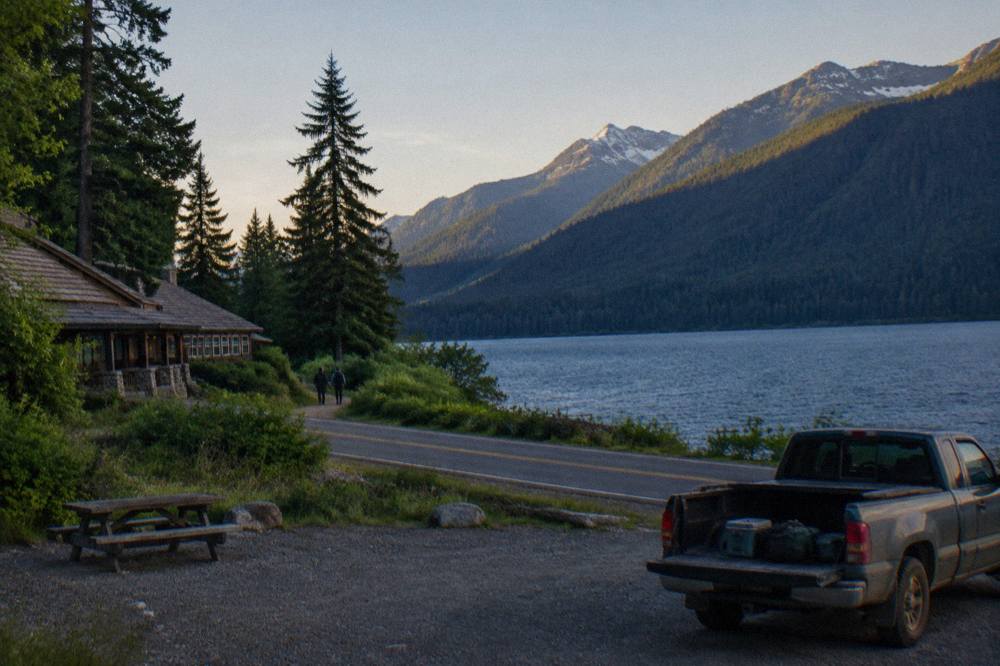
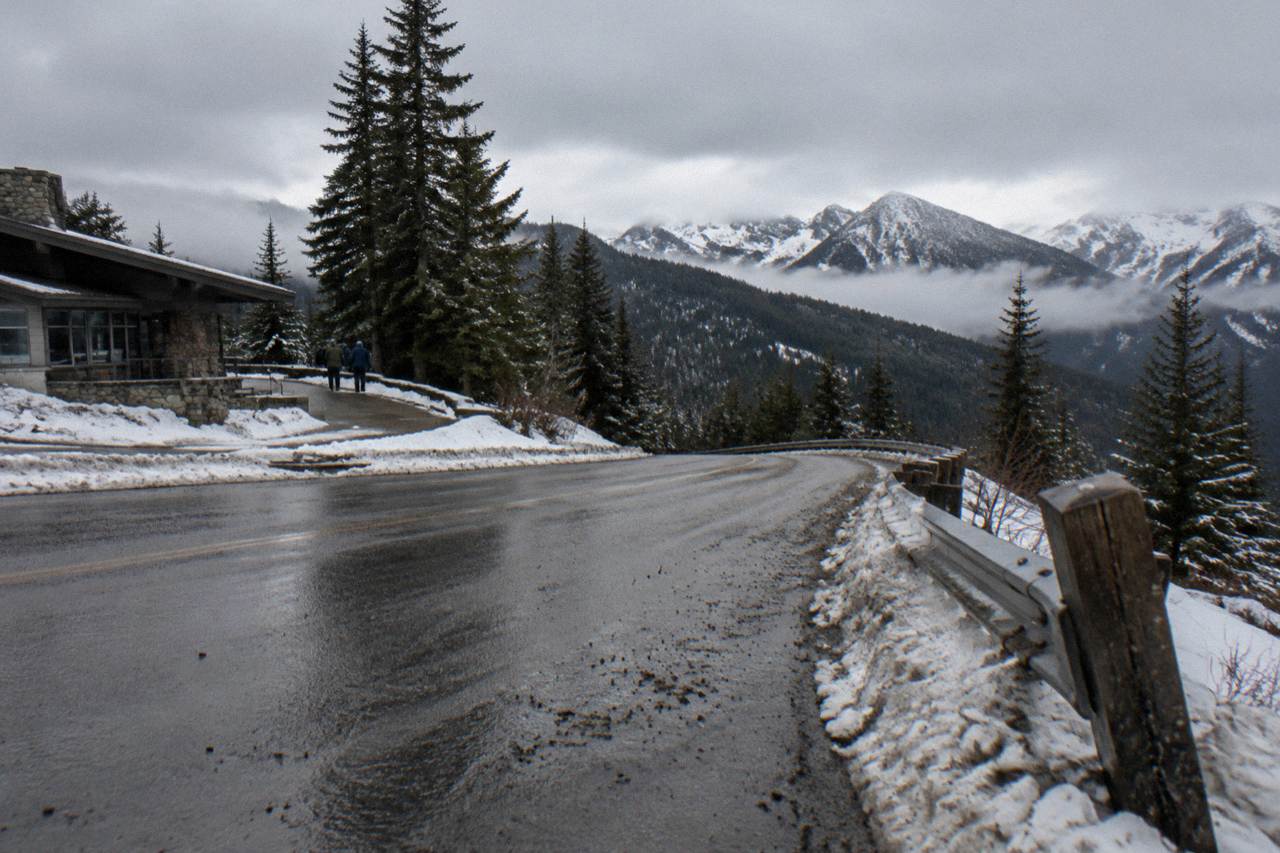
The driving itself is the attraction on several stretches. The 101 run along Lake Crescent's north shore is one of the prettiest road miles in the state, and Hurricane Ridge Road delivers continuous views on the climb to 5,242 feet. The park's Hurricane Ridge page describes the road and its seasonal schedule in detail, including the winter pattern: open Friday through Sunday and holiday Mondays only, weather permitting, closed Christmas Day.
For a fuller comparison of driving yourself against riding along, the Olympic tour vs driving yourself guide works through the costs and trade-offs item by item. The short version: a guided day trades your steering wheel for someone else's schedule, and on 10 to 13 hour Seattle departures that trade can be worth it.
What Can You Actually See From The Car In Olympic National Park?
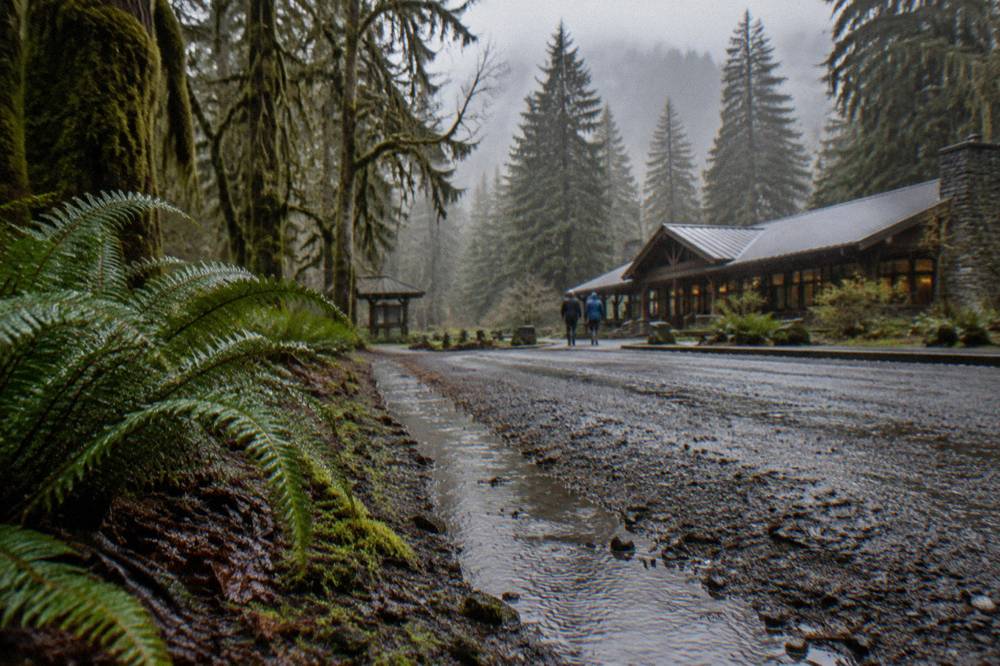
Quite a lot, but only one ecosystem at a time. From the driver's seat you can see Hurricane Ridge's alpine panorama, Lake Crescent from the 101 shore, the moss-draped forest edge along Upper Hoh Road, sea stacks at Ruby Beach, and Roosevelt elk grazing roadside meadows in the Hoh and Queets valleys. The park's wilderness interior, glaciers included, is visible only to hikers.
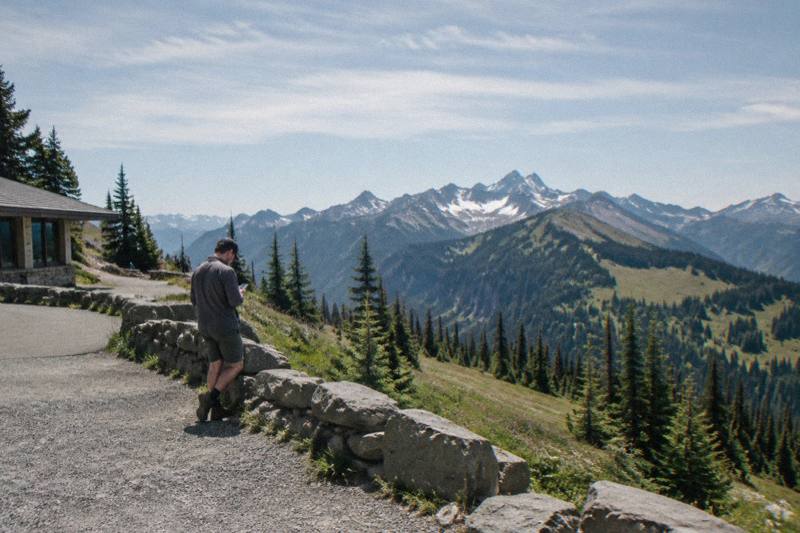
Hurricane Ridge is the single best windshield view in the park: on a clear day the ridge parking area opens a sweep of the Olympic Mountains with almost no walking required. Lake Crescent gives itself away from the highway itself, blue and deep along the north shore drive. The Hoh is different again: the road in runs along the river under a canopy that gets denser and greener with every mile, and the visitor center area's short loops, the 0.8 mile Hall of Mosses Trail and the 1.2 mile Spruce Nature Trail, are worth stepping out of the car for.
The coast is the third face. Ruby Beach and Kalaloch sit directly off Highway 101, so a drive-through can add tide pools, sea stacks, and driftwood without a long detour. The park's guidance for tide pools is to aim for tides lower than one foot, what beachgoers call a minus tide, and to watch for sneaker waves on any Olympic beach.
Wildlife is a real part of a drive-through day. Roosevelt elk, which form the largest fully wild herd in the Pacific Northwest, are frequently visible from roadside pullouts in the rain forest valleys, and the park's rule is to stay at least 100 feet away from them, three bus lengths. Black bears appear now and then in forest and subalpine areas; grizzly bears do not occur on the Olympic Peninsula at all.
How Long Does It Take To Drive Through Olympic National Park?
Realistically, one full, long day covers a curated loop of two or three areas, roughly 10 to 12 hours including stops. Port Angeles to the Hoh Rain Forest is about a two-hour drive, the Hoh to Kalaloch about 45 minutes, and the Seattle approach adds a ferry crossing of roughly 35 minutes plus a drive of about two and a half to three hours to Port Angeles.
Those last figures come from the Seattle side of the ledger, and they shape the whole day for anyone starting there. The Seattle to Bainbridge Island ferry runs about 35 minutes, and the drive from the Bainbridge terminal to Port Angeles covers roughly 82 miles, which stacks up to a total Seattle to Port Angeles journey of about two and a half to three hours. The Edmonds to Kingston crossing runs about 30 minutes as the northern alternative. Neither route takes vehicle reservations: loading is first-come, first-served, so summer weekends can mean a wait at the dock.
For a deeper breakdown of the Seattle approach, including the ferry arithmetic, the drive from Seattle to Olympic National Park post works through the full timeline. Anyone planning the drive-through as a day trip from Seattle should read that one before committing: the honest total is a very early start and a late return.
| Loop option | Areas covered | Realistic time with stops | Best for |
|---|---|---|---|
| North loop | Hurricane Ridge, Lake Crescent | 6 to 8 hours from Port Angeles | First visit, alpine priorities |
| West loop | Lake Crescent, Hoh Rain Forest | 8 to 10 hours from Port Angeles | Rain forest priorities |
| Coast leg | Hoh, Ruby Beach, Kalaloch | 8 to 10 hours from Forks or Port Angeles | Beach and tide pool time |
| Full circuit | Ridge, Lake Crescent, Hoh, coast | 12 or more hours | One-day-only visitors with stamina |
Guided Seattle departures make the same trade in a different way. The Hurricane Ridge And Lake Crescent Day tour (from $188 per person, rated 4.6 across 220 reviews) compresses the classic north and west highlights into an 11-hour day with pickup in Seattle, and the All-Inclusive Naturalist Day Tour (from $368 per person, rated 4.9 across 1,067 reviews) does the same terrain with a naturalist guide, lunch, and a longer interpretive pacing. Neither covers the whole park, and neither listing claims to; the stops are a selection, which is exactly what a well-planned drive-through should be too.
What Roads Are Closed In Olympic National Park?
Two closures matter to anyone routing a drive-through right now. Highway 101 is closed at the Hoh River Bridge, with overnight closures from 7 p.m. to 5:30 a.m. each night October 13 to 19 and no detour across the river; the Hoh Rain Forest remains reachable from Forks. Mora Road is closed to all traffic at the campground, so Rialto Beach is not accessible via Mora Road during repairs of severe winter flood damage.
The Highway 101 closure splits the coastal drive in a way a paper map will not show you. North of the bridge: Port Angeles, Hurricane Ridge, Lake Crescent, Sol Duc, Forks, and the Hoh. South of it: Kalaloch, Queets, and Quinault. Alternate routes around the east side of the mountains add at least four hours, so a one-day loop that touches both sides is off the table while the bridge work runs. The park's Highway 101 closure page carries the full schedule, and the current conditions page is the source for every other alert.
The Mora Road closure has a knock-on effect for tours as well as private drivers. Two roster listings, the Hoh And Rialto From Port Angeles tour and the Rialto Tide Pooling Hike, name Rialto Beach in their titles; with Mora Road shut, a reader considering either must confirm the operator's current route on the live listing before booking. Ruby Beach, Kalaloch, and Beach 4 sit on Highway 101 itself and are the coastal stops to rely on. The full index of guides sits on Olympic National Park Tours.
Beyond those two closures, the seasonal patterns are predictable and published. Hurricane Ridge Road runs a winter schedule of Friday through Sunday and holiday Mondays, with tire chains required to be carried above the Heart O' the Hills entrance station from November 1 through April 1, for all vehicles including four-wheel drive. Obstruction Point Road, gravel and not suitable for RVs or trailers, opens weather permitting from mid-June through October 15. Before any winter drive, the park's road and weather recording at 360-565-3131 is the fastest check.
Is Driving Yourself Better Than A Guided Tour From Seattle?
Driving yourself wins on flexibility and price for groups: one $30 vehicle pass, one tank of gas, and your own schedule. A guided tour wins on fatigue and local knowledge: the Seattle departures run 10 to 13 hours, the ferry and mountain roads are handled by a professional driver, and a guide reshapes the day around weather and crowds. Neither sees the whole park.
The cost math depends on headcount. A couple in a rental car pays $30 to enter plus fuel and ferry fares; the same couple on the Small-Group Ferry Day Tour pays from $188 per person, though that figure bundles the ferry, the entrance fee, lunch, and snacks, so the sticker gap narrows once you add what the day actually costs a driver. A solo traveler often comes out ahead on a tour; a family of four almost never does. The what an Olympic tour costs post runs the full comparison.
The fatigue factor deserves more weight than it usually gets. A Seattle-based drive-through means a ferry, a two and a half to three hour drive to Port Angeles, a mountain road to Hurricane Ridge, hours more to the Hoh or the coast, and all of it back again before the last ferry. One review of the Small-Group Hike Or Snowshoe Day tour, from Daniel, puts it well: "My not having to drive the entire way was a great benefit." On a 12-hour day that is not a small thing.
The middle path is the audio driving tour, which from $17 per group turns your own car into a narrated drive without surrendering the wheel. It runs five to six hours of GPS-triggered audio, works offline, and pauses whenever you do. For confident drivers who just want the stories, it is the cheapest upgrade in the park.
When Is The Best Time Of Year To Drive Through Olympic National Park?
July and August are the reliable months: the driest weather, all the spur roads open, and the clearest ridge views, at the price of the year's biggest crowds. September is the sweet spot for many drivers, with lighter traffic and usually good weather, though snow can appear in the high country as early as late September. October through May brings road closures and reduced schedules.
The numbers behind that advice are stark. Port Angeles, at park headquarters, averages a modest 25 to 30 inches of rain a year, while the western valleys and coast receive 100 to 170 inches, and the Hoh alone averages 140 inches. July and August drop to roughly two inches of monthly rainfall in the lowlands, with daytime highs around 71 to 72°F. The pattern is simple: the park is dramatically wetter on its west side, and summer is the only season when that barely matters.
Crowds follow the sun. The park hosts over three million visits a year, and the Hoh Rain Forest parking lots can fill by mid-morning in summer, with the entrance station metering traffic once they do. An early start is the standard advice on every leg: Hurricane Ridge before late morning, the Hoh before 10, and the beaches, which do not fill the same way, for the afternoon.
| Season | Road access | Typical conditions | Trade-off |
|---|---|---|---|
| July to August | All spur roads open | Driest, clearest skies of the year | Peak crowds, full parking lots |
| September | Spur roads open into early fall | Mild, lighter crowds | Possible early high-country snow |
| October to November | Ridge weekend schedule, some closures start | Wet, stormy on the coast | Salmon runs at Sol Duc, fewer people |
| December to March | Ridge road Friday to Sunday only | Heavy snow, 30 to 35 feet a year at the ridge | Chains required, many facilities closed |
| April to June | Roads reopen as snow clears | Showers thinning, waterfalls strong | Spring melt, changeable ridge access |
Winter driving deserves its own caution. Hurricane Ridge in winter is scheduled open Friday through Sunday and holiday Mondays, uphill traffic from 9 a.m. to 4 p.m., all vehicles below Heart O' the Hills by 5 p.m., and chains mandatory in the vehicle even for four-wheel drive. The temporary facilities at the ridge are limited: restrooms and an intermittently staffed contact station, with no food service. A winter drive-through is possible, but it is a different trip, skiers and snowshoers more than sightseers.
Whatever the season, the same three decision points recur: how much of the loop to attempt, which spurs to skip, and whether the day starts in Seattle or already on the peninsula. Settle those three and the drive-through becomes a plan rather than a gamble. That is also the moment to decide between your own car, a guided van, or a hybrid of the two, which is exactly what the trio of options below is for.
What Should You Know Before A Drive-Through Day In Olympic National Park?
Start early, pick two or three spurs rather than everything, carry a chain-free backup plan for weather, bring food and fuel, and check the conditions page and the 360-565-3131 recording the morning you drive. Fill the tank in Port Angeles or Forks: services inside the park are sparse, the park does not accept cash at entrances, and cell coverage on the west side is patchy enough that offline maps are not optional.
Food planning matters more than visitors expect. Beyond the lodge restaurants at Lake Crescent and Sol Duc, both seasonal, options inside the park are thin, and the Fairholme area near Lake Crescent has limited services. Most drive-through regulars pack a cooler and treat a picnic stop, Marymere Falls or a Kalaloch overlook, as part of the day. Gas up before the long west-side stretches.
Timing the ferry matters if the day starts in Seattle. Walk-on foot passengers pay about $11.35 round trip, a vehicle and driver about $20.25 one way, collected in both directions, and no vehicle reservations exist on the Seattle to Bainbridge or Edmonds to Kingston routes, so a summer weekend can add an hour of dock waiting. Reservations are not needed for park entry either: general access is first-come, first-served, though campgrounds book separately, a point the reservations for Olympic post covers in full.
A last word on expectations. The park's size, 922,651 acres, is the number to keep in mind when the day starts feeling ambitious. Even the most efficient drive-through touches a thin ribbon of it. The reward for accepting that is a day with genuine range: morning alpine air at 5,242 feet, an afternoon under the Hoh's moss canopy, and a sunset beach, all on one pass, one tank, and one very good road trip.
For travelers who would rather sample one piece of the park deeply than loop all of it thinly, a half-day option around Lake Crescent covers the most photogenic single area near Port Angeles in four hours. The Lake Crescent Half-Day Tour runs from $110 per person with roundtrip van transport from Port Angeles and a commercially authorized guide; its review pool is small at 39 reviews, so read the listing details rather than relying on a rating.
Common Questions About Driving Through Olympic National Park
Can You Just Drive Through Olympic National Park?
Yes. The park is open 24 hours a day, year-round, and a $30 private vehicle pass valid for seven days covers everyone in the car. But there is no single road through the park: a drive-through is a loop of Highway 101 with spur roads into Hurricane Ridge, the Hoh Rain Forest, Lake Crescent, and the coast.
Do You Have to Pay to Drive Through Olympic National Park?
Yes. Entry costs $30 per private vehicle for seven consecutive days, $25 per motorcycle, or $15 per person on foot or bicycle. The park does not accept cash, and you can pre-pay on Recreation.gov to save time at entrance stations.
Can You Drive From One Side of the Park to the Other?
Not through the middle. No road crosses the park's interior wilderness. Highway 101 wraps around the outside, and with the Hoh River Bridge closure on 101 there is no crossing at the river; alternate routes around the east side add at least four hours. The Hoh Rain Forest stays reachable from Forks.
How Many Days Do You Need to Drive the Whole Park Loop?
Two to three comfortable days is the standard answer for the full Highway 101 circuit with the major spurs. One very long day of 12 or more hours can cover a curated selection of two or three areas, such as Hurricane Ridge, Lake Crescent, and either the Hoh or the coast.
Is the Drive to Hurricane Ridge Open in Winter?
Only on a limited schedule. From roughly late November through March, Hurricane Ridge Road is open Friday through Sunday and holiday Mondays, weather permitting, with uphill traffic from 9 a.m. to 4 p.m. and all vehicles below Heart O' the Hills by 5 p.m. Tire chains must be carried from November 1 through April 1.
Can You Sleep in Your Car While Driving Through the Park?
No, not as a substitute for camping. Overnight stays require a designated campground, which runs $15 to $24 a night depending on location and season, and backcountry overnights require a wilderness permit at $8 per person per night plus a $6 reservation fee. The park's campground pages on Recreation.gov handle bookings.