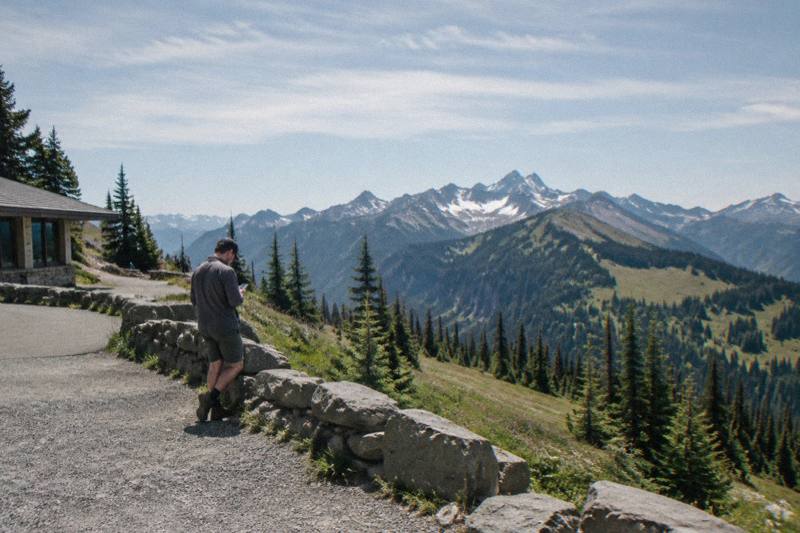
Can You Still Drive Up To Hurricane Ridge?
Yes, Hurricane Ridge Road is open and drivable, with a winter schedule and chain rules. Here is what the park publishes about access, the lodge site, and the drive itself.
Can You Still Drive Up To Hurricane Ridge?
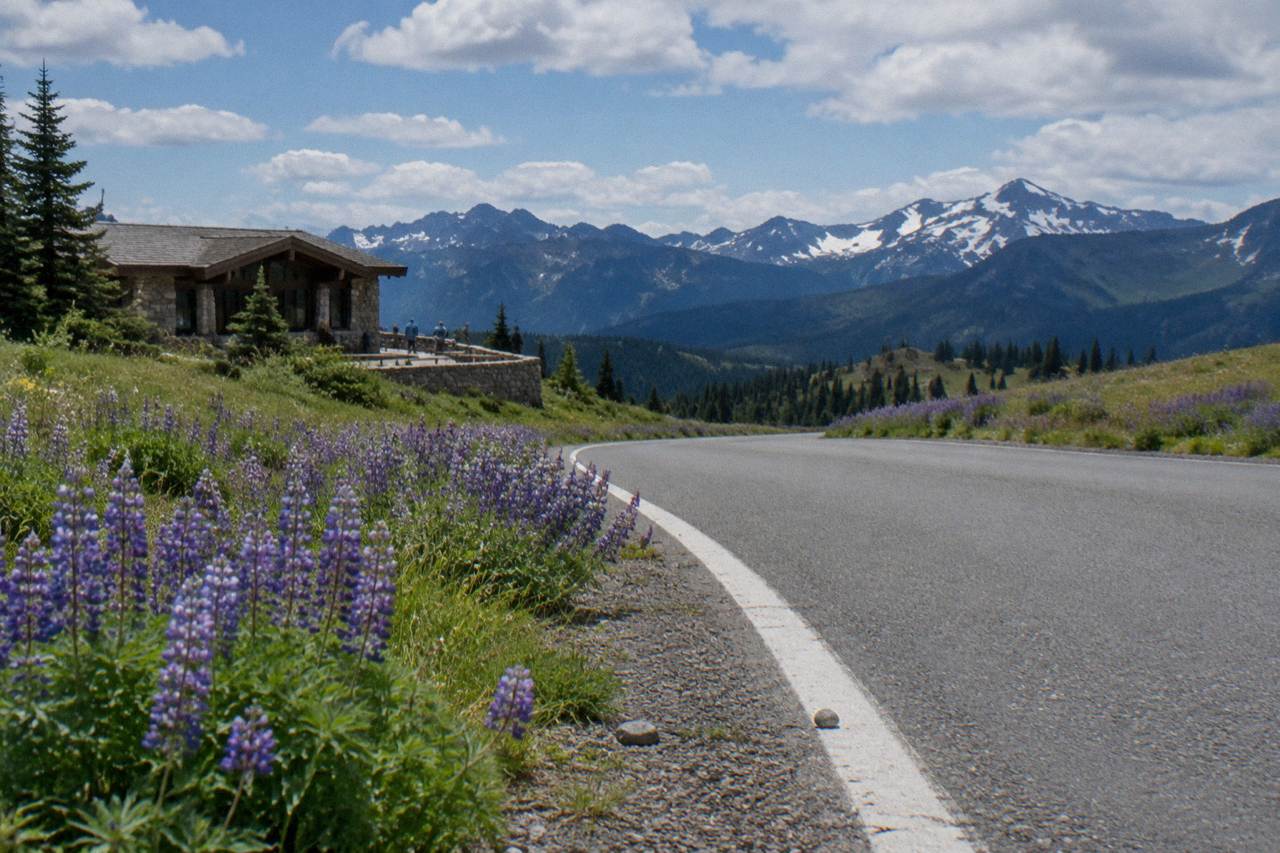
Yes, and the drive is one of the most rewarding in the Pacific Northwest. Hurricane Ridge Road runs 17 paved miles south of Port Angeles, climbing to 5,242 feet at the ridge itself. The road is open throughout summer, runs on a reduced Friday-to-Sunday schedule in winter with weather permitting, and remains fully drivable even though the Day Lodge at the top was lost to a fire and has not been rebuilt.
The question earns a careful answer because two things changed the experience. First, the lodge is gone, replaced by temporary trailers offering restrooms and an intermittently staffed visitor contact station. Second, winter access follows a published schedule rather than daily availability, and the park requires every vehicle, four-wheel drive included, to carry tire chains from November 1 through April 1. Neither change closes the road. Both change how you should plan the day.
For travelers who would rather not read a road-conditions page at all, the Hurricane Ridge and Lake Crescent tours collection covers guided options that include the ridge, and the Hurricane Ridge And Lake Crescent Day Tour from Seattle handles the driving, the ferry, and the timing in one booked day. For everyone else, the sections below cover the schedule, the chain rule, the lodge situation, Obstruction Point Road, and the road-conditions habits that locals keep.
When Is Hurricane Ridge Road Open?
Hurricane Ridge Road is open daily through the summer season, and in winter it is scheduled open Friday through Sunday plus holiday Mondays, weather permitting. In winter the road typically accepts uphill traffic from 9 am to 4 pm, and all vehicles must be below the Heart O' the Hills entrance station by 5 pm. The road is closed on Christmas Day, and from late March through April it may open or close day to day depending on conditions.
That is the park's own published schedule, and it is the single most important thing to internalize before planning a winter trip. A mid-January visit only works if it lands on a Friday, Saturday, Sunday, or a holiday Monday, and even then the weather call happens that morning. Hurricane Ridge traditionally records 30 to 35 feet of snow a year, and snow can appear in the high country as early as late September, so the window between "summer road" and "winter schedule" is shorter than most visitors expect.
The park publishes road status on its current conditions pages, and it maintains a recorded road and weather line at 360-565-3131 that staff update when status changes. Locals call that number the morning of a ridge trip, not the night before, because conditions on a road that gains thousands of feet of elevation can turn within hours. There is no reservation or timed-entry system for Hurricane Ridge access; parking at the top is first-come, first-served, which is why the busiest summer weekends see the lot fill by late morning.
The pattern in practice looks like this:
| Season | Road Status | Notes For Drivers |
|---|---|---|
| Summer (roughly late May through September) | Open daily | No timed entry; parking fills on weekends |
| Late September through October | Open, weather permitting | Early snow possible in the high country |
| Winter (late November through March) | Friday to Sunday plus holiday Mondays | Uphill traffic 9 am to 4 pm; all vehicles below Heart O' the Hills by 5 pm |
| Late March through April | Day-to-day | The park may open or close the road depending on conditions |
| Christmas Day | Closed | Full closure each year |
The summer Clallam Transit shuttle has run daily service up the road in past summer seasons, which is worth checking if you would rather not drive the mountain road at all, and ranger-led snowshoe walks run on winter weekends for visitors who arrive without gear. Details on both appear in the data block further down this page.
What Replaced The Hurricane Ridge Day Lodge?
The Day Lodge at Hurricane Ridge was lost to a fire and has not been rebuilt. In its place the park provides temporary trailers holding restrooms and a visitor contact station, and that contact station is staffed intermittently, generally Friday through Sunday in winter. There is no food service, no potable water, no souvenir shop, and no gear rental at the top, so bring everything you plan to eat and drink for the day.
This is the detail that surprises returning visitors most. The lodge used to be the warm-up stop, the lunch stop, and the place to buy a hot drink after time on the snow. None of that exists now. A reconstruction project is in the design phase, with the design contract awarded, but the park's own project page places construction at the earliest several years out, so the trailer setup is the reality for anyone planning a near-term trip.
What that means practically is that the ridge is now a bring-your-own-everything destination. In winter you will want a thermos, real layers, and a plan for changing conditions, because there is no building to retreat into. In summer it matters less, since most visitors spend their time on the viewpoints and the trails rather than indoors, but families with small children or travelers who count on a cafeteria lunch should adjust expectations before committing to the drive.
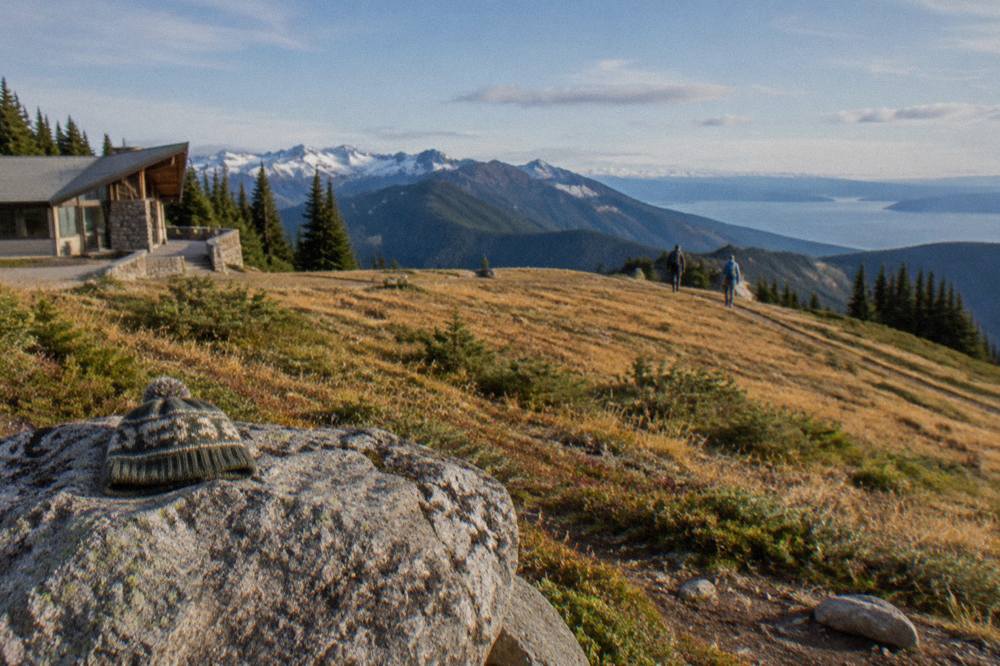
The view itself has not changed. On a clear day the ridge delivers a panorama across the Olympic Mountains to the Strait of Juan de Fuca and, far out, Vancouver Island, and that is what draws people up the 17-mile road regardless of what sits at the top. What the fire changed is comfort, not scenery.
Do You Need Tire Chains To Drive To Hurricane Ridge?
Yes, from November 1 through April 1, every vehicle traveling above the Heart O' the Hills entrance station must carry tire chains or approved alternate traction devices, and that requirement includes four-wheel-drive and all-wheel-drive vehicles. The rule is not conditional on the day's weather. Rangers can turn vehicles away at the entrance station for not carrying chains even when the road surface is bare.
The chain requirement is the most commonly misunderstood part of the drive. Visitors with rented SUVs frequently assume that all-wheel drive exempts them; it does not, and the park states the rule plainly for all vehicles. Rental companies in the Seattle area do not always include chains in the vehicle, and some rental agreements prohibit their use entirely, which is a genuine reason to reconsider a winter self-drive and look at a guided option instead.
The reason for the rule is the road itself. Seventeen miles of continuous climbing through forest and then open subalpine terrain means the bottom of the road and the top can be in different weather worlds. Rain in Port Angeles can be snow, sleet, or freezing fog at 5,242 feet, and the park closes the road quickly when conditions deteriorate. Chains in the trunk are how the road stays openable at all in marginal weather.
A few practical points follow from this:
- Carry chains from November 1 through April 1 even on a bluebird forecast, because mountain weather changes fast.
- Check the recorded road and weather line, 360-565-3131, on the morning of the trip rather than the day before.
- If your rental agreement bars chains, a guided tour that includes the ridge removes the problem entirely, since the operator's vehicle carries the required equipment.
Winter travelers who want the ridge without the chain logistics have a good option in the Small-Group Hike Or Snowshoe Day from Seattle, which runs guided hikes in summer and snowshoe treks in winter, tailored to the group, with the operator handling the vehicle and the gear.
Can You Drive To Obstruction Point From Hurricane Ridge?
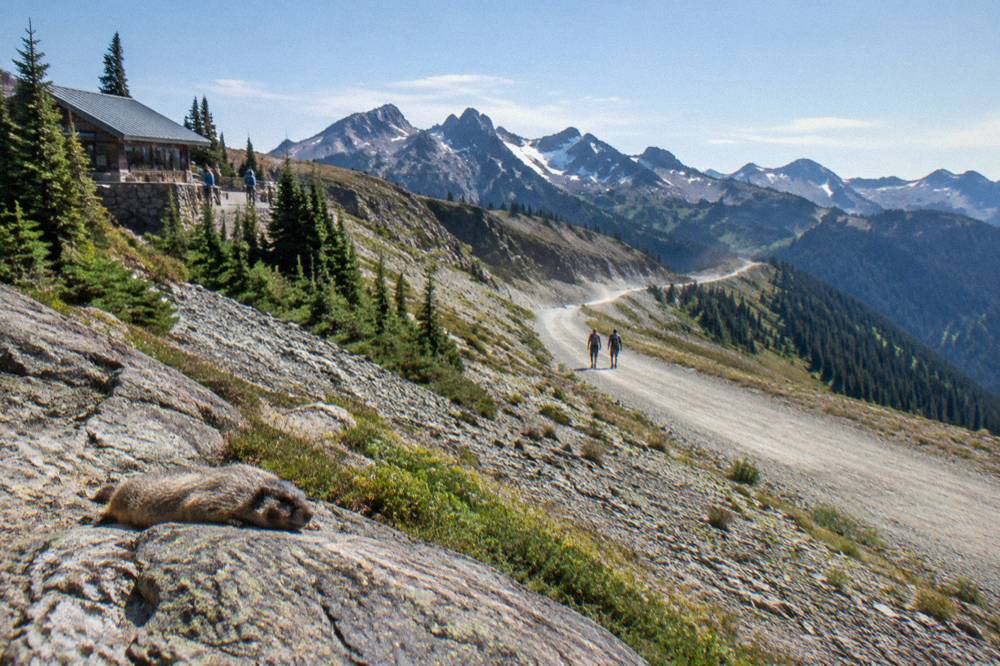
Obstruction Point Road leaves the Hurricane Ridge parking area and runs 7.8 miles of gravel to one of the highest trailheads in the park, and it is open from mid-June through October 15, weather and snow permitting. The road is not suitable for RVs or trailers, and it is a slow, narrow, high-clearance drive that rewards drivers with some of the most open alpine terrain in the Olympics.
Obstruction Point is the quiet answer for visitors who find the main ridge area busy. The road starts at the ridge parking lot and traverses open slopes with almost no tree cover, so the drive itself is scenic in a way the paved road below is not. At the end, trailheads lead into the Grand Valley and Grand Pass country, wildflower meadow terrain from early to mid-July through September in a typical year.
The constraints matter more here than on the paved road. Gravel, tight curves, and exposure mean the drive takes far longer than the distance suggests, and the park's guidance is clear that RVs and trailers should not attempt it. Weather closes the road outside its season, and snow lingers at that elevation well into summer, which is why mid-June is the published opening rather than something earlier.
For most visitors, Obstruction Point works as a half-day add-on to a ridge morning: drive up the main road, walk the Hurricane Hill area or the ridge viewpoints, then decide based on time and comfort whether the gravel road is worth it. The Hurricane Ridge And Lake Crescent Day Tour and similar guided days do not typically include Obstruction Point, since their route pairs the ridge with Lake Crescent stops instead, so if the gravel road is a priority, this is a self-drive day.
Is It Better To Take A Guided Tour Up To Hurricane Ridge?
A guided tour makes sense when the winter chain rule, the ferry logistics from Seattle, or the road-conditions uncertainty feel like work, and self-driving makes sense when you want flexibility at the top. Guided ridge days run from $188 to $368 per person depending on format, and several include the park entrance fee, meals, and snowshoe gear. The road is free of tour-vehicle restrictions, so both approaches reach exactly the same overlooks.
The honest comparison comes down to what each option costs you besides money. Self-driving costs you the morning road check, the chain question in winter, and the parking race on summer weekends. A guided day costs you control of the schedule, and on Seattle departures it costs you a long day, since these tours list 9 to 12 hours door to door with the crossing and the drive built in. Neither is universally better; the split usually follows party size and season. The wider set of guides lives on Olympic National Park Tours.
Here is how the main ridge-reachable options compare on the listings:
| Tour | Departs | From Price | Duration | Rating And Pool |
|---|---|---|---|---|
| Hurricane Ridge And Lake Crescent Day | Seattle | $188 per person | 11 hours | 4.6 across 220 reviews |
| Sol Duc, Lake Crescent And Ridge Day | Port Angeles | $195 per person | 9 hours | 5.0 across 83 reviews |
| Small-Group Hike Or Snowshoe Day | Seattle | $348 per person | 12 hours | 4.9 across 145 reviews |
| All-Inclusive Naturalist Day Tour | Seattle | $368 per person | 12 hours | 4.9 across 1,067 reviews |
The Port Angeles departure is the sleeper value. The Sol Duc, Lake Crescent And Ridge Day covers the ridge plus the Sol Duc Valley and Lake Crescent in a 9-hour day from Port Angeles, rated 5.0 across 83 reviews, and its listing includes the park entrance fee and roundtrip van transport; lunch is not included. One guest review from Ramya_V reads: "10/10 experience! I especially loved the views of Hurricane Ridge. Our tour guide, Eric, was so friendly and fun too." Travelers already staying on the peninsula get a shorter day and a naturalist guide for less than the Seattle full-day options.
From Seattle, the Hurricane Ridge And Lake Crescent Day Tour is the entry point at from $188 per person, and the All-Inclusive Naturalist Day Tour is the premium version at from $368 per person with a naturalist guide and the park's entrance fee included; you can compare both on the Hurricane Ridge and Lake Crescent tours hub. If you want the full rundown of Seattle departures, dock-to-dock, the guide to Olympic day tours from Seattle breaks down every option. Winter visitors get the clearest benefit of all: the Small-Group Hike Or Snowshoe Day switches to snowshoes when the snow arrives, with a guide who carries the expertise and the equipment, as described in the guided snowshoe day overview. Check availability if the no-driving version of the ridge appeals.
What Is The Drive From Port Angeles Like?
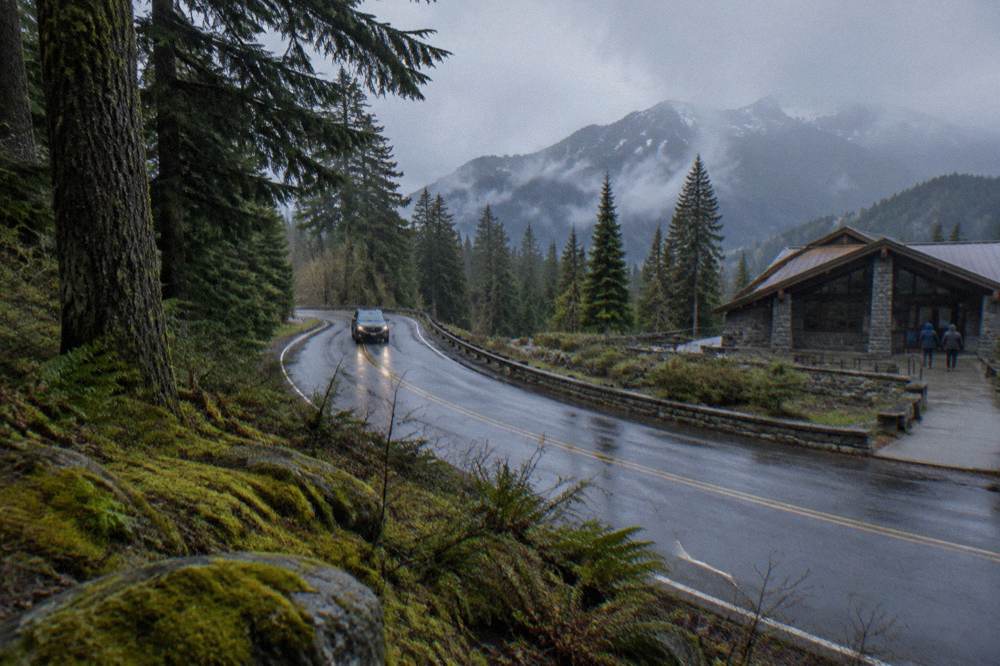
The drive from Port Angeles to Hurricane Ridge covers 17 paved miles and climbs from sea level to 5,242 feet, transitioning from dense lowland forest to subalpine meadows with pullouts along the way. It is a steady mountain road with curves and grade, not a frightening one, and typical conditions make it comfortably drivable for ordinary passenger cars in summer. Allow roughly 40 to 45 minutes each way without stops.
The character of the road changes in three acts. The lower stretch climbs through the Heart O' the Hills forest, dark and green and cool even on hot days. The middle section opens into a series of switchbacks and traverses where the trees thin and the first big views of the Strait appear. The final approach rolls across open meadows to the ridge parking area, and on clear days the mountains of the interior Olympics rise ahead of you the whole way.
Two habits make the drive better. First, use the pullouts. The viewpoints on the way up, especially those facing north over the Strait of Juan de Fuca toward Vancouver Island, are part of the experience, and stopping at them also lets faster traffic pass. Second, watch the weather differential. Port Angeles sits in a comparatively dry zone, averaging roughly 25 to 30 inches of precipitation a year, while the high country records 30 to 35 feet of snow annually, so a sunny departure can still mean a fogged-in or snowy summit. The recording at 360-565-3131 exists precisely for that gap.
For travelers planning a wider Olympic loop, the drive pairs naturally with Lake Crescent, about 18 miles west of Port Angeles, and with the Sol Duc Valley about 40 minutes west. Several guided days stitch these together, including a Lake Crescent Half-Day Tour from Port Angeles at from $110 per person for 4 hours, which works as a lighter companion to a self-driven ridge morning. Travelers working out the full Seattle logistics can start with the breakdown in how to reach the park from Seattle.
What If The Road Closes During Your Visit?
If Hurricane Ridge Road closes while you are on the peninsula, the realistic move is to reallocate the day westward to Lake Crescent or the Sol Duc Valley, both of which sit on lower, more reliable roads, or to the coast. The road can close any winter day and occasionally closes in the shoulder season too, and the park closes it without regard to plans already made. Building one flexible day into the itinerary is the standard local response.
Closures happen for snow, ice, wind, and occasionally for repairs, and the park publishes status through its alerts and road-conditions pages as well as the recorded line. The pattern to accept is that a winter ridge day is a plan, not a guarantee. Travelers who book a single night in Port Angeles with the ridge as the only goal are taking a real risk; travelers who give themselves two or three nights almost always get a weather window.
The consolation is that the peninsula's other headliners sit on gentler roads. Lake Crescent and the Marymere Falls trail, the Sol Duc Falls overlook walk, and the beaches along Highway 101 all stay reachable in weather that closes the ridge. The trade in reverse is true as well: on the days when the ridge road is open and clear, it is the best view on the peninsula, which is exactly why the schedule, the chains, and the morning road check are worth the trouble.
The data points below fill in the current operating picture at the ridge, drawn from the park's own published pages.
Guided tours absorb closure risk differently. Operators monitor the road and reroute when the ridge is shut, shifting the day toward rainforest, lake, or coastal stops, and a guest review of the small-group ferry day describes exactly that: when the ferry was not operational, the operator drove the group to Olympic instead and bought lunch. The All-Inclusive Naturalist Day Tour follows the same logic with a naturalist guide and the entrance fee included. For travelers on a tight window, that built-in flexibility is arguably worth as much as the guiding itself.
Do You Need A Permit Or Reservation To Drive Up?
No permit, reservation, or timed entry is required to drive Hurricane Ridge Road; access is first-come, first-served and the standard park entrance fee applies at the gate. A private vehicle pass costs $30 for seven consecutive days, a motorcycle pass $25, and a per-person entry on foot or bicycle $15 for visitors 16 and older. The park does not accept cash, so carry a card or prepay entry through Recreation.gov.
Two edge cases catch people out. Overnight camping in the wilderness above the road requires a wilderness permit, obtained through the Wilderness Information Center in Port Angeles, and there is no overnight parking allowed at the ridge parking lot, so winter ski-mountaineers and snowshoers planning dawn starts must arrange differently. And the entrance fee is separate from any tour price unless the tour's listing states that it includes park entry; several of the guided days above do include it, which is worth checking on the listing before comparing prices.
Fee-free days give everyone else a small lever. The park's published list of fee-free days for the year includes Presidents Day, Memorial Day, Flag Day, the Independence Day weekend, the NPS birthday in late August, Constitution Day, Theodore Roosevelt's birthday in late October, and Veterans Day. Those days waive the entrance fee only, not campground or permit fees, and they tend to be busier precisely because they are free, so the parking math at the ridge gets harder, not easier.
The entrance-fee-and-passes detail, including the Olympic Annual Pass at $55 and the America the Beautiful options, is covered in full on the park's fee page and unpacked on the official fees page. If your Olympic itinerary already includes other fee stops, the annual pass math can work out on a single trip.
Common Questions About Driving Up To Hurricane Ridge
Can You Still Drive Up To Hurricane Ridge?
Yes. Hurricane Ridge Road is open and drivable, running 17 paved miles south of Port Angeles to the ridge at 5,242 feet. It is open daily in summer and scheduled Friday through Sunday plus holiday Mondays in winter, weather permitting. The Day Lodge is gone, replaced by temporary restrooms and an intermittently staffed contact station, but the road and the overlooks are fully in service.
Do I Need Chains On Hurricane Ridge Road In Winter?
Yes. From November 1 through April 1, every vehicle traveling above the Heart O' the Hills entrance station must carry tire chains or approved alternate traction devices, including four-wheel-drive and all-wheel-drive vehicles. Rangers can enforce the requirement regardless of the day's weather. If a rental agreement prohibits chains, a guided tour with the ridge included avoids the problem.
Is There Food Or A Lodge At The Top Of Hurricane Ridge?
No. The Day Lodge was lost to a fire and reconstruction is still years away. Temporary trailers provide restrooms and a visitor contact station staffed intermittently, generally Friday through Sunday in winter. There is no food service, potable water, souvenirs, or gear rental at the top, so carry everything you plan to eat and drink.
How Do I Check The Current Status Of Hurricane Ridge Road?
Call the park's recorded road and weather line at 360-565-3131 on the morning of your visit, and check the park's current road conditions and alerts pages online. Locals check the morning rather than the night before, because conditions on a road climbing to 5,242 feet can change within hours. There is no timed-entry or reservation system; parking is first-come, first-served.
When Is Obstruction Point Road Open?
Obstruction Point Road, the 7.8-mile gravel road that leaves the Hurricane Ridge parking area, is open from mid-June through October 15, weather and snow permitting. It is not suitable for RVs or trailers. It leads to high trailheads into meadow terrain that typically blooms from early to mid-July through September.
What Is The Cheapest Guided Way To See Hurricane Ridge?
From Seattle, the Hurricane Ridge And Lake Crescent Day Tour starts at $188 per person for an 11-hour day, rated 4.6 across 220 reviews. From Port Angeles, the Sol Duc, Lake Crescent And Ridge Day starts at $195 per person for 9 hours, rated 5.0 across 83 reviews, and includes the park entrance fee and transport on its listing.